Application
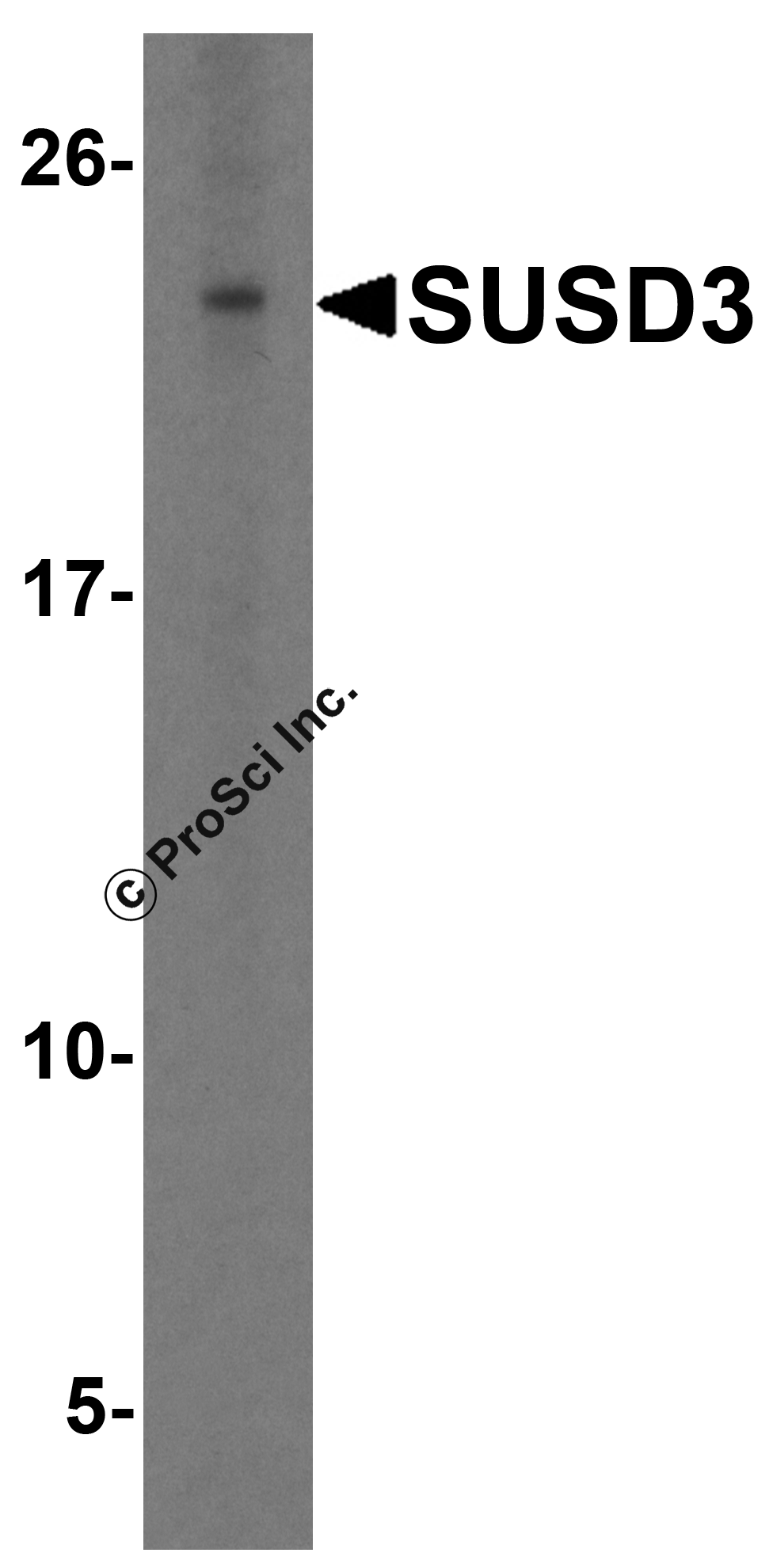
Western blot analysis of SUSD3 in HeLa cell lysate with SUSD3 antibody at 1 μg/ml.Application
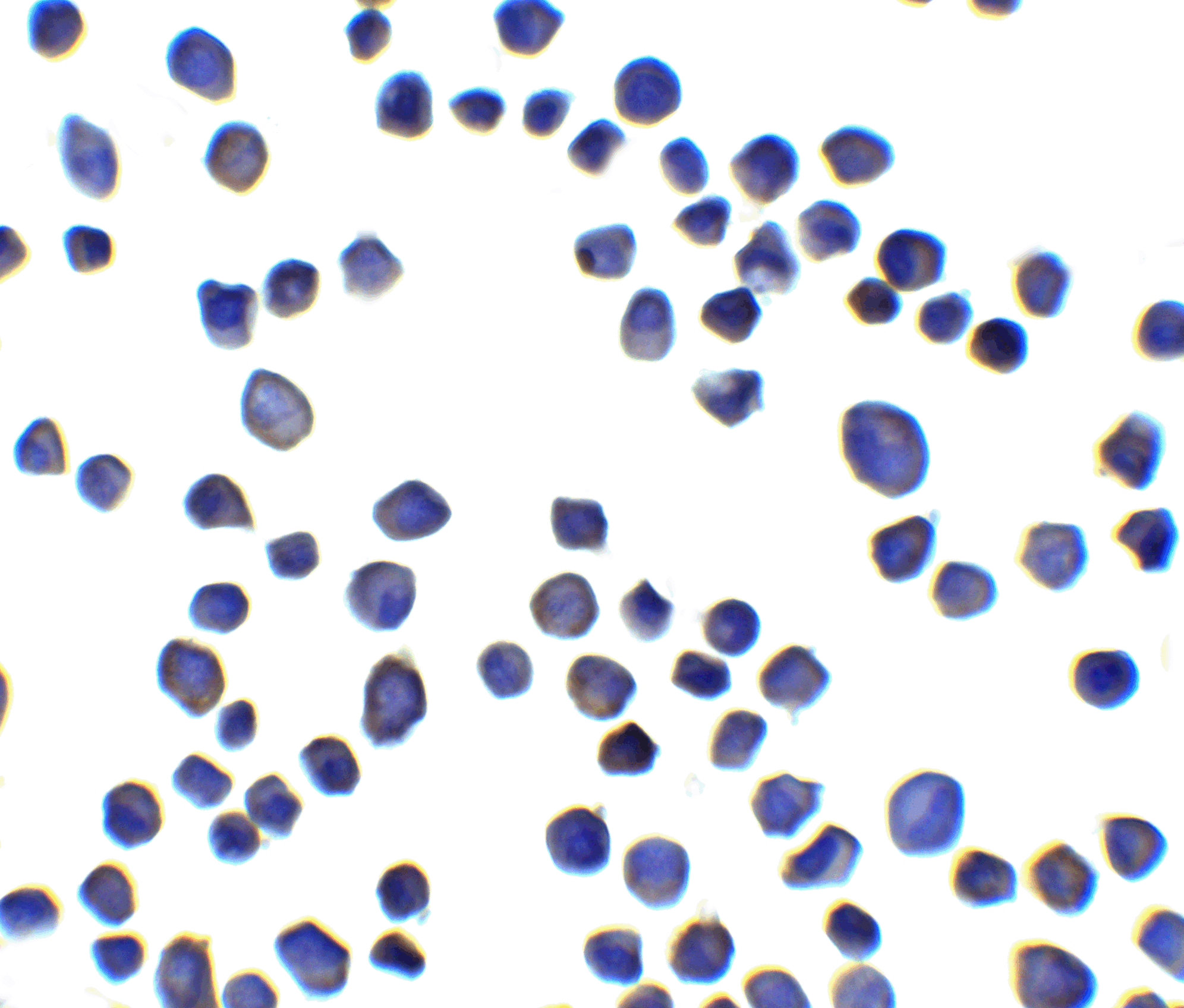
Immunocytochemistry of SUSD3 in 3T3 cells with SUSD3 antibody at 5 μg/ml.| Product Name | SUSD3 Antibody |
|---|---|
| Antibody Type | Primary Antibodies |
| Antigen Alias | Sushi domain containing 3 |
| Product description | Little is known of the function of the sushi domain containing 3 protein (SUSD3), but its expression has been reported in estrogen receptor-alpha (ERalpha)-positive breast tumors with decreased expression reported in aggressive malignant tumors (1,2). Recently, SUSD3 has been found to promote estrogen-dependent cell proliferation and may regulate cell-cell and cell-substrate interactions and migration in breast cancer (3). Furthermore, elevated SUSD3 mRNA levels were observed in aromatase inhibitor-responsive breast tumors, suggesting that it may also serve as a novel predictor of response to endocrine therapy and a potential therapeutic target (3).1) Abba MC, Hu Y, Sun H, et al. Gene expression signature of estrogen receptor alpha status in breast cancer. BMC Genomics 2005; 6:37. |
| Immunogen | SUSD3 antibody was raised against a 16 amino acid peptide from near the center of human SUSD3. The immunogen is located within amino acids 120 - 170 of SUSD3. |
| Clonality | Polyclonal |
|---|---|
| Isotype | IgG |
| Host Species | Rabbit |
| Tested Applications | ELISAICCWB |
| SUSD3 antibody can be used for the detection of SUSD3 by Western blot at 1 - 2 μg/mL. Antibody can also be used for immunocytochemistry starting at 5 μg/mL.: |
|
| Species Reactivity | HumanMouse |
| Concentration | 1mg/ml |
| Purification | Affinity purified |
| Gene Symbol | SUSD3 |
|---|---|
| Alternative Names | Sushi domain containing 3 |
| Molecular Weight(MW) | Predicted: 16, 22, 23, 28 kDa Observed: 23 kDa |
| Sequence Similarities | 2) Cat. No. 17-201 - 3T3/BALB Cell Slide |
| Tissue Specificity | SUSD3 antibody is human and mouse reactive. Multiple isoforms of SUSD3 are known to exist. |
Application
Western blot analysis of SUSD3 in HeLa cell lysate with SUSD3 antibody at 1 μg/ml.
Application
Immunocytochemistry of SUSD3 in 3T3 cells with SUSD3 antibody at 5 μg/ml.| Positive Control | 1) Cat. No. 1282 - 3T3 (NIH) Cell Lysate |
|---|---|
| Application Notes | SUSD3 antibody can be used for the detection of SUSD3 by Western blot at 1 - 2 μg/mL. Antibody can also be used for immunocytochemistry starting at 5 μg/mL.: |
| Form | Liquid |
|---|---|
| Storage Instructions | SUSD3 antibody can be stored at 4˚C for three months and -20˚C, stable for up to one year. |
| Storage Buffer | SUSD3 Antibody is supplied in PBS containing 0.02% sodium azide. |


