Application
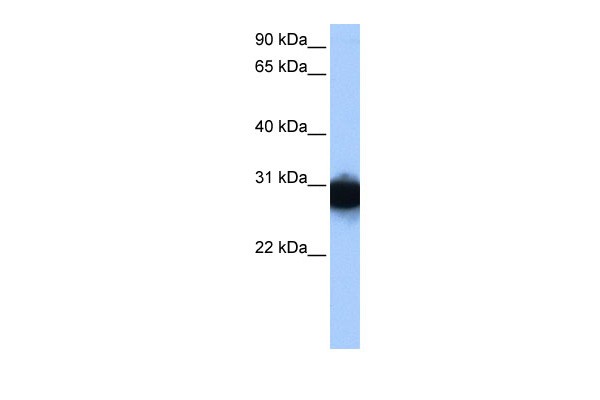
Antibody used in WB on Human HepG2 at 0.2-1 ug/ml.Application
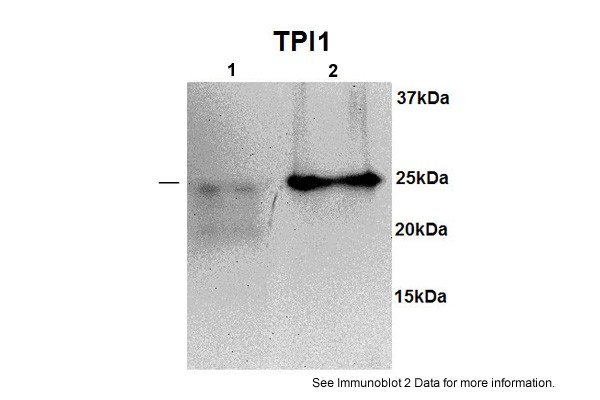
Antibody used in WB on Human, Drosophila.| Product Name | TPI1 Antibody |
|---|---|
| Antibody Type | Primary Antibodies |
| Antigen Alias | TPI1, MGC88108, TPI, TIM, TPID, HEL-S-49 |
| Product description | TPI1 belongs to the triosephosphate isomerase family. Defects in TPI1 are the cause of triosephosphate isomerase deficiency (TPI deficiency) . TPI deficiency is an autosomal recessive disorder. It is the most severe clinical disorder of glycolysis. It is associated with neonatal jaundice, chronic hemolytic anemia, progressive neuromuscular dysfunction, cardiomyopathy and increased susceptibility to infection.1) Ralser, M., (er) BMC Genet. 9, 38 (2008). |
| Immunogen | Antibody produced in rabbits immunized with a synthetic peptide corresponding a region of human TPI1. |
| Clonality | Polyclonal |
|---|---|
| Host Species | Rabbit |
| Tested Applications | ELISAWB |
| TPI1 antibody can be used for detection of TPI1 by ELISA at 1:1562500. TPI1 antibody can be used for detection of TPI1 by western blot at 1 μg/mL, and HRP conjugated secondary antibody should be diluted 1:50,000 - 100,000.: |
|
| Species Reactivity | Human |
| Concentration | 1mg/ml |
| Purification | Affinity purified |
| Gene Symbol | TPI1 |
|---|---|
| Alternative Names | TPI1 MGC88108 TPI TIM TPID HEL-S-49 |
| Molecular Weight(MW) | 27 kDa |
Application
Antibody used in WB on Human HepG2 at 0.2-1 ug/ml.
Application
Antibody used in WB on Human, Drosophila.| Positive Control | 1) Cat. No. 1211 - HepG2 Cell Lysate |
|---|---|
| Application Notes | TPI1 antibody can be used for detection of TPI1 by ELISA at 1:1562500. TPI1 antibody can be used for detection of TPI1 by western blot at 1 μg/mL, and HRP conjugated secondary antibody should be diluted 1:50,000 - 100,000.: |
| Form | Liquid |
|---|---|
| Storage Instructions | For short periods of storage (days) store at 4˚C. For longer periods of storage, store TPI1 antibody at -20˚C. As with any antibody avoid repeat freeze-thaw cycles. |
| Storage Buffer | Antibody is lyophilized in PBS buffer with 2% sucrose. Add 50 μL of distilled water. Final antibody concentration is 1 mg/mL. |


