Application
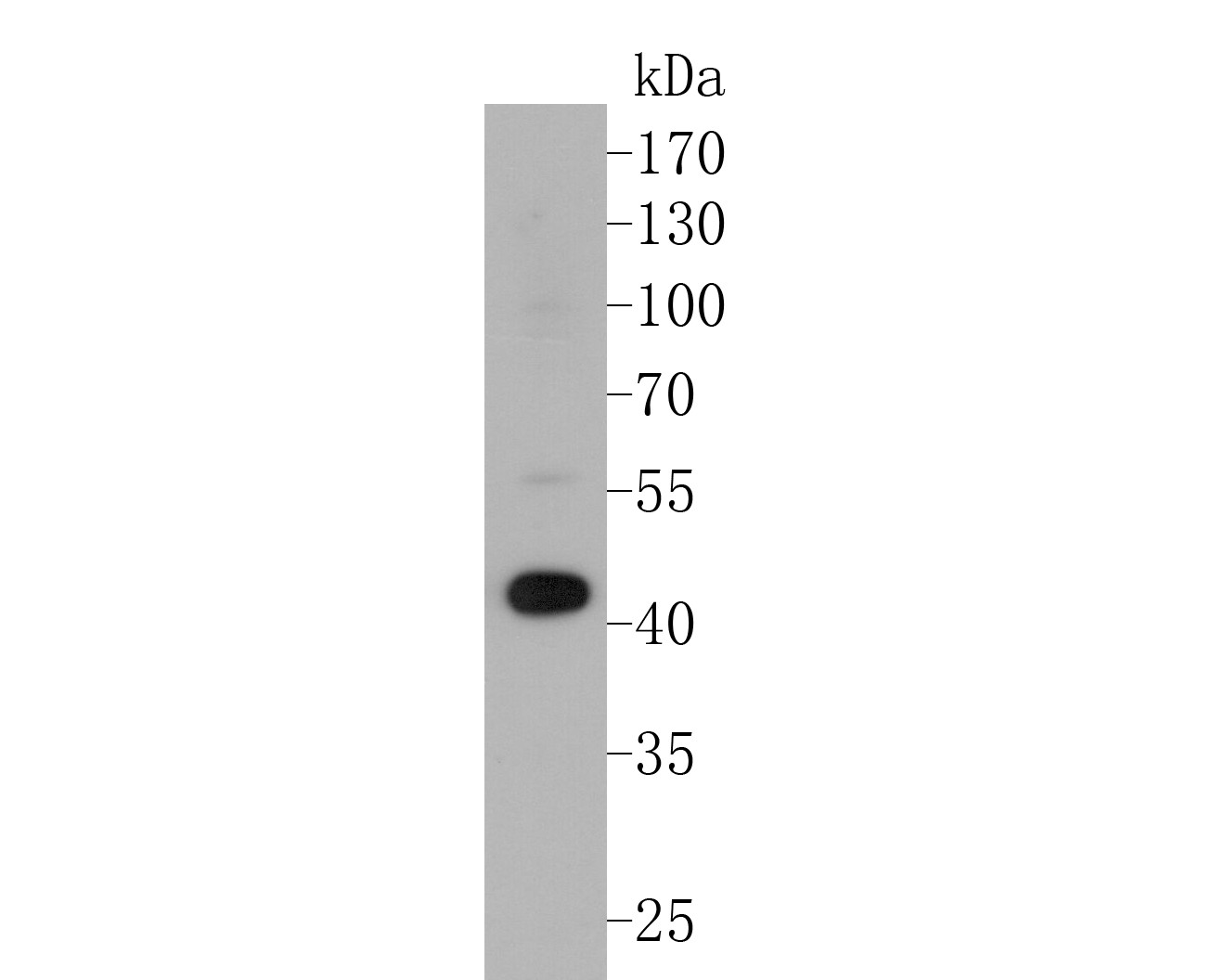
Fig1: Western blot analysis of ACADL on SH-SY5Y cell lysate. Proteins were transferred to a PVDF membrane and blocked with 5% BSA in PBS for 1 hour at room temperature. The primary antibody (ER1901-11, 1/5000) was used in 5% BSA at room temperature for 2 hours. Goat Anti-Rabbit IgG - HRP Secondary Antibody (HA1001) at 1:5,000 dilution was used for 1 hour at room temperature.Application
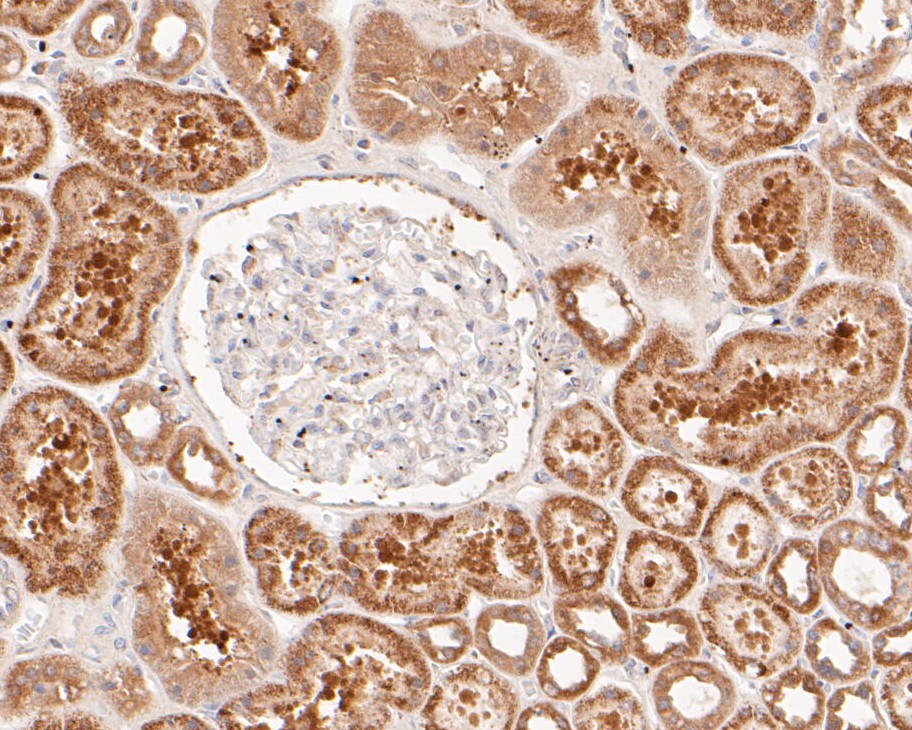
Fig2: Immunohistochemical analysis of paraffin-embedded human kidney tissue using anti-ACADL antibody. The section was pre-treated using heat mediated antigen retrieval with Tris-EDTA buffer (pH 8.0-8.4) for 20 minutes.The tissues were blocked in 5% BSA for 30 minutes at room temperature, washed with ddH2O and PBS, and then probed with the primary antibody (ER1901-11, 1/50) for 30 minutes at room temperature. The detection was performed using an HRP conjugated compact polymer system. DAB was used as the chromogen. Tissues were counterstained with hematoxylin and mounted with DPX.Application
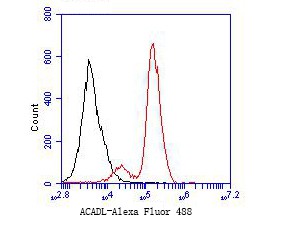
Fig3: Flow cytometric analysis of ACADL was done on F9 cells. The cells were fixed, permeabilized and stained with the primary antibody (ER1901-11, 1/50) (red). After incubation of the primary antibody at room temperature for an hour, the cells were stained with a Alexa Fluor 488-conjugated Goat anti-Rabbit IgG Secondary antibody at 1/1000 dilution for 30 minutes.Unlabelled sample was used as a control (cells without incubation with primary antibody; black).| Product Name | ACADL |
|---|---|
| Antibody Type | Primary Antibodies |
| Antigen Alias | ACAD4 antibody ACADL antibody ACADL_HUMAN antibody Acyl Coenzyme A dehydrogenase long chain antibody Acyl-CoA dehydrogenase long chain antibody FLJ94052 antibody LCAD antibody Long chain acyl CoA dehydrogenase antibody Long-chain specific acyl-CoA dehydrogenase, mitochondrial antibody |
| Product description | ACADL is a gene that encodes LCAD - acyl-CoA dehydrogenase, long chain - which is a member of the acyl-CoA dehydrogenase family. The acyl-CoA dehydrogenase family is primarily responsible for beta-oxidation of fatty acids within the mitochondria. LCAD dysfunction is associated with lowered fatty acid oxidation capacity and decreased heat generation. As a result, LCAD deficiency has been correlated with increased cardiac hypertrophy, pulmonary disease, and overall insulin resistance. The LCAD enzyme catalyzes most of fatty acid beta-oxidation by forming a C2-C3 trans-double bond in the fatty acid. LCAD works on long-chain fatty acids, typically between C12 and C16-acylCoA. LCAD is essential for oxidizing unsaturated fatty acids such as oleic acid, but seems redundant in the oxidation of saturated fatty acids. Fatty acid oxidation has proven to spare glucose in fasting conditions, and is also required for amino acid metabolism, which is essential for the maintenance of adequate glucose production. LCAD is regulated by a reversible acetylation mechanism by SIRT3, in which the active form of the enzyme is deacetylated, and hyperacetylation reduces the enzymatic activity. |
| Immunogen | Recombinant protein within N-terminal human ACADL. |
| Clonality | Polyclonal |
|---|---|
| Isotype | IgG |
| Host Species | Rabbit |
| Tested Applications | WBIHCFC |
| WB:1:500-1:2,000: IHC-P:1:50-1:200: FC:1:50-1:100: |
|
| Species Reactivity | HumanMouse |
| Concentration | 1mg/mL |
| Alternative Names | ACAD4 antibody
ACADL antibody
ACADL_HUMAN antibody
Acyl Coenzyme A dehydrogenase long chain antibody
Acyl-CoA dehydrogenase long chain antibody
FLJ94052 antibody
LCAD antibody
Long chain acyl CoA dehydrogenase antibody
Long-chain specific acyl-CoA dehydrogenase mitochondrial antibody |
|---|---|
| Molecular Weight(MW) | 48 kDa |
| Cellular Localization | Mitochondrion matrix. |
Application
Fig1: Western blot analysis of ACADL on SH-SY5Y cell lysate. Proteins were transferred to a PVDF membrane and blocked with 5% BSA in PBS for 1 hour at room temperature. The primary antibody (ER1901-11, 1/5000) was used in 5% BSA at room temperature for 2 hours. Goat Anti-Rabbit IgG - HRP Secondary Antibody (HA1001) at 1:5,000 dilution was used for 1 hour at room temperature.
Application
Fig2: Immunohistochemical analysis of paraffin-embedded human kidney tissue using anti-ACADL antibody. The section was pre-treated using heat mediated antigen retrieval with Tris-EDTA buffer (pH 8.0-8.4) for 20 minutes.The tissues were blocked in 5% BSA for 30 minutes at room temperature, washed with ddH2O and PBS, and then probed with the primary antibody (ER1901-11, 1/50) for 30 minutes at room temperature. The detection was performed using an HRP conjugated compact polymer system. DAB was used as the chromogen. Tissues were counterstained with hematoxylin and mounted with DPX.
Application
Fig3: Flow cytometric analysis of ACADL was done on F9 cells. The cells were fixed, permeabilized and stained with the primary antibody (ER1901-11, 1/50) (red). After incubation of the primary antibody at room temperature for an hour, the cells were stained with a Alexa Fluor 488-conjugated Goat anti-Rabbit IgG Secondary antibody at 1/1000 dilution for 30 minutes.Unlabelled sample was used as a control (cells without incubation with primary antibody; black).| Positive Control | SH-SY5Y cell, human kidney tissue, F9. |
|---|---|
| Application Notes | WB:1:500-1:2,000: IHC-P:1:50-1:200: FC:1:50-1:100: |
| Form | Liquid |
|---|---|
| Storage Instructions | Store at +4℃ after thawing. Aliquot store at -20℃. Avoid repeated freeze / thaw cycles. |
| Storage Buffer | 1*TBS (pH7.4), 1%BSA, 50%Glycerol. Preservative: 0.05% Sodium Azide. |


