Application
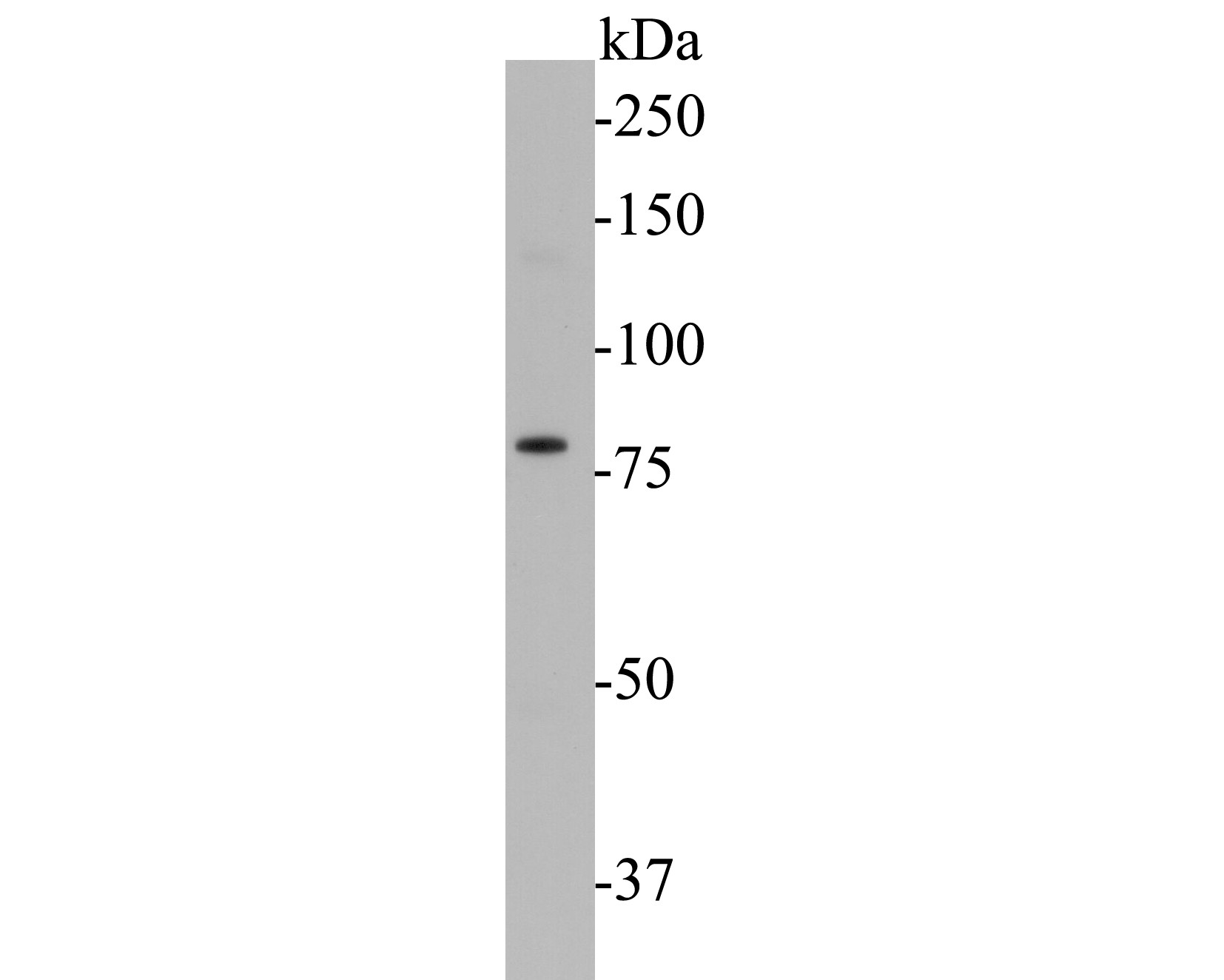
Fig1: Western blot analysis of KV1.1 on rat brain tissue lysate. Proteins were transferred to a PVDF membrane and blocked with 5% BSA in PBS for 1 hour at room temperature. The primary antibody (ER1901-23, 1/500) was used in 5% BSA at room temperature for 2 hours. Goat Anti-Rabbit IgG - HRP Secondary Antibody (HA1001) at 1:5,000 dilution was used for 1 hour at room temperature.Application
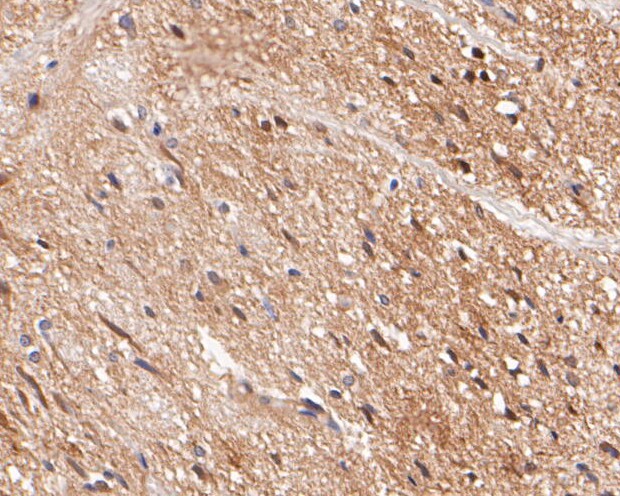
Fig2: Immunohistochemical analysis of paraffin-embedded rat spinal cord tissue using anti-KV1.1 antibody. The section was pre-treated using heat mediated antigen retrieval with Tris-EDTA buffer (pH 8.0-8.4) for 20 minutes.The tissues were blocked in 5% BSA for 30 minutes at room temperature, washed with ddH2O and PBS, and then probed with the primary antibody (ER1901-23, 1/200) for 30 minutes at room temperature. The detection was performed using an HRP conjugated compact polymer system. DAB was used as the chromogen. Tissues were counterstained with hematoxylin and mounted with DPX.Application
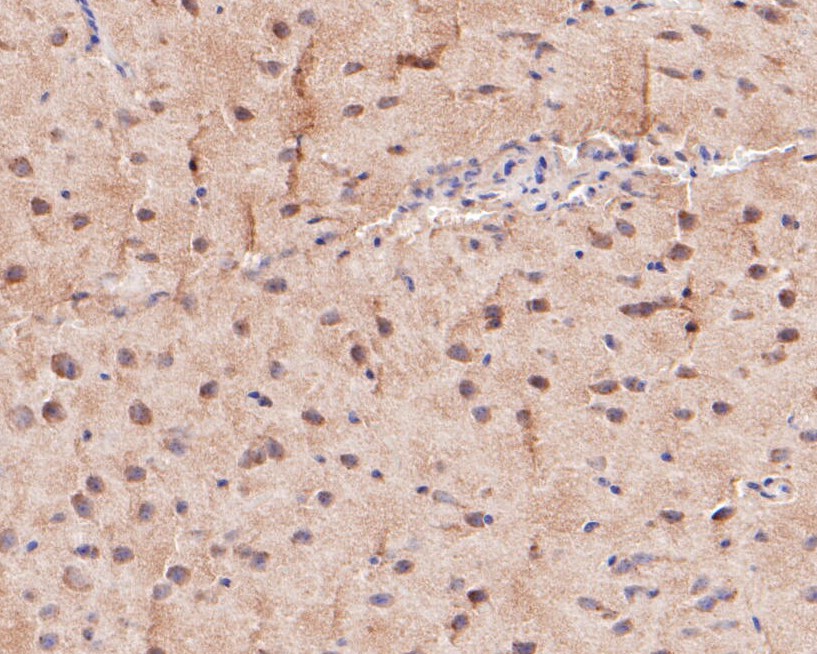
Fig3: Immunohistochemical analysis of paraffin-embedded mouse brain tissue using anti-KV1.1 antibody. The section was pre-treated using heat mediated antigen retrieval with Tris-EDTA buffer (pH 8.0-8.4) for 20 minutes.The tissues were blocked in 5% BSA for 30 minutes at room temperature, washed with ddH2O and PBS, and then probed with the primary antibody (ER1901-23, 1/200) for 30 minutes at room temperature. The detection was performed using an HRP conjugated compact polymer system. DAB was used as the chromogen. Tissues were counterstained with hematoxylin and mounted with DPX.Application
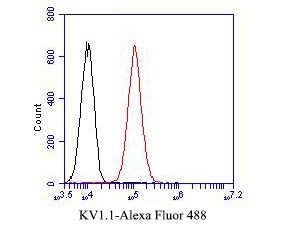
Fig4: Flow cytometric analysis of KV1.1 was done on A549 cells. The cells were fixed, permeabilized and stained with the primary antibody (ER1901-23, 1/50) (red). After incubation of the primary antibody at room temperature for an hour, the cells were stained with a Alexa Fluor 488-conjugated Goat anti-Rabbit IgG Secondary antibody at 1/1000 dilution for 30 minutes.Unlabelled sample was used as a control (cells without incubation with primary antibody; black). FC M| Product Name | KV1.1 |
|---|---|
| Antibody Type | Primary Antibodies |
| Antigen Alias | AEMK antibody EA1 antibody Episodic ataxia with myokymia antibody HBK1 antibody HUK1 antibody Kca1 1 antibody Kcna1 antibody KCNA1_HUMAN antibody Kcpvd antibody KV1.1 antibody MBK1 antibody mceph antibody MGC124402 antibody MGC126782 antibody MGC138385 antibody MK1 antibody MK1, mouse, homolog of KV1.1 antibody Potassium channel protein 1 antibody Potassium voltage gated channel shaker related subfamily member 1 antibody Potassium voltage gated channel subfamily A member 1 antibody Potassium voltage gated channel, shaker related subfamily, member 1 (episodic ataxia with myokymia) antibody Potassium voltage-gated channel subfamily A member 1 antibody RBK1 antibody RCK1 antibody Shak antibody Shaker related subfamily member 1 antibody Voltage gated potassium channel subunit Kv1.1 antibody Voltage-gated K(+) channel HuKI antibody Voltage-gated potassium channel HBK1 antibody Voltage-gated potassium channel subunit Kv1.1 antibody |
| Product description | Voltage-gated potassium channel that mediates transmembrane potassium transport in excitable membranes, primarily in the brain and the central nervous system, but also in the kidney. Contributes to the regulation of the membrane potential and nerve signaling, and prevents neuronal hyperexcitability. Forms tetrameric potassium-selective channels through which potassium ions pass in accordance with their electrochemical gradient. The channel alternates between opened and closed conformations in response to the voltage difference across the membrane. Channel properties are modulated by cytoplasmic beta subunits that regulate the subcellular location of the alpha subunits and promote rapid inactivation of delayed rectifier potassium channels. In vivo, membranes probably contain a mixture of heteromeric potassium channel complexes, making it difficult to assign currents observed in intact tissues to any particular potassium channel family member. Regulates neuronal excitability in hippocampus, especially in mossy fibers and medial perforant path axons, preventing neuronal hyperexcitability. Response to toxins that are selective for KCNA1, respectively for KCNA2, suggests that heteromeric potassium channels composed of both KCNA1 and KCNA2 play a role in pacemaking and regulate the output of deep cerebellar nuclear neurons. |
| Immunogen | Synthetic peptide within rat KV1.1 aa 190-250. |
| Clonality | Polyclonal |
|---|---|
| Isotype | IgG |
| Host Species | Rabbit |
| Tested Applications | WBIHC-PFC |
| WB:1:500-1:2,000 IHC-P:1:50-1:200 FC:1:50-1:100 |
|
| Species Reactivity | HumanMouseRat |
| Concentration | 1mg/mL |
| Alternative Names | AEMK antibody
EA1 antibody
Episodic ataxia with myokymia antibody HBK1 antibody HUK1 antibody Kca1 1 antibody Kcna1 antibody KCNA1_HUMAN antibody Kcpvd antibody KV1.1 antibody MBK1 antibody mceph antibody MGC124402 antibody MGC126782 antibody MGC138385 antibody MK1 antibody MK1 mouse homolog of KV1.1 antibody Potassium channel protein 1 antibody Potassium voltage gated channel shaker related subfamily member 1 antibody Potassium voltage gated channel subfamily A member 1 antibody Potassium voltage gated channel shaker related subfamily member 1 (episodic ataxia with myokymia) antibody Potassium voltage-gated channel subfamily A member 1 antibody RBK1 antibody RCK1 antibody Shak antibody Shaker related subfamily member 1 antibody Voltage gated potassium channel subunit Kv1.1 antibody Voltage-gated K(+) channel HuKI antibody Voltage-gated potassium channel HBK1 antibody Voltage-gated potassium channel subunit Kv1.1 antibody |
|---|---|
| Molecular Weight(MW) | 56 kDa (Predicted band size) |
| Cellular Localization | Endoplasmic reticulum. Plasma membrane. Other locations. |
Application
Fig1: Western blot analysis of KV1.1 on rat brain tissue lysate. Proteins were transferred to a PVDF membrane and blocked with 5% BSA in PBS for 1 hour at room temperature. The primary antibody (ER1901-23, 1/500) was used in 5% BSA at room temperature for 2 hours. Goat Anti-Rabbit IgG - HRP Secondary Antibody (HA1001) at 1:5,000 dilution was used for 1 hour at room temperature.
Application
Fig2: Immunohistochemical analysis of paraffin-embedded rat spinal cord tissue using anti-KV1.1 antibody. The section was pre-treated using heat mediated antigen retrieval with Tris-EDTA buffer (pH 8.0-8.4) for 20 minutes.The tissues were blocked in 5% BSA for 30 minutes at room temperature, washed with ddH2O and PBS, and then probed with the primary antibody (ER1901-23, 1/200) for 30 minutes at room temperature. The detection was performed using an HRP conjugated compact polymer system. DAB was used as the chromogen. Tissues were counterstained with hematoxylin and mounted with DPX.
Application
Fig3: Immunohistochemical analysis of paraffin-embedded mouse brain tissue using anti-KV1.1 antibody. The section was pre-treated using heat mediated antigen retrieval with Tris-EDTA buffer (pH 8.0-8.4) for 20 minutes.The tissues were blocked in 5% BSA for 30 minutes at room temperature, washed with ddH2O and PBS, and then probed with the primary antibody (ER1901-23, 1/200) for 30 minutes at room temperature. The detection was performed using an HRP conjugated compact polymer system. DAB was used as the chromogen. Tissues were counterstained with hematoxylin and mounted with DPX.
Application
Fig4: Flow cytometric analysis of KV1.1 was done on A549 cells. The cells were fixed, permeabilized and stained with the primary antibody (ER1901-23, 1/50) (red). After incubation of the primary antibody at room temperature for an hour, the cells were stained with a Alexa Fluor 488-conjugated Goat anti-Rabbit IgG Secondary antibody at 1/1000 dilution for 30 minutes.Unlabelled sample was used as a control (cells without incubation with primary antibody; black). FC M| Positive Control | Rat brain tissue lysate, rat spinal cord tissue, mouse brain tissue, A549. |
|---|---|
| Application Notes | WB:1:500-1:2,000 IHC-P:1:50-1:200 FC:1:50-1:100 |
| Form | Liquid |
|---|---|
| Storage Instructions | Store at +4℃ after thawing. Aliquot store at -20℃. Avoid repeated freeze / thaw cycles. |
| Storage Buffer | 1*TBS (pH7.4), 1%BSA, 50%Glycerol. Preservative: 0.05% Sodium Azide. |


