Application
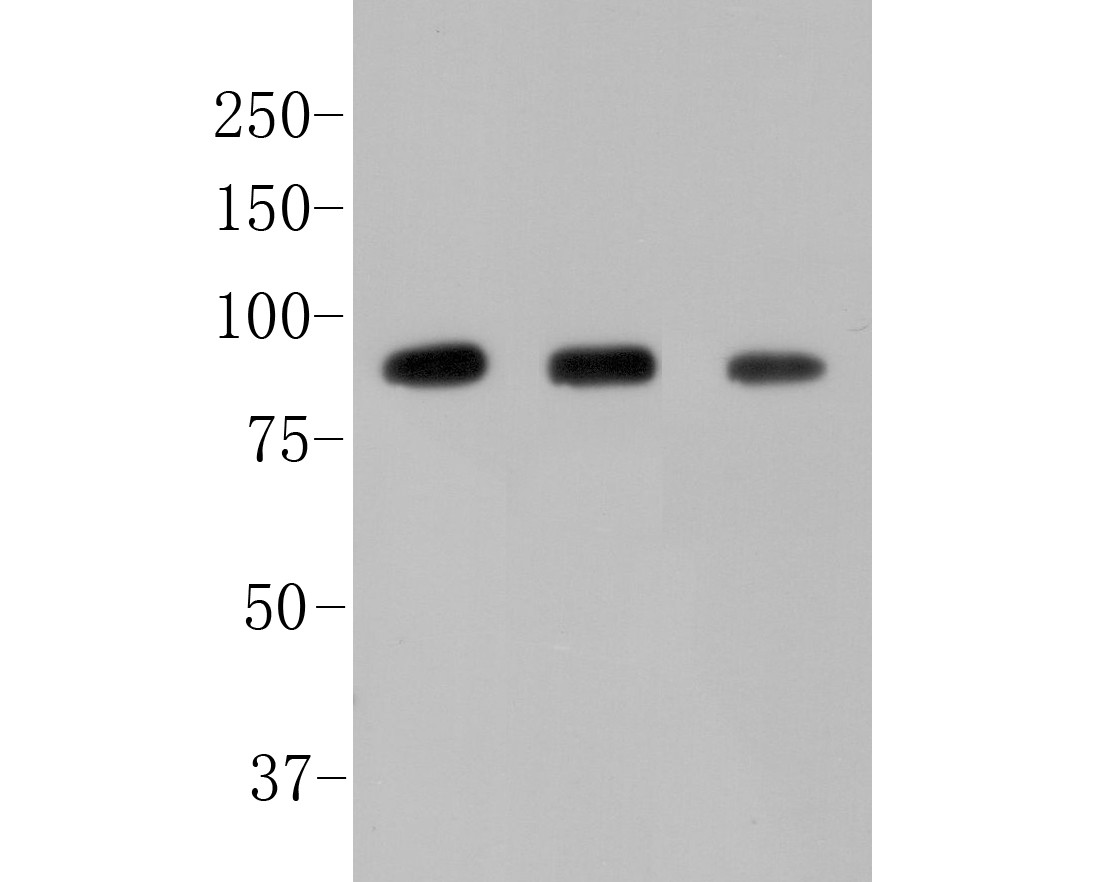
Fig1: Western blot analysis of Alpha-dystroglycan on different lysates. Proteins were transferred to a PVDF membrane and blocked with 5% BSA in PBS for 1 hour at room temperature. The primary antibody (ER1901-72, 1/100) was used in 5% BSA at room temperature for 2 hours. Goat Anti-Rabbit IgG - HRP Secondary Antibody (HA1001) at 1:5,000 dilution was used for 1 hour at room temperature. Positive control: Lane 1: SkBr3 cell lysate Lane 2: Mouse placenta tissue lysate Lane3: Siha cell lysateApplication
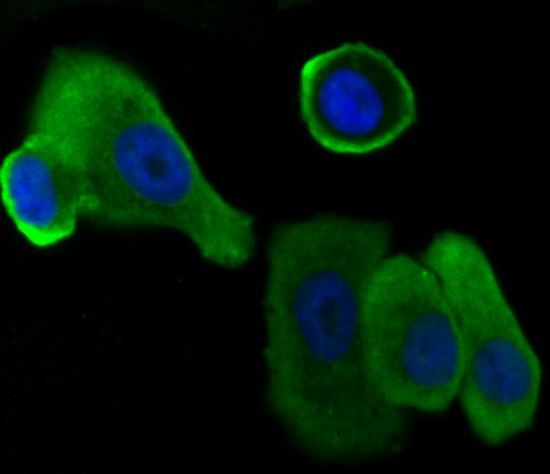
Fig2: ICC staining of Alpha-dystroglycan in SkBr3 cells (green). Formalin fixed cells were permeabilized with 0.1% Triton X-100 in TBS for 10 minutes at room temperature and blocked with 1% Blocker BSA for 15 minutes at room temperature. Cells were probed with the primary antibody (ER1901-72, 1/100) for 1 hour at room temperature, washed with PBS. Alexa Fluor®488 Goat anti-Rabbit IgG was used as the secondary antibody at 1/100 dilution. The nuclear counter stain is DAPI (blue).Application
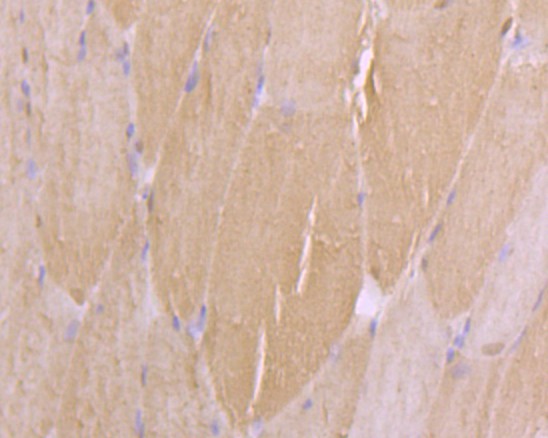
Fig3: Immunohistochemical analysis of paraffin-embedded Rat skeletal muscle tissue using anti-Alpha-dystroglycan antibody. The section was pre-treated using heat mediated antigen retrieval with sodium citrate buffer (pH 6.0) for 20 minutes. The tissues were blocked in 5% BSA for 30 minutes at room temperature, washed with ddH2O and PBS, and then probed with the primary antibody (ER1901-72, 1/100) for 30 minutes at room temperature. The detection was performed using an HRP conjugated compact polymer system. DAB was used as the chromogen. Tissues were counterstained with hematoxylin and mounted with DPX.Application
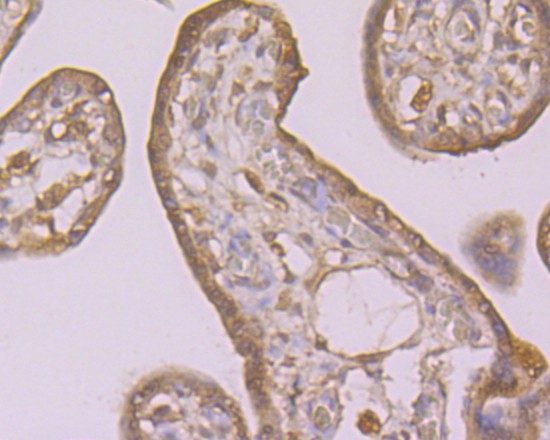
Fig4: Immunohistochemical analysis of paraffin-embedded human placenta tissue using anti-Alpha-dystroglycan antibody. The section was pre-treated using heat mediated antigen retrieval with sodium citrate buffer (pH 6.0) for 20 minutes. The tissues were blocked in 5% BSA for 30 minutes at room temperature, washed with ddH2O and PBS, and then probed with the primary antibody (ER1901-72, 1/100) for 30 minutes at room temperature. The detection was performed using an HRP conjugated compact polymer system. DAB was used as the chromogen. Tissues were counterstained with hematoxylin and mounted with DPX.Application
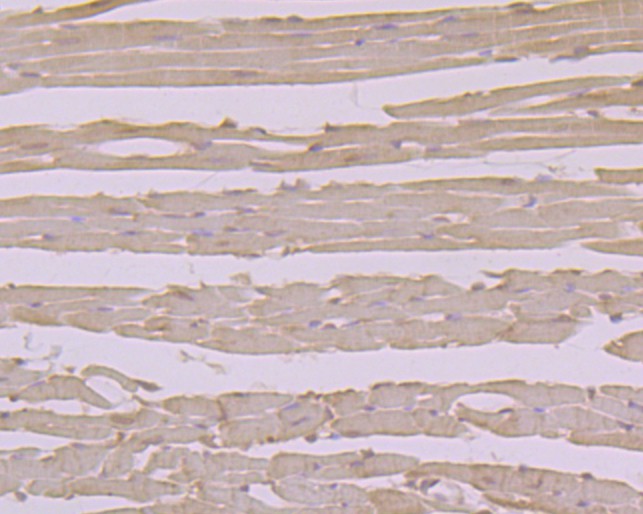
Fig5: Immunohistochemical analysis of paraffin-embedded Mouse heart tissue using anti-Alpha-dystroglycan antibody. The section was pre-treated using heat mediated antigen retrieval with sodium citrate buffer (pH 6.0) for 20 minutes. The tissues were blocked in 5% BSA for 30 minutes at room temperature, washed with ddH2O and PBS, and then probed with the primary antibody (ER1901-72, 1/100) for 30 minutes at room temperature. The detection was performed using an HRP conjugated compact polymer system. DAB was used as the chromogen. Tissues were counterstained with hematoxylin and mounted with DPX.Application
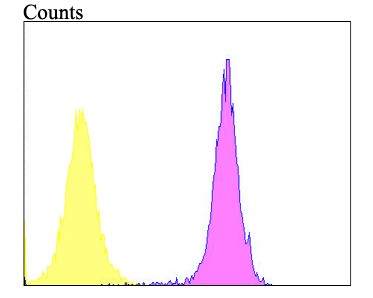
Fig6: Flow cytometric analysis of Alpha-dystroglycan was done on A431 cells. The cells were fixed, permeabilized and stained with the primary antibody (ER1901-72, 1/100) (purple). After incubation of the primary antibody at room temperature for an hour, the cells were stained with a Alexa Fluor 488-conjugated goat anti-rabbit IgG Secondary antibody at 1/500 dilution for 30 minutes.Unlabelled sample was used as a control (cells without incubation with primary antibody; yellow).| Product Name | Alpha-dystroglycan |
|---|---|
| Antibody Type | Primary Antibodies |
| Antigen Alias | 156DAG antibody A3a antibody AGRNR antibody Alpha dystroglycan antibody Alpha-DG antibody Beta-DG antibody Beta-dystroglycan antibody DAG antibody Dag1 antibody DAG1_HUMAN antibody Dystroglycan 1 (dystrophin associated glycoprotein 1) antibody Dystroglycan antibody Dystrophin associated glycoprotein 1 antibody Dystrophin-associated glycoprotein 1 antibody OTTHUMP00000210857 antibody OTTHUMP00000210858 antibody |
| Product description | Dystroglycan (DG) is a cell surface receptor for several extracellular matrix molecules including laminins, Agrin and Perlecan. Dystroglycan function is required for the formation of basement membranes in early development and the organization of Laminin on the cell surface. α-dystroglycan is a membrane- associated, extracellular glycoprotein that is anchored to the cell-membrane by binding to the transmembrane glycoprotein α-dystroglycan to form an α/β-dystroglycan-complex. Additionally, dystroglycan is part of a multimolecular complex, where it associates with dystrophin, at the sarcolemma, to form the dystrophin-associated protein complex, or with utrophin, at the neuromuscular junction, to form the utrophin-associated protein complex. Dystroglycan is also thought to participate in the clustering of nicotinic acetylcholine receptors at the neuromuscular junction. |
| Immunogen | Synthetic peptide within Human Alpha-dystroglycan aa 20-55. |
| Clonality | Polyclonal |
|---|---|
| Isotype | IgG |
| Host Species | Rabbit |
| Tested Applications | WBIHCICCFC |
| WB:1:500-1 2000IHC:1:50-1:200 ICC:1:50-1:200 FC:1:50-1:200 |
|
| Species Reactivity | HumanMouseRat |
| Concentration | 1mg/ml |
| Alternative Names | 156DAG antibody
A3a antibody
AGRNR antibody Alpha dystroglycan antibody Alpha-DG antibody Beta-DG antibody Beta-dystroglycan antibody DAG antibody Dag1 antibody DAG1_HUMAN antibody Dystroglycan 1 (dystrophin associated glycoprotein 1) antibody Dystroglycan antibody Dystrophin associated glycoprotein 1 antibody Dystrophin-associated glycoprotein 1 antibody OTTHUMP00000210857 antibody OTTHUMP00000210858 antibody |
|---|---|
| Molecular Weight(MW) | Predicted band size 97 kDa. |
| Cellular Localization | Cell junction. Cytoplasm. Cytoskeleton. Membrane. Secreted. Synapse. Nucleus. |
Application
Fig1: Western blot analysis of Alpha-dystroglycan on different lysates. Proteins were transferred to a PVDF membrane and blocked with 5% BSA in PBS for 1 hour at room temperature. The primary antibody (ER1901-72, 1/100) was used in 5% BSA at room temperature for 2 hours. Goat Anti-Rabbit IgG - HRP Secondary Antibody (HA1001) at 1:5,000 dilution was used for 1 hour at room temperature. Positive control: Lane 1: SkBr3 cell lysate Lane 2: Mouse placenta tissue lysate Lane3: Siha cell lysate
Application
Fig2: ICC staining of Alpha-dystroglycan in SkBr3 cells (green). Formalin fixed cells were permeabilized with 0.1% Triton X-100 in TBS for 10 minutes at room temperature and blocked with 1% Blocker BSA for 15 minutes at room temperature. Cells were probed with the primary antibody (ER1901-72, 1/100) for 1 hour at room temperature, washed with PBS. Alexa Fluor®488 Goat anti-Rabbit IgG was used as the secondary antibody at 1/100 dilution. The nuclear counter stain is DAPI (blue).
Application
Fig3: Immunohistochemical analysis of paraffin-embedded Rat skeletal muscle tissue using anti-Alpha-dystroglycan antibody. The section was pre-treated using heat mediated antigen retrieval with sodium citrate buffer (pH 6.0) for 20 minutes. The tissues were blocked in 5% BSA for 30 minutes at room temperature, washed with ddH2O and PBS, and then probed with the primary antibody (ER1901-72, 1/100) for 30 minutes at room temperature. The detection was performed using an HRP conjugated compact polymer system. DAB was used as the chromogen. Tissues were counterstained with hematoxylin and mounted with DPX.
Application
Fig4: Immunohistochemical analysis of paraffin-embedded human placenta tissue using anti-Alpha-dystroglycan antibody. The section was pre-treated using heat mediated antigen retrieval with sodium citrate buffer (pH 6.0) for 20 minutes. The tissues were blocked in 5% BSA for 30 minutes at room temperature, washed with ddH2O and PBS, and then probed with the primary antibody (ER1901-72, 1/100) for 30 minutes at room temperature. The detection was performed using an HRP conjugated compact polymer system. DAB was used as the chromogen. Tissues were counterstained with hematoxylin and mounted with DPX.
Application
Fig5: Immunohistochemical analysis of paraffin-embedded Mouse heart tissue using anti-Alpha-dystroglycan antibody. The section was pre-treated using heat mediated antigen retrieval with sodium citrate buffer (pH 6.0) for 20 minutes. The tissues were blocked in 5% BSA for 30 minutes at room temperature, washed with ddH2O and PBS, and then probed with the primary antibody (ER1901-72, 1/100) for 30 minutes at room temperature. The detection was performed using an HRP conjugated compact polymer system. DAB was used as the chromogen. Tissues were counterstained with hematoxylin and mounted with DPX.
Application
Fig6: Flow cytometric analysis of Alpha-dystroglycan was done on A431 cells. The cells were fixed, permeabilized and stained with the primary antibody (ER1901-72, 1/100) (purple). After incubation of the primary antibody at room temperature for an hour, the cells were stained with a Alexa Fluor 488-conjugated goat anti-rabbit IgG Secondary antibody at 1/500 dilution for 30 minutes.Unlabelled sample was used as a control (cells without incubation with primary antibody; yellow).| Positive Control | SkBr3 cell lysate, mouse placenta tissue lysate, SkBr3, Rat skeletal muscle tissue, human placenta tissue, Mouse heart tissue, A431. |
|---|---|
| Application Notes | WB:1:500-1 2000IHC:1:50-1:200 ICC:1:50-1:200 FC:1:50-1:200 |
| Form | Liquid |
|---|---|
| Storage Instructions | Store at +4℃ after thawing. Aliquot store at -20℃. Avoid repeated freeze / thaw cycles. |
| Storage Buffer | 1*TBS (pH7.4), 1%BSA, 50%Glycerol. Preservative: 0.05% Sodium Azide. |


