Application
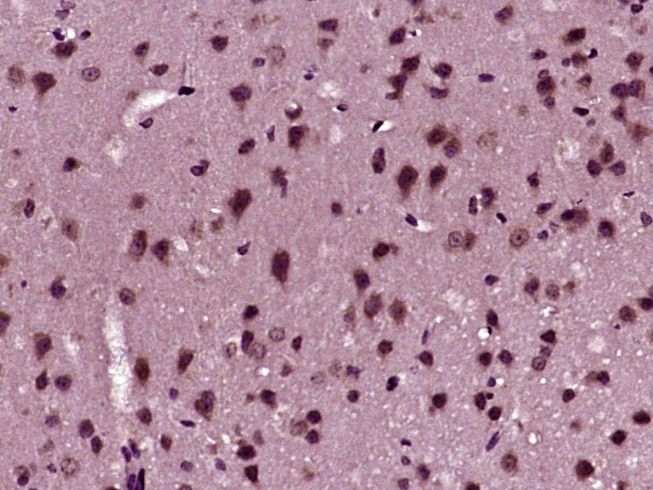
Fig1: Paraformaldehyde-fixed, paraffin embedded (mouse brain tissue); Antigen retrieval by boiling in sodium citrate buffer (pH6.0) for 15min; Block endogenous peroxidase by 3% hydrogen peroxide for 20 minutes; Blocking buffer (normal goat serum) at 37℃ for 30min; Antibody incubation with (BASP1) Polyclonal Antibody, Unconjugated (ER1904-13) at 1:400 overnight at 4℃, followed by operating according to SP Kit(Rabbit) (sp-0023) instructionsand DAB staining.Application
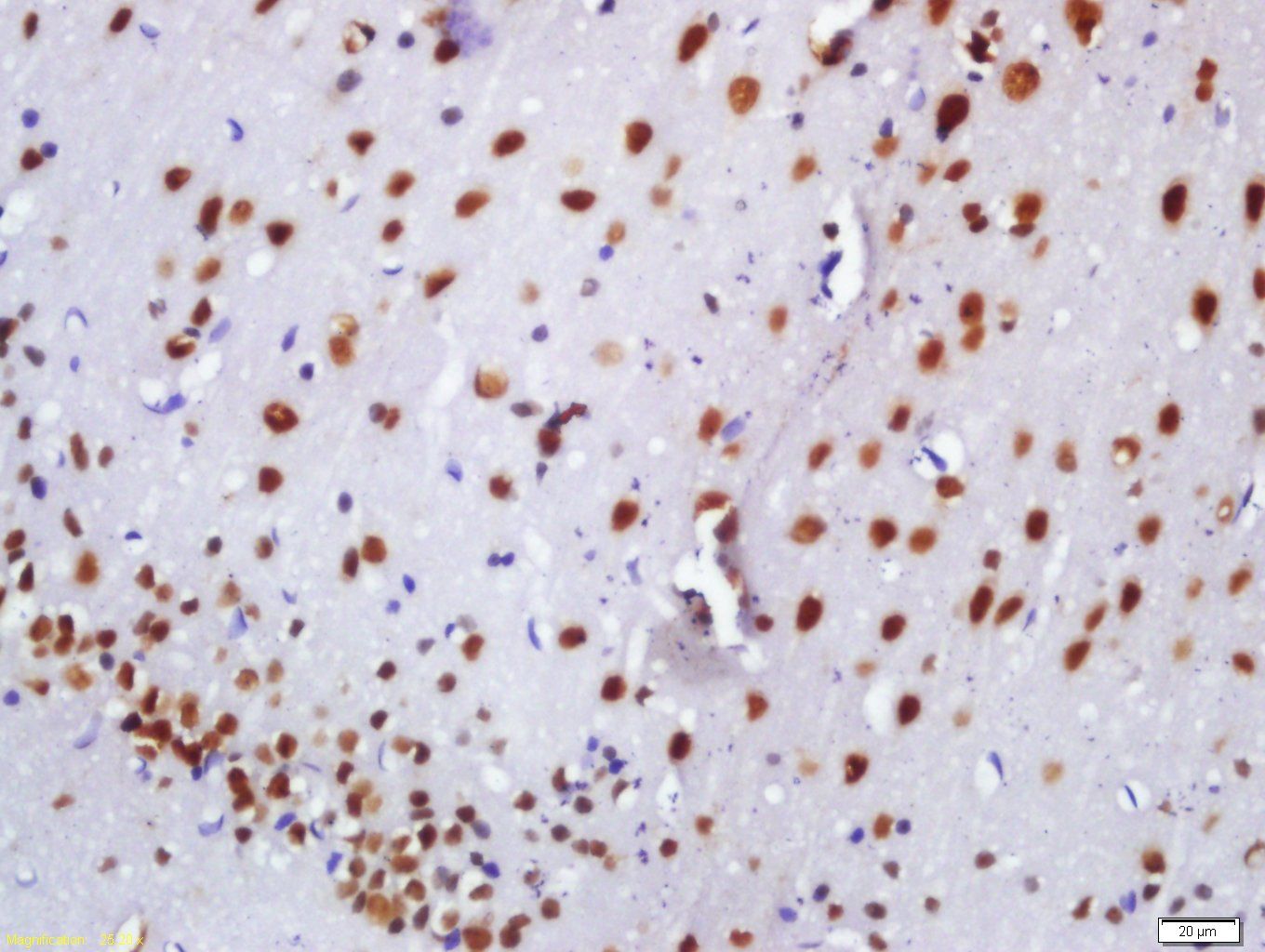
Fig2: Tissue/cell: rat brain tissue; 4% Paraformaldehyde-fixed and paraffin-embedded; Antigen retrieval: citrate buffer ( 0.01M, pH 6.0 ), Boiling bathing for 15min; Block endogenous peroxidase by 3% Hydrogen peroxide for 30min; Blocking buffer (normal goat serum,C-0005) at 37℃ for 20 min; Incubation: Anti-BASP1 Polyclonal Antibody, Unconjugated(ER1904-13) 1:200, overnight at 4℃, followed by conjugation to the secondary antibody(SP-0023) and DAB(C-0010) stainingApplication
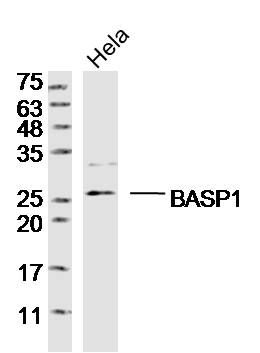
Fig3: Sample:Hela (Human)Cell Lysate at 40 ug Primary: Anti-BASP1(ER1904-13)at 1/300 dilution Secondary: IRDye800CW Goat Anti-RabbitIgG at 1/20000 dilution Predicted band size: 25kD Observed band size: 26kD| Product Name | BASP1 |
|---|---|
| Antibody Type | Primary Antibodies |
| Antigen Alias | BASP 1 BASP-1 BASP1 protein Brain abundant membrane attached signal protein 1 Brain Abundant Signal Protein Membrane Attached 1 Brain Acid Soluble Protein 1 CAP 23 CAP23 MGC8555 NAP 22 NAP-22 NAP22 Neuronal axonal membrane protein NAP 22 Neuronal tissue enriched acidic protein 22 kDa neuronal tissue enriched acidic protein BASP1_HUMAN. |
| Product description | BASP1 is a brain abundant membrane bound protein with several transient phosphorylation sites and PEST motifs. BASP1 binds calmodulin, is phosphorylated by protein kinase C and undergoes N-terminal myristoylation. BASP1 is expressed specifically in nervous tissue. Intercellular signaling and nerve outgrowth are influenced by a number of proteins expressed at nerve endings and synapses of which BASP1 is one. |
| Immunogen | KLH conjugated synthetic peptide derived from human BASP1/Nap22 3-100/227 |
| Clonality | Polyclonal |
|---|---|
| Isotype | IgG |
| Host Species | Rabbit |
| Tested Applications | WBIHC-P |
| WB:1:500-2000: IHC-P:1:400-800: |
|
| Species Reactivity | HumanMouseRatChickenDogPigCowHorseRabbit |
| Concentration | 1mg/ml |
| Alternative Names | BASP 1 BASP-1 BASP1 protein Brain abundant membrane attached signal protein 1 Brain Abundant Signal Protein Membrane Attached 1 Brain Acid Soluble Protein 1 CAP 23 CAP23 MGC8555 NAP 22 NAP-22 NAP22 Neuronal axonal membrane protein NAP 22 Neuronal tissue enriched acidic protein 22 kDa neuronal tissue enriched acidic protein BASP1_HUMAN. |
|---|---|
| Molecular Weight(MW) | 25 KDa |
| Cellular Localization | Cell membrane; Lipid-anchor. Cell projection, growth cone. Note=Associated with the membranes of growth cones that form the tips of elongating axons. |
| SwissProt ID | P80723 |
|---|
Application
Fig1: Paraformaldehyde-fixed, paraffin embedded (mouse brain tissue); Antigen retrieval by boiling in sodium citrate buffer (pH6.0) for 15min; Block endogenous peroxidase by 3% hydrogen peroxide for 20 minutes; Blocking buffer (normal goat serum) at 37℃ for 30min; Antibody incubation with (BASP1) Polyclonal Antibody, Unconjugated (ER1904-13) at 1:400 overnight at 4℃, followed by operating according to SP Kit(Rabbit) (sp-0023) instructionsand DAB staining.
Application
Fig2: Tissue/cell: rat brain tissue; 4% Paraformaldehyde-fixed and paraffin-embedded; Antigen retrieval: citrate buffer ( 0.01M, pH 6.0 ), Boiling bathing for 15min; Block endogenous peroxidase by 3% Hydrogen peroxide for 30min; Blocking buffer (normal goat serum,C-0005) at 37℃ for 20 min; Incubation: Anti-BASP1 Polyclonal Antibody, Unconjugated(ER1904-13) 1:200, overnight at 4℃, followed by conjugation to the secondary antibody(SP-0023) and DAB(C-0010) staining
Application
Fig3: Sample:Hela (Human)Cell Lysate at 40 ug Primary: Anti-BASP1(ER1904-13)at 1/300 dilution Secondary: IRDye800CW Goat Anti-RabbitIgG at 1/20000 dilution Predicted band size: 25kD Observed band size: 26kD| Positive Control | Brain |
|---|---|
| Application Notes | WB:1:500-2000: IHC-P:1:400-800: |
| Form | Liquid |
|---|---|
| Storage Instructions | Store at -20℃ for one year. Avoid repeated freeze/thaw cycles. The lyophilized antibody is stable at room temperature for at least one month and for greater than a year when kept at -20℃. When reconstituted in sterile pH 7.4 0.01M PBS or diluent of antibody the antibody is stable for at least two weeks at 2-4℃. |
| Storage Buffer | 0.01M TBS(pH7.4) with 1% BSA, 0.03% Proclin300 and 50% Glycerol. |


