Application
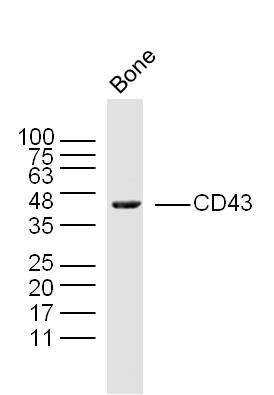
Fig1: Sample: Bone (Mouse) Lysate at 40 ug Primary: Anti- CD43 (ER1905-92) at 1/300 dilution Secondary: IRDye800CW Goat Anti-Rabbit IgG at 1/20000 dilution Predicted band size: 38 kD Observed band size: 38 kD| Product Name | CD43 |
|---|---|
| Antibody Type | Primary Antibodies |
| Antigen Alias | CD 43 CD43 CD43 antigen Galactoglycoprotein Galactoglycoprotein GALGP GPL 115 GPL115 Human gene for sialophorin Leucocyte sialoglycoprotein Leucocyte sialoglycoprotein LEUK_HUMAN Leukocyte sialoglycoprotein Leukosialin LSN Sialophorin (leukosialin) Sialophorin SPN. |
| Product description | One of the major glycoproteins of thymocytes and T lymphocytes. Plays a role in the physicochemical properties of the T-cell surface and in lectin binding. Presents carbohydrate ligands to selectins. Has an extended rodlike structure that could protrude above the glycocalyx of the cell and allow multiple glycan chains to be accessible for binding. Is a counter-receptor for SN/Siglec-1. During T-cell activation is actively removed from the T-cell-APC (antigen-presenting cell) contact site thus suggesting a negative regulatory role in adaptive immune response. |
| Immunogen | KLH conjugated synthetic peptide derived from human CD43 101-200/400 |
| Clonality | Polyclonal |
|---|---|
| Isotype | IgG |
| Host Species | Rabbit |
| Tested Applications | WB |
| WB:1:500-2000: |
|
| Species Reactivity | HumanMouseRat |
| Concentration | 1mg/ml |
| Alternative Names | CD 43 CD43 CD43 antigen Galactoglycoprotein Galactoglycoprotein GALGP GPL 115 GPL115 Human gene for sialophorin Leucocyte sialoglycoprotein Leucocyte sialoglycoprotein LEUK_HUMAN Leukocyte sialoglycoprotein Leukosialin LSN Sialophorin (leukosialin) Sialophorin SPN. |
|---|---|
| Molecular Weight(MW) | 38 KDa |
| Cellular Localization | Membrane; Single-pass type I membrane protein. |
| SwissProt ID | P16150 |
|---|
Application
Fig1: Sample: Bone (Mouse) Lysate at 40 ug Primary: Anti- CD43 (ER1905-92) at 1/300 dilution Secondary: IRDye800CW Goat Anti-Rabbit IgG at 1/20000 dilution Predicted band size: 38 kD Observed band size: 38 kD| Positive Control | Cell surface of thymocytes, T-lymphocytes, neutrophils, plasma cells and myelomas. |
|---|---|
| Application Notes | WB:1:500-2000: |
| Form | Liquid |
|---|---|
| Storage Instructions | Store at -20℃ for one year. Avoid repeated freeze/thaw cycles. The lyophilized antibody is stable at room temperature for at least one month and for greater than a year when kept at -20℃. When reconstituted in sterile pH 7.4 0.01M PBS or diluent of antibody the antibody is stable for at least two weeks at 2-4℃. |
| Storage Buffer | Preservative: 15mM Sodium Azide, Constituents: 1% BSA, 0.01M PBS, pH 7.4 |


