Application
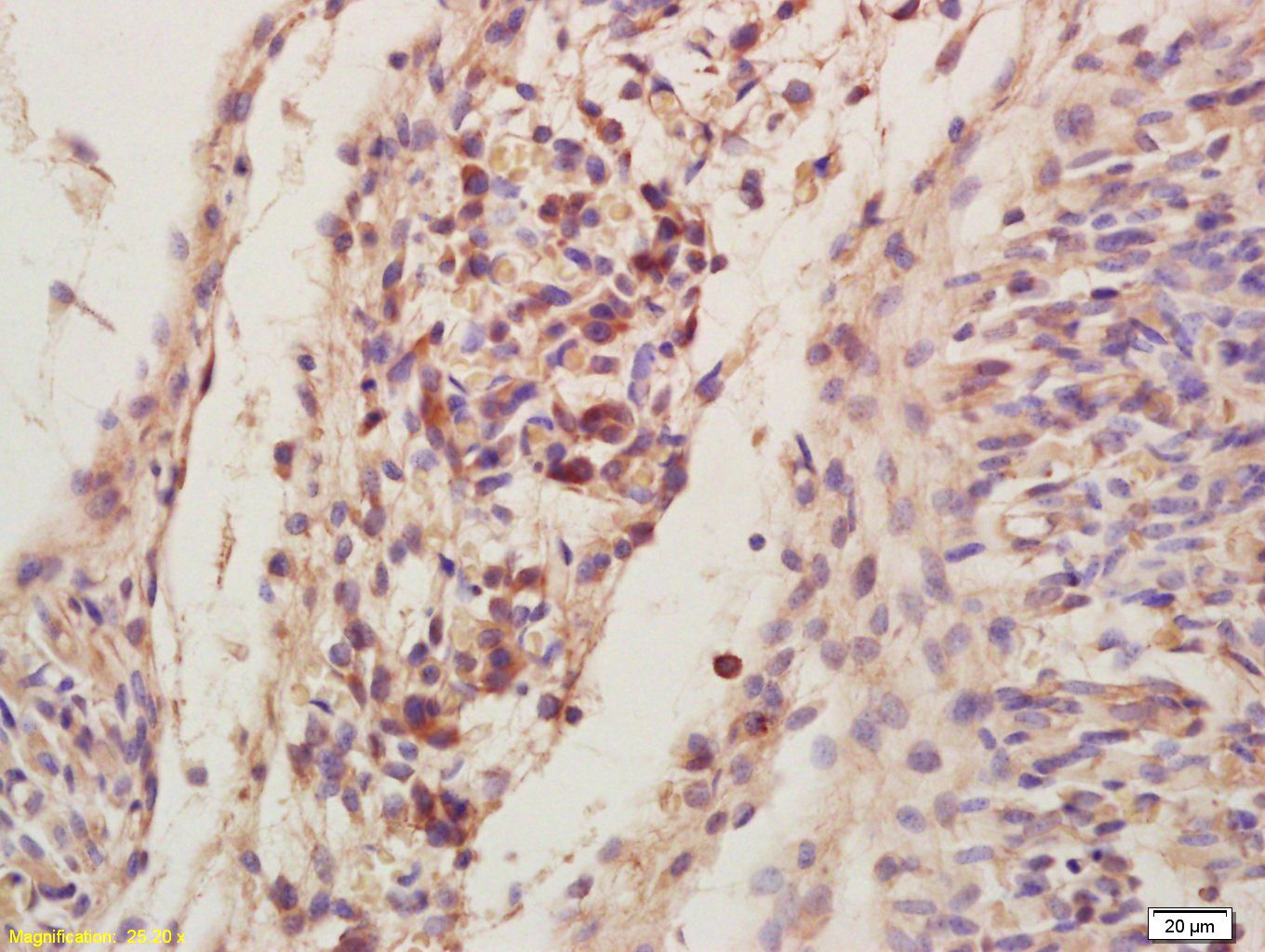
Fig1: Tissue/cell: Mouse embryos; 4% Paraformaldehyde-fixed and paraffin-embedded; Antigen retrieval: citrate buffer ( 0.01M, pH 6.0 ), Boiling bathing for 15min; Block endogenous peroxidase by 3% Hydrogen peroxide for 30min; Blocking buffer (normal goat serum,C-0005) at 37℃ for 20 min; Incubation: Anti-LIS1 Polyclonal Antibody, Unconjugated(ER1912-39) 1:200, overnight at 4℃, followed by conjugation to the secondary antibody(SP-0023) and DAB(C-0010) stainingApplication
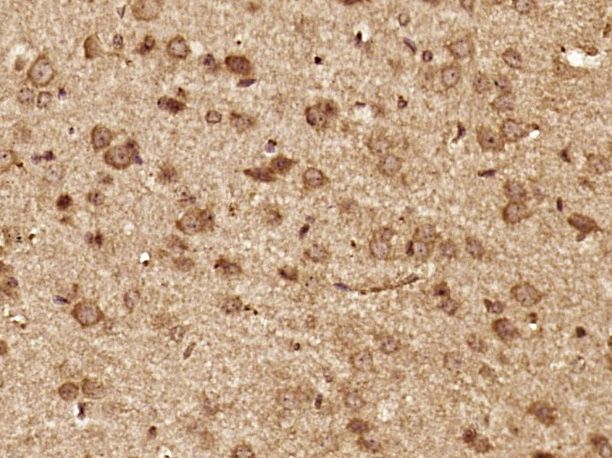
Fig2: Paraformaldehyde-fixed, paraffin embedded (Mouse brain); Antigen retrieval by boiling in sodium citrate buffer (pH6.0) for 15min; Block endogenous peroxidase by 3% hydrogen peroxide for 20 minutes; Blocking buffer (normal goat serum) at 37℃ for 30min; Antibody incubation with (LIS1) Polyclonal Antibody, Unconjugated (ER1912-39) at 1:400 overnight at 4℃, followed by operating according to SP Kit(Rabbit) (sp-0023) instructionsand DAB staining.Application
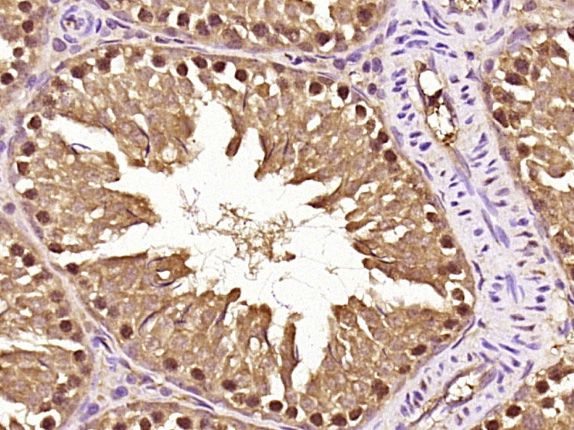
Fig3: Paraformaldehyde-fixed, paraffin embedded (Rat testis); Antigen retrieval by boiling in sodium citrate buffer (pH6.0) for 15min; Block endogenous peroxidase by 3% hydrogen peroxide for 20 minutes; Blocking buffer (normal goat serum) at 37℃ for 30min; Antibody incubation with (LIS1) Polyclonal Antibody, Unconjugated (ER1912-39) at 1:400 overnight at 4℃, followed by operating according to SP Kit(Rabbit) (sp-0023) instructionsand DAB staining.Application
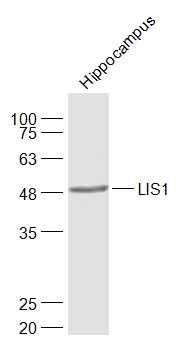
Fig4: Sample: Hippocampus (Mouse) Lysate at 40 ug Primary: Anti-LIS1 (ER1912-39) at 1/1000 dilution Secondary: IRDye800CW Goat Anti-Rabbit IgG at 1/20000 dilution Predicted band size: 47 kD Observed band size: 49 kD| Product Name | LIS1 |
|---|---|
| Antibody Type | Primary Antibodies |
| Antigen Alias | LIS 1 LIS 2 LIS-1 LIS1 LIS1_HUMAN LIS2 Lissencephaly 1 protein Lissencephaly-1 protein MDCR MDS PAF acetylhydrolase 45 kDa subunit PAF AH 45 kDa subunit PAF AH alpha PAF-AH 45 kDa subunit PAF-AH alpha PAFAH alpha PAFAH PAFAH1B1 PAFAHA Platelet activating factor acetylhydrolase 1b regulatory subunit 1 Platelet activating factor acetylhydrolase isoform Ib alpha subunit Platelet-activating factor acetylhydrolase IB subunit alpha. |
| Product description | Required for proper activation of Rho GTPases and actin polymerization at the leading edge of locomoting cerebellar neurons and postmigratory hippocampal neurons in response to calcium influx triggered via NMDA receptors. Non-catalytic subunit of an acetylhydrolase complex which inactivates platelet-activating factor (PAF) by removing the acetyl group at the SN-2 position (By similarity). Positively regulates the activity of the minus-end directed microtubule motor protein dynein. May enhance dynein-mediated microtubule sliding by targeting dynein to the microtubule plus end. Required for several dynein- and microtubule-dependent processes such as the maintenance of Golgi integrity, the peripheral transport of microtubule fragments and the coupling of the nucleus and centrosome. Required during brain development for the proliferation of neuronal precursors and the migration of newly formed neurons from the ventricular/subventricular zone toward the cortical plate. Neuronal migration involves a process called nucleokinesis, whereby migrating cells extend an anterior process into which the nucleus subsequently translocates. During nucleokinesis dynein at the nuclear surface may translocate the nucleus towards the centrosome by exerting force on centrosomal microtubules. May also play a role in other forms of cell locomotion including the migration of fibroblasts during wound healing. |
| Immunogen | KLH conjugated synthetic peptide derived from human LIS1 311-410/410 |
| Clonality | Polyclonal |
|---|---|
| Isotype | IgG |
| Host Species | Rabbit |
| Tested Applications | WBIHC-P |
| WB:1:500-2000: IHC-P:1:400-800: |
|
| Species Reactivity | HumanMouseRat |
| Concentration | 1mg/ml |
| Alternative Names | LIS 1 LIS 2 LIS-1 LIS1 LIS1_HUMAN LIS2 Lissencephaly 1 protein Lissencephaly-1 protein MDCR MDS PAF acetylhydrolase 45 kDa subunit PAF AH 45 kDa subunit PAF AH alpha PAF-AH 45 kDa subunit PAF-AH alpha PAFAH alpha PAFAH PAFAH1B1 PAFAHA Platelet activating factor acetylhydrolase 1b regulatory subunit 1 Platelet activating factor acetylhydrolase isoform Ib alpha subunit Platelet-activating factor acetylhydrolase IB subunit alpha. |
|---|---|
| Molecular Weight(MW) | 47 KDa |
| Cellular Localization | Cytoplasm, cytoskeleton. Cytoplasm, cytoskeleton, centrosome. Cytoplasm, cytoskeleton, spindle (By similarity). Nucleus membrane (Potential). Note=Redistributes to axons during neuronal development. Also localizes to the microtubules of the manchette in elongating spermatids and to the meiotic spindle in spermatocytes (By similarity). Localizes to the plus end of microtubules and to the centrosome. May localize to the nuclear membrane. |
| SwissProt ID | P43034 |
|---|
Application
Fig1: Tissue/cell: Mouse embryos; 4% Paraformaldehyde-fixed and paraffin-embedded; Antigen retrieval: citrate buffer ( 0.01M, pH 6.0 ), Boiling bathing for 15min; Block endogenous peroxidase by 3% Hydrogen peroxide for 30min; Blocking buffer (normal goat serum,C-0005) at 37℃ for 20 min; Incubation: Anti-LIS1 Polyclonal Antibody, Unconjugated(ER1912-39) 1:200, overnight at 4℃, followed by conjugation to the secondary antibody(SP-0023) and DAB(C-0010) staining
Application
Fig2: Paraformaldehyde-fixed, paraffin embedded (Mouse brain); Antigen retrieval by boiling in sodium citrate buffer (pH6.0) for 15min; Block endogenous peroxidase by 3% hydrogen peroxide for 20 minutes; Blocking buffer (normal goat serum) at 37℃ for 30min; Antibody incubation with (LIS1) Polyclonal Antibody, Unconjugated (ER1912-39) at 1:400 overnight at 4℃, followed by operating according to SP Kit(Rabbit) (sp-0023) instructionsand DAB staining.
Application
Fig3: Paraformaldehyde-fixed, paraffin embedded (Rat testis); Antigen retrieval by boiling in sodium citrate buffer (pH6.0) for 15min; Block endogenous peroxidase by 3% hydrogen peroxide for 20 minutes; Blocking buffer (normal goat serum) at 37℃ for 30min; Antibody incubation with (LIS1) Polyclonal Antibody, Unconjugated (ER1912-39) at 1:400 overnight at 4℃, followed by operating according to SP Kit(Rabbit) (sp-0023) instructionsand DAB staining.
Application
Fig4: Sample: Hippocampus (Mouse) Lysate at 40 ug Primary: Anti-LIS1 (ER1912-39) at 1/1000 dilution Secondary: IRDye800CW Goat Anti-Rabbit IgG at 1/20000 dilution Predicted band size: 47 kD Observed band size: 49 kD| Positive Control | Fairly ubiquitous expression in both the frontal and occipital areas of the brain. |
|---|---|
| Application Notes | WB:1:500-2000: IHC-P:1:400-800: |
| Form | Liquid |
|---|---|
| Storage Instructions | Store at -20℃ for one year. Avoid repeated freeze/thaw cycles. The lyophilized antibody is stable at room temperature for at least one month and for greater than a year when kept at -20℃. When reconstituted in sterile pH 7.4 0.01M PBS or diluent of antibody the antibody is stable for at least two weeks at 2-4℃. |
| Storage Buffer | 0.01M TBS(pH7.4) with 1% BSA, 0.03% Proclin300 and 50% Glycerol. |


