Application
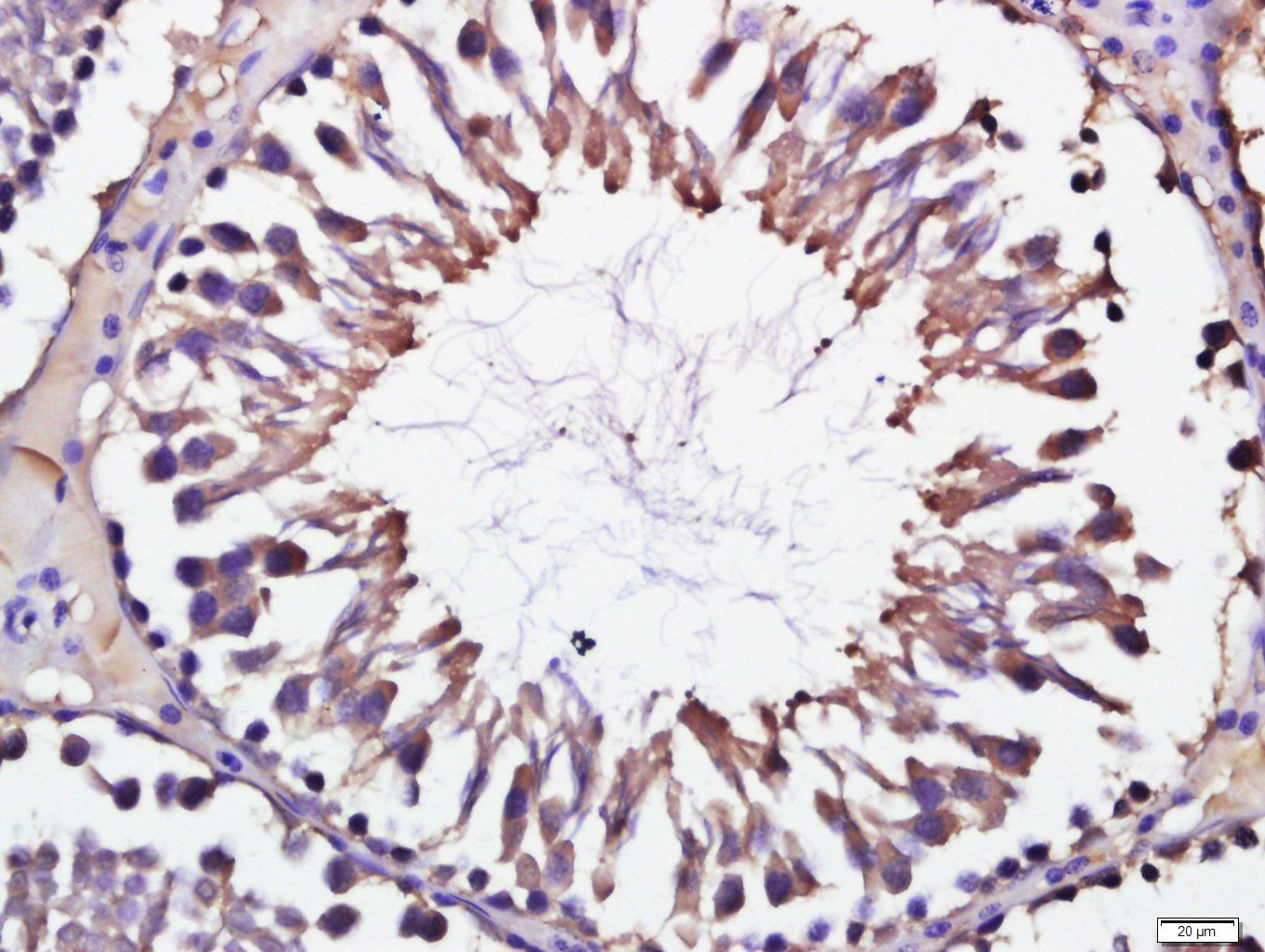
Fig1: Paraformaldehyde-fixed, paraffin embedded (rat testis); Antigen retrieval by boiling in sodium citrate buffer (pH6.0) for 15min; Block endogenous peroxidase by 3% hydrogen peroxide for 20 minutes; Blocking buffer (normal goat serum) at 37℃ for 30min; Antibody incubation with (LKB1) Polyclonal Antibody, Unconjugated (ER1912-41) at 1:400 overnight at 4℃, followed by a conjugated secondary (sp-0023) for 20 minutes and DAB staining.Application
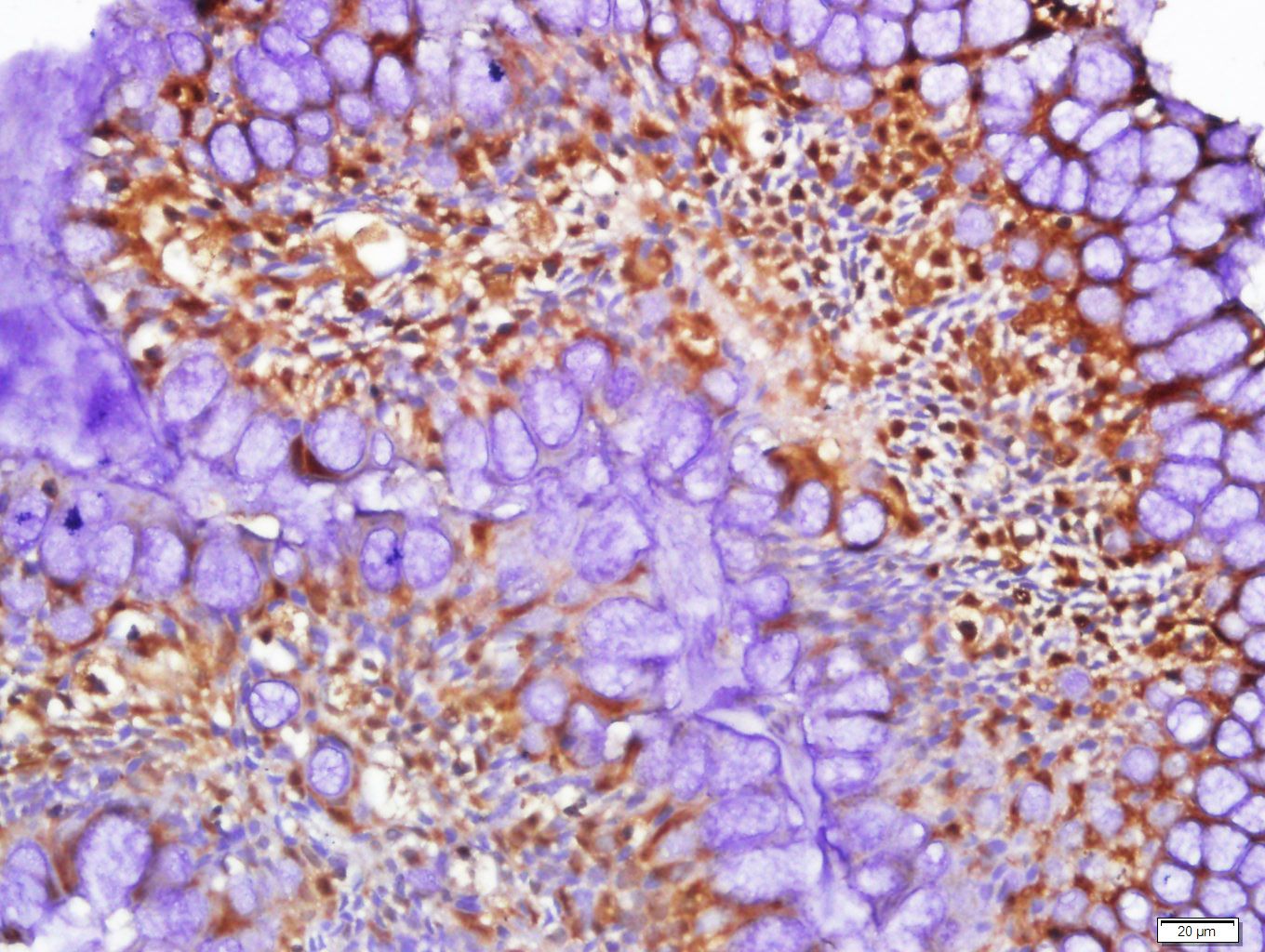
Fig2: Paraformaldehyde-fixed, paraffin embedded (human colon carcinoma); Antigen retrieval by boiling in sodium citrate buffer (pH6.0) for 15min; Block endogenous peroxidase by 3% hydrogen peroxide for 20 minutes; Blocking buffer (normal goat serum) at 37℃ for 30min; Antibody incubation with (LKB1) Polyclonal Antibody, Unconjugated (ER1912-41) at 1:400 overnight at 4℃, followed by a conjugated secondary (sp-0023) for 20 minutes and DAB staining.Application
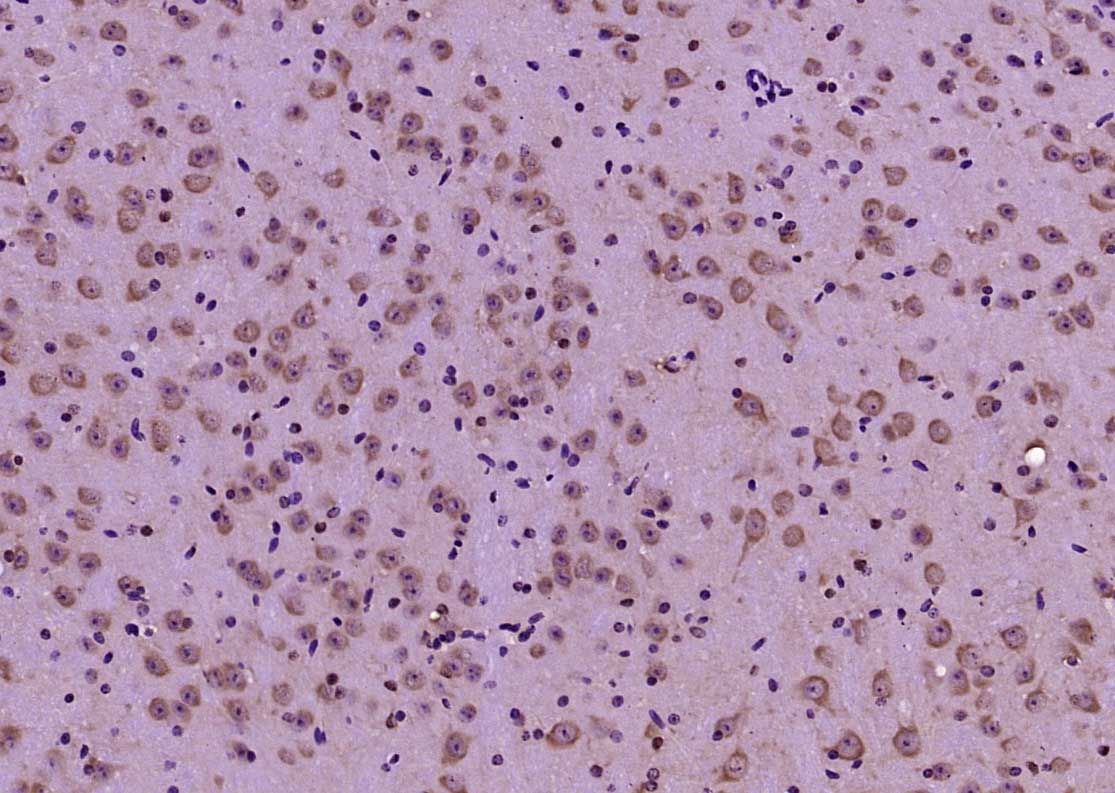
Fig3: Paraformaldehyde-fixed, paraffin embedded (Mouse brain); Antigen retrieval by boiling in sodium citrate buffer (pH6.0) for 15min; Block endogenous peroxidase by 3% hydrogen peroxide for 20 minutes; Blocking buffer (normal goat serum) at 37℃ for 30min; Antibody incubation with (LKB1) Polyclonal Antibody, Unconjugated (ER1912-41) at 1:400 overnight at 4℃, followed by operating according to SP Kit(Rabbit) (sp-0023) instructionsand DAB staining.Application
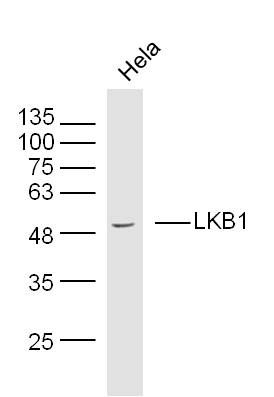
Fig4: Sample: Hela Cell (Human) Lysate at 40 ug Primary: Anti-LKB1 (ER1912-41) at 1/300 dilution Secondary: IRDye800CW Goat Anti-Rabbit IgG at 1/20000 dilution Predicted band size: 48 kD Observed band size: 50 kDApplication
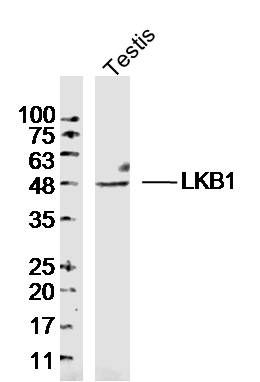
Fig5: Sample: Testis (Mouse) Lysate at 40 ug Primary: Anti-LKB1 (ER1912-41) at 1/300 dilution Secondary: IRDye800CW Goat Anti-Rabbit IgG at 1/20000 dilution Predicted band size: 48 kD Observed band size: 48 kD| Product Name | LKB1 |
|---|---|
| Antibody Type | Primary Antibodies |
| Antigen Alias | LKB1 PJS Renal carcinoma antigen NY-REN-19 Serine/Threonine Kinase 11 Serine/threonine protein kinase 11 Serine/threonine protein kinase LKB1 Serine/threonine-protein kinase 11 Serine/threonine-protein kinase LKB1 Stk11 STK11_HUMAN hLKB1 Liver kinase B1 LKB 1 NY REN 19 antigen Peutz Jeghers syndrome PJS Polarization related protein LKB1 Serine/threonine protein kinase STK11 Serine/threonine-protein kinase XEEK1 STK 11. |
| Product description | Tumor suppressor serine/threonine-protein kinase that controls the activity of AMP-activated protein kinase (AMPK) family members, thereby playing a role in various processes such as cell metabolism, cell polarity, apoptosis and DNA damage response. Acts by phosphorylating the T-loop of AMPK family proteins, leading to promote their activity: phosphorylates PRKAA1, PRKAA2, BRSK1, BRSK2, MARK1, MARK2, MARK3, MARK4, NUAK1, NUAK2, SIK1, SIK2, SIK3 and SNRK but not MELK. Also phosphorylates non-AMPK family proteins such as STRADA and possibly p53/TP53. Acts as a key upstream regulator of AMPK by mediating phosphorylation and activation of AMPK catalytic subunits PRKAA1 and PRKAA2: it thereby regulates inhibition of signaling pathways that promote cell growth and proliferation when energy levels are low, glucose homeostasis in liver, activation of autophagy when cells undergo nutrient deprivation, B-cell differentiation in the germinal center in response to DNA damage. Also acts as a regulator of cellular polarity by remodeling the actin cytoskeleton. Required for cortical neurons polarization by mediating phosphorylation and activation of BRSK1 and BRSK2, leading to axon initiation and specification. Involved in DNA damage response: interacts with p53/TP53 and recruited to the CDKN1A/WAF1 promoter to participate to transcription activation. Able to phosphorylate p53/TP53; the relevance of such result in vivo is however unclear and phosphorylation may be indirect and mediated by downstream STK11/LKB1 kinase NUAK1 Also acts as a mediator p53/TP53-dependent apoptosis via interaction with p53/TP53: translocates to mitochondrion during apoptosis and regulates p53/TP53-dependent apoptosis pathways. |
| Immunogen | KLH conjugated synthetic peptide derived from human LKB1 21-120/433 |
| Clonality | Polyclonal |
|---|---|
| Isotype | IgG |
| Host Species | Rabbit |
| Tested Applications | WBIHC-P |
| WB:1:500-2000: IHC-P:1:400-800: |
|
| Species Reactivity | HumanMouseRatChickenDogCowHorseRabbitSheep |
| Concentration | 1mg/ml |
| Alternative Names | LKB1 PJS Renal carcinoma antigen NY-REN-19 Serine/Threonine Kinase 11 Serine/threonine protein kinase 11 Serine/threonine protein kinase LKB1 Serine/threonine-protein kinase 11 Serine/threonine-protein kinase LKB1 Stk11 STK11_HUMAN hLKB1 Liver kinase B1 LKB 1 NY REN 19 antigen Peutz Jeghers syndrome PJS Polarization related protein LKB1 Serine/threonine protein kinase STK11 Serine/threonine-protein kinase XEEK1 STK 11. |
|---|---|
| Molecular Weight(MW) | 48 KDa |
| Cellular Localization | Nucleus. Cytoplasm. Membrane. Mitochondrion. Note=A small fraction localizes at membranes. Relocates to the cytoplasm when bound to STRAD (STRADA or STRADB) and CAB39/MO25 (CAB39/MO25alpha or CAB39L/MO25beta). Translocates to mitochondrion during apoptosis. |
| SwissProt ID | Q15831 |
|---|
Application
Fig1: Paraformaldehyde-fixed, paraffin embedded (rat testis); Antigen retrieval by boiling in sodium citrate buffer (pH6.0) for 15min; Block endogenous peroxidase by 3% hydrogen peroxide for 20 minutes; Blocking buffer (normal goat serum) at 37℃ for 30min; Antibody incubation with (LKB1) Polyclonal Antibody, Unconjugated (ER1912-41) at 1:400 overnight at 4℃, followed by a conjugated secondary (sp-0023) for 20 minutes and DAB staining.
Application
Fig2: Paraformaldehyde-fixed, paraffin embedded (human colon carcinoma); Antigen retrieval by boiling in sodium citrate buffer (pH6.0) for 15min; Block endogenous peroxidase by 3% hydrogen peroxide for 20 minutes; Blocking buffer (normal goat serum) at 37℃ for 30min; Antibody incubation with (LKB1) Polyclonal Antibody, Unconjugated (ER1912-41) at 1:400 overnight at 4℃, followed by a conjugated secondary (sp-0023) for 20 minutes and DAB staining.
Application
Fig3: Paraformaldehyde-fixed, paraffin embedded (Mouse brain); Antigen retrieval by boiling in sodium citrate buffer (pH6.0) for 15min; Block endogenous peroxidase by 3% hydrogen peroxide for 20 minutes; Blocking buffer (normal goat serum) at 37℃ for 30min; Antibody incubation with (LKB1) Polyclonal Antibody, Unconjugated (ER1912-41) at 1:400 overnight at 4℃, followed by operating according to SP Kit(Rabbit) (sp-0023) instructionsand DAB staining.
Application
Fig4: Sample: Hela Cell (Human) Lysate at 40 ug Primary: Anti-LKB1 (ER1912-41) at 1/300 dilution Secondary: IRDye800CW Goat Anti-Rabbit IgG at 1/20000 dilution Predicted band size: 48 kD Observed band size: 50 kD
Application
Fig5: Sample: Testis (Mouse) Lysate at 40 ug Primary: Anti-LKB1 (ER1912-41) at 1/300 dilution Secondary: IRDye800CW Goat Anti-Rabbit IgG at 1/20000 dilution Predicted band size: 48 kD Observed band size: 48 kD| Positive Control | Ubiquitously expressed. Strongest expression in testis and fetal liver. |
|---|---|
| Application Notes | WB:1:500-2000: IHC-P:1:400-800: |
| Form | Liquid |
|---|---|
| Storage Instructions | Store at -20℃ for one year. Avoid repeated freeze/thaw cycles. The lyophilized antibody is stable at room temperature for at least one month and for greater than a year when kept at -20℃. When reconstituted in sterile pH 7.4 0.01M PBS or diluent of antibody the antibody is stable for at least two weeks at 2-4℃. |
| Storage Buffer | 0.01M TBS(pH7.4) with 1% BSA, 0.03% Proclin300 and 50% Glycerol. |


