WB
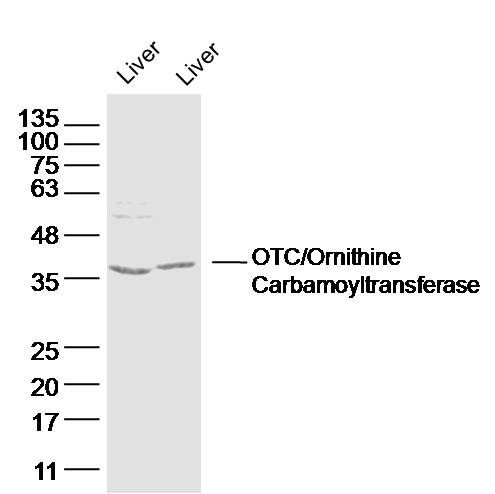
Sample: Liver (Mouse) Lysate at 40 ug, Liver (Rat) Lysate at 40 ug, Primary: Anti- OTC/Ornithine Carbamoyltransferase at 1/300 dilution, Secondary: IRDye800CW Goat Anti-Rabbit IgG at 1/20000 dilution.IHC
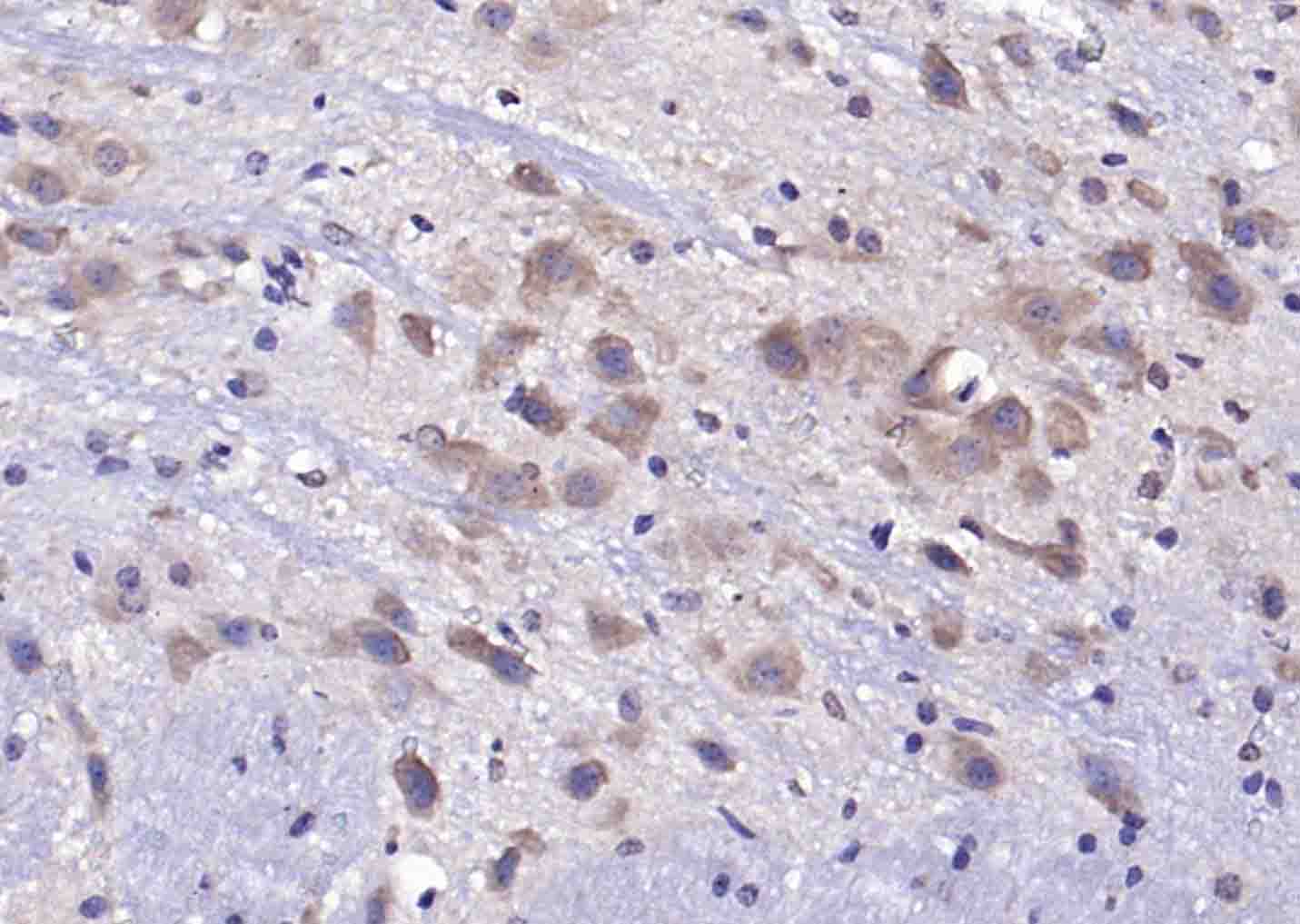
Paraformaldehyde-fixed, paraffin embedded (mouse cerebellum); Antigen retrieval by boiling in sodium citrate buffer (pH6.0) for 15min; Block endogenous peroxidase by 3% hydrogen peroxide for 20 minutes; Blocking buffer (normal goat serum) at 37°C for 30min; Antibody incubation with (OTC/Ornithine Carbamoyltransferase) Polyclonal Antibody, Unconjugated at 1:200 overnight at 4°C, followed by operating according to SP Kit instructionsand DAB staining.IHC
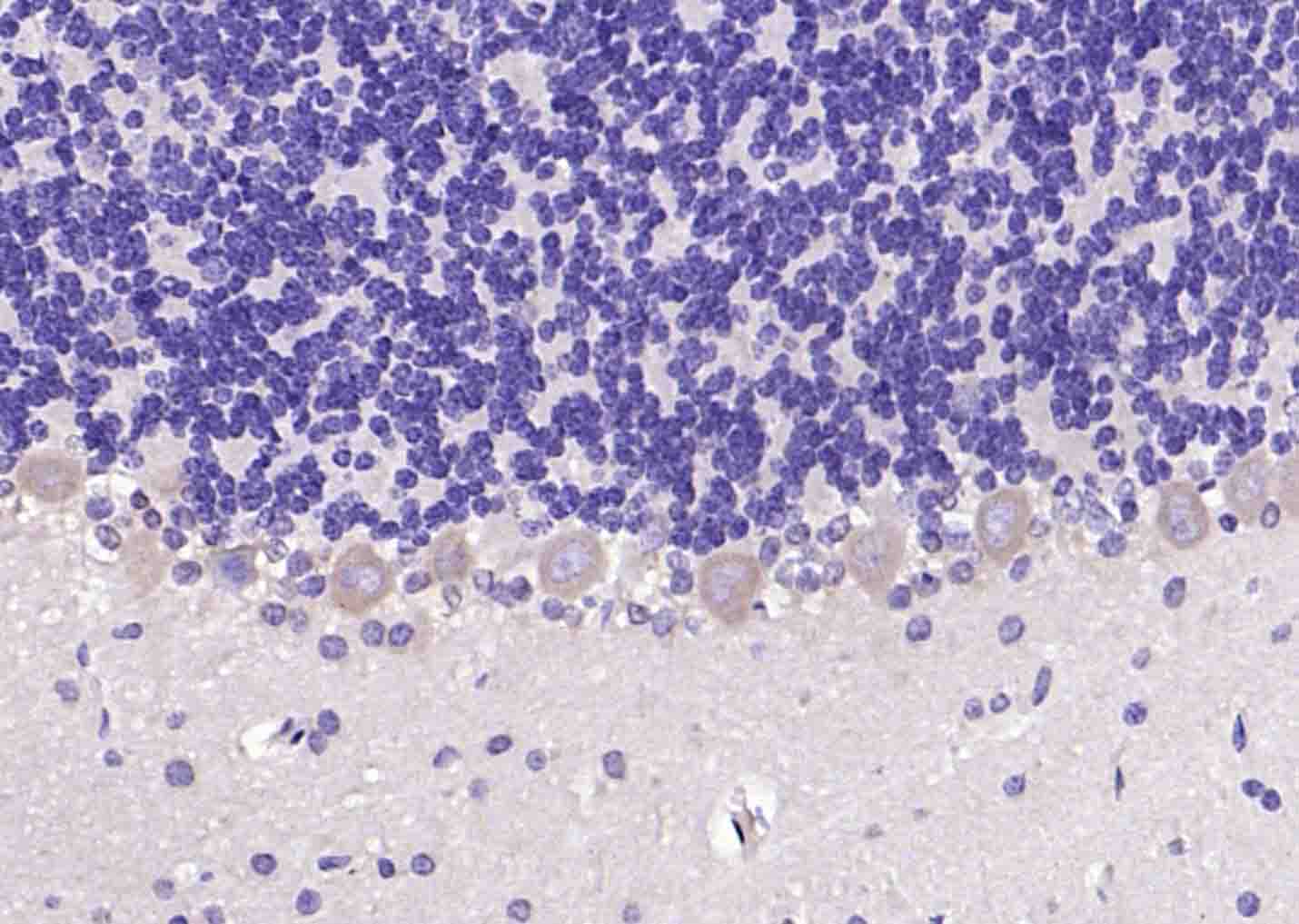
Paraformaldehyde-fixed, paraffin embedded (Rat cerebellum); Antigen retrieval by boiling in sodium citrate buffer (pH6.0) for 15min; Block endogenous peroxidase by 3% hydrogen peroxide for 20 minutes; Blocking buffer (normal goat serum) at 37°C for 30min; Antibody incubation with (OTC/Ornithine Carbamoyltransferase) Polyclonal Antibody, Unconjugated at 1:200 overnight at 4°C, followed by operating according to SP Kit instructionsand DAB staining.| Product Name | OTC/Ornithine Carbamoyltransferase Rabbit Polyclonal Antibody |
|---|---|
| Antibody Type | Primary Antibodies |
| Product description | Ornithine transcarbamylase (OTC) (also called ornithine carbamoyltransferase) is an enzyme that catalyzes the reaction between carbamoyl phosphate (CP) and ornithine (Orn) to form citrulline (Cit) and phosphate (Pi). There are two classes of OTC anabolic and catabolic. This article focuses on anabolic OTC. Anabolic OTC facilitates the sixth step in the biosynthesis of the amino acid arginine in prokaryotes. In contrast, mammalian OTC plays an essential role in the urea cycle whose purpose is to capture toxic ammonia and transform it into less toxic urea nitrogen source for excretion. A potential treatment for the high ammonia levels is to give sodium benzoate, which combines with glycine to produce hippurate, at the same time removing an ammonium group. Biotin also plays an important role in the functioning of the OTC enzyme and has been shown to reduce ammonia intoxication in animal experiments. Additionally, the use of whole-body therapeutic hypothermia (TH) has been proposed and studied as a treatment. TH is thought to increase the effectiveness of dialysis to extract ammonia from the body. |
| Immunogen | KLH conjugated synthetic peptide derived from human OTC/Ornithine Carbamoyltransferase 31-130/354 |
| Clonality | Polyclonal |
|---|---|
| Isotype | IgG |
| Host Species | Rabbit |
| Tested Applications | IHCWB |
| WB:1:500-1:2000 IHC:1:100-1:500 |
|
| Species Reactivity | HumanMouseRat |
| Concentration | 1mg/ml |
| Purification | Protein A |
| Alternative Names | EC 2.1.3.3
MGC129967
MGC129968
MGC138856
OCTD
Ornithine carbamoyltransferase mitochondrial
Ornithine carbamoyltransferase mitochondrial Ornithine transcarbamylase Otc OTC_HUMAN OTCase. |
|---|---|
| Molecular Weight(MW) | 36 KDa |
| Cellular Localization | Mitochondrion matrix. |
| SwissProt ID | P00480 |
|---|
WB
Sample: Liver (Mouse) Lysate at 40 ug, Liver (Rat) Lysate at 40 ug, Primary: Anti- OTC/Ornithine Carbamoyltransferase at 1/300 dilution, Secondary: IRDye800CW Goat Anti-Rabbit IgG at 1/20000 dilution.
IHC
Paraformaldehyde-fixed, paraffin embedded (mouse cerebellum); Antigen retrieval by boiling in sodium citrate buffer (pH6.0) for 15min; Block endogenous peroxidase by 3% hydrogen peroxide for 20 minutes; Blocking buffer (normal goat serum) at 37°C for 30min; Antibody incubation with (OTC/Ornithine Carbamoyltransferase) Polyclonal Antibody, Unconjugated at 1:200 overnight at 4°C, followed by operating according to SP Kit instructionsand DAB staining.
IHC
Paraformaldehyde-fixed, paraffin embedded (Rat cerebellum); Antigen retrieval by boiling in sodium citrate buffer (pH6.0) for 15min; Block endogenous peroxidase by 3% hydrogen peroxide for 20 minutes; Blocking buffer (normal goat serum) at 37°C for 30min; Antibody incubation with (OTC/Ornithine Carbamoyltransferase) Polyclonal Antibody, Unconjugated at 1:200 overnight at 4°C, followed by operating according to SP Kit instructionsand DAB staining.| Application Notes | WB:1:500-1:2000 IHC:1:100-1:500 |
|---|
| Form | Liquid |
|---|---|
| Storage Instructions | Store at -20℃ for one year. Avoid repeated freeze/thaw cycles. The lyophilized antibody is stable at room temperature for at least one month and for greater than a year when kept at -20℃. When reconstituted in sterile pH 7.4 0.01M PBS or diluent of antibody the antibody is stable for at least two weeks at 2-4℃. |
| Storage Buffer | 0.01M TBS(pH7.4) with 1% BSA, 0.03% Proclin300 and 50% Glycerol. |


