Application
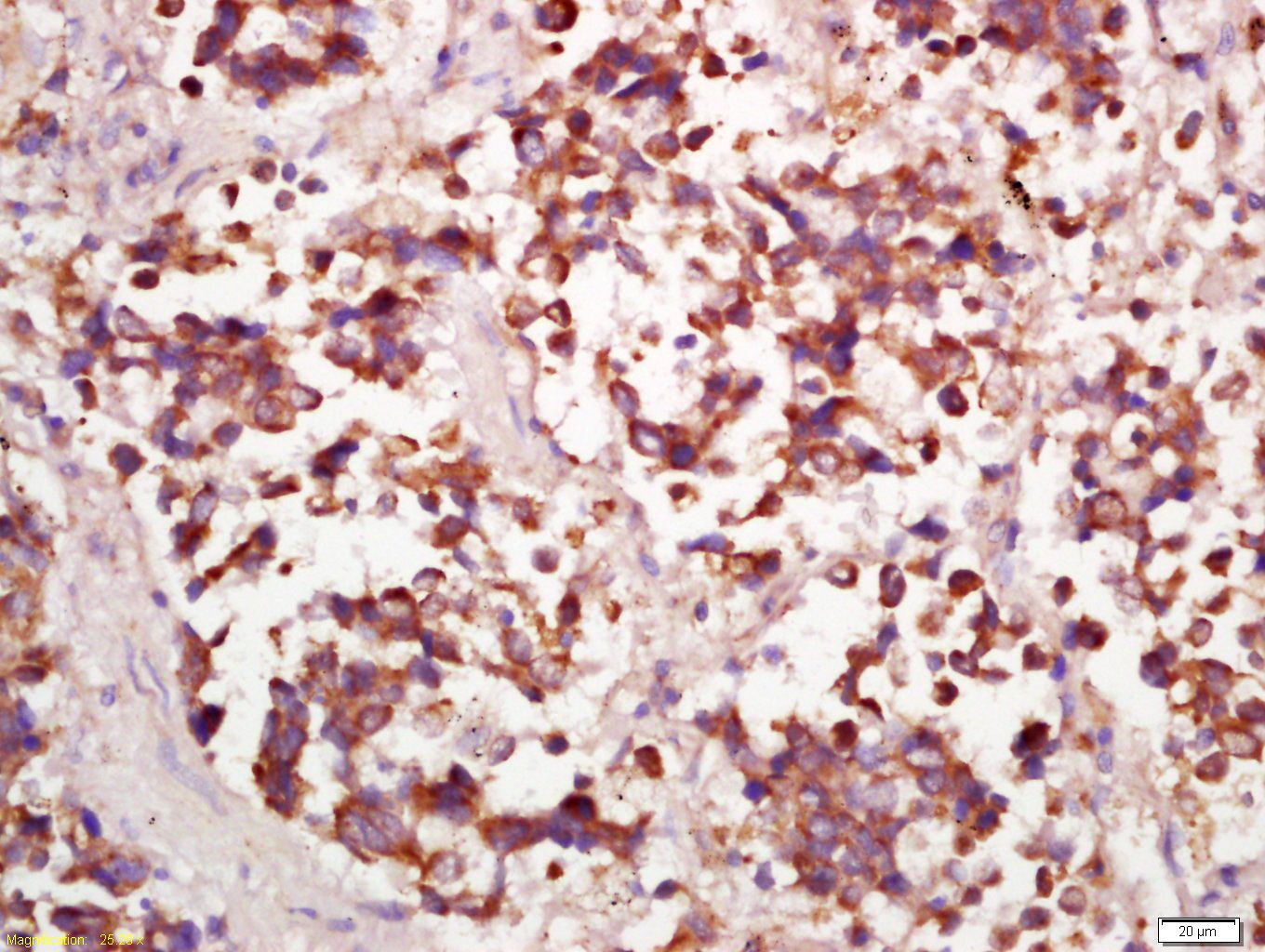
Fig1: Tissue/cell: human lung carcinoma; 4% Paraformaldehyde-fixed and paraffin-embedded; Antigen retrieval: citrate buffer ( 0.01M, pH 6.0 ), Boiling bathing for 15min; Block endogenous peroxidase by 3% Hydrogen peroxide for 30min; Blocking buffer (normal goat serum,C-0005) at 37℃ for 20 min; Incubation: Anti-PPP4C Polyclonal Antibody, Unconjugated(ER1915-39) 1:200, overnight at 4℃, followed by conjugation to the secondary antibody(SP-0023) and DAB(C-0010) stainingApplication
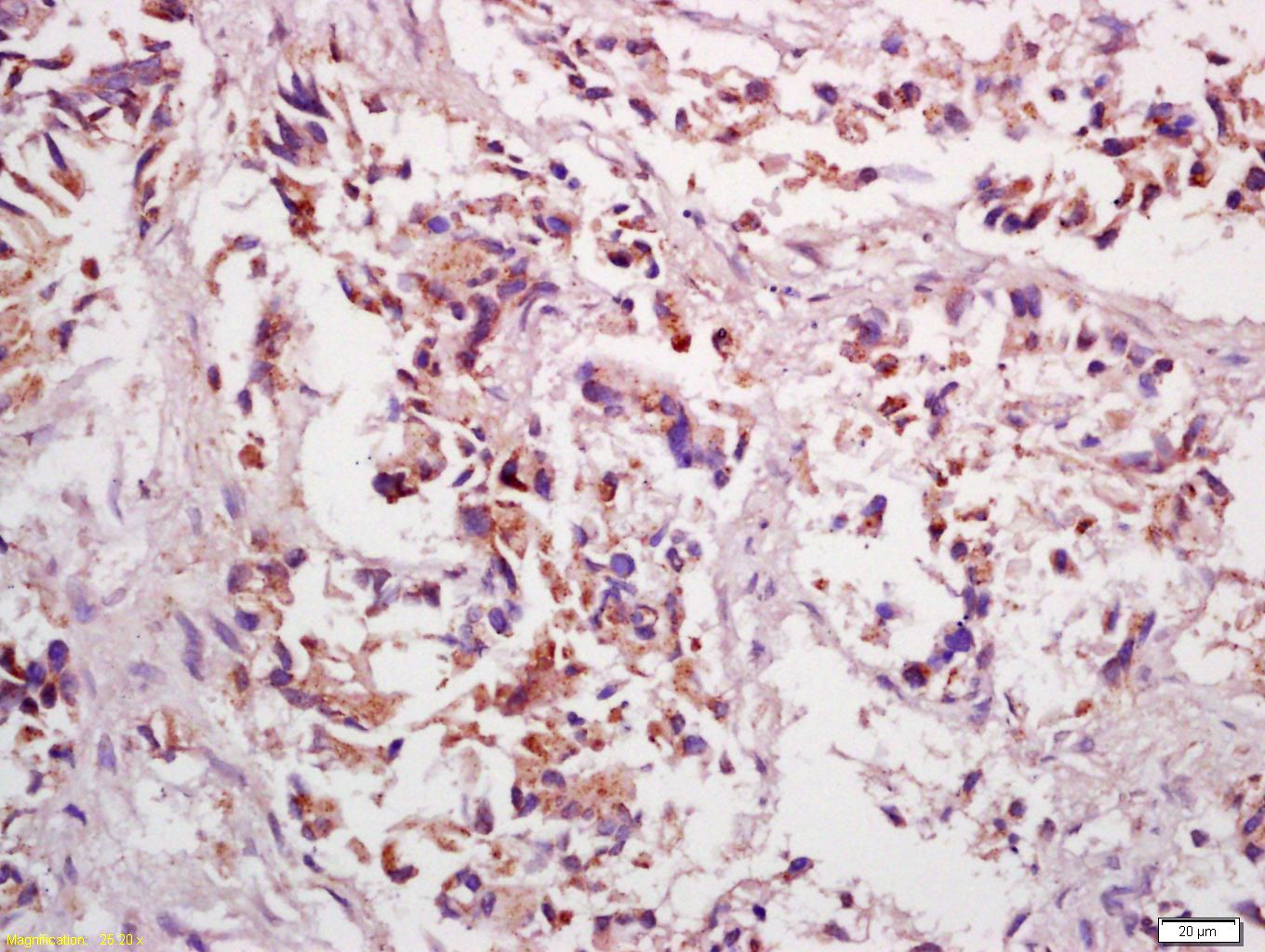
Fig2: Tissue/cell: human gastric carcinoma; 4% Paraformaldehyde-fixed and paraffin-embedded; Antigen retrieval: citrate buffer ( 0.01M, pH 6.0 ), Boiling bathing for 15min; Block endogenous peroxidase by 3% Hydrogen peroxide for 30min; Blocking buffer (normal goat serum,C-0005) at 37℃ for 20 min; Incubation: Anti-PPP4C Polyclonal Antibody, Unconjugated(ER1915-39) 1:200, overnight at 4℃, followed by conjugation to the secondary antibody(SP-0023) and DAB(C-0010) stainingApplication
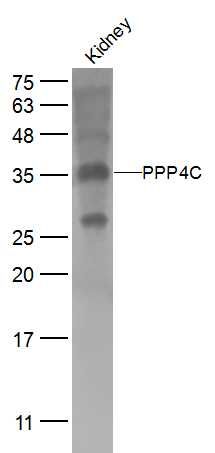
Fig3: Sample: Kidney (Mouse) Lysate at 40 ug Primary: Anti-PPP4C (ER1915-39) at 1/500 dilution Secondary: IRDye800CW Goat Anti-Rabbit IgG at 1/20000 dilution Predicted band size: 34 kD Observed band size: 34 kD| Product Name | PPP4C |
|---|---|
| Antibody Type | Primary Antibodies |
| Antigen Alias | protein phosphatase 4/c PP4/C Ser/Thr-protein phosphatase 4 catalitic subunit serine/threonine-protein phosphatase 4 catalytic subunit isoform X2 PP4C PP4 PP X PP-X PP2AC PPP4C PP4 PP4C PPH3 PPP4 PPX PP2Ac PP4C PP4C_HUMAN protein phosphatase 4 (formerly X), catalytic subunit Protein phosphatase 4 catalytic subunit Protein phosphatase X protein phosphatase X, catalytic subunit Serine/threonine protein phosphatase 4 catalytic subunit Serine/threonine-protein phosphatase-4 catalytic subunit. |
| Product description | Protein phosphatase that is involved in many processes such as microtubule organization at centrosomes, maturation of spliceosomal snRNPs, apoptosis, DNA repair, tumor necrosis factor (TNF)-alpha signaling, activation of c-Jun N-terminal kinase MAPK8, regulation of histone acetylation, DNA damage checkpoint signaling, NF-kappa-B activation and cell migration. The PPP4C-PPP4R1 PP4 complex may play a role in dephosphorylation and regulation of HDAC3. The PPP4C-PPP4R2-PPP4R3A PP4 complex specifically dephosphorylates H2AFX phosphorylated on Ser-140 (gamma-H2AFX) generated during DNA replication and required for DNA double strand break repair. Dephosphorylates NDEL1 at CDK1 phosphorylation sites and negatively regulates CDK1 activity in interphase. In response to DNA damage, catalyzes RPA2 dephosphorylation, an essential step for DNA repair since it allows the efficient RPA2-mediated recruitment of RAD51 to chromatin. |
| Immunogen | KLH conjugated synthetic peptide derived from human PP4C 265-307/307 |
| Clonality | Polyclonal |
|---|---|
| Isotype | IgG |
| Host Species | Rabbit |
| Tested Applications | WBIHC-P |
| WB:1:500-2000: IHC-P:1:400-800: |
|
| Species Reactivity | HumanMouseRatChickenDogRabbit |
| Concentration | 1mg/ml |
| Alternative Names | protein phosphatase 4/c
PP4/C
Ser/Thr-protein phosphatase 4 catalitic subunit
serine/threonine-protein phosphatase 4 catalytic subunit isoform X2
PP4C
PP4
PP X
PP-X
PP2AC
PPP4C
PP4
PP4C
PPH3
PPP4
PPX
PP2Ac
PP4C
PP4C_HUMAN
protein phosphatase 4 (formerly X) catalytic subunit Protein phosphatase 4 catalytic subunit Protein phosphatase X protein phosphatase X catalytic subunit Serine/threonine protein phosphatase 4 catalytic subunit Serine/threonine-protein phosphatase-4 catalytic subunit. |
|---|---|
| Molecular Weight(MW) | 34 KDa |
| Cellular Localization | Cytoplasm. Nucleus. Cytoplasm, cytoskeleton, microtubule organizing center, centrosome. |
| SwissProt ID | P60510 |
|---|
Application
Fig1: Tissue/cell: human lung carcinoma; 4% Paraformaldehyde-fixed and paraffin-embedded; Antigen retrieval: citrate buffer ( 0.01M, pH 6.0 ), Boiling bathing for 15min; Block endogenous peroxidase by 3% Hydrogen peroxide for 30min; Blocking buffer (normal goat serum,C-0005) at 37℃ for 20 min; Incubation: Anti-PPP4C Polyclonal Antibody, Unconjugated(ER1915-39) 1:200, overnight at 4℃, followed by conjugation to the secondary antibody(SP-0023) and DAB(C-0010) staining
Application
Fig2: Tissue/cell: human gastric carcinoma; 4% Paraformaldehyde-fixed and paraffin-embedded; Antigen retrieval: citrate buffer ( 0.01M, pH 6.0 ), Boiling bathing for 15min; Block endogenous peroxidase by 3% Hydrogen peroxide for 30min; Blocking buffer (normal goat serum,C-0005) at 37℃ for 20 min; Incubation: Anti-PPP4C Polyclonal Antibody, Unconjugated(ER1915-39) 1:200, overnight at 4℃, followed by conjugation to the secondary antibody(SP-0023) and DAB(C-0010) staining
Application
Fig3: Sample: Kidney (Mouse) Lysate at 40 ug Primary: Anti-PPP4C (ER1915-39) at 1/500 dilution Secondary: IRDye800CW Goat Anti-Rabbit IgG at 1/20000 dilution Predicted band size: 34 kD Observed band size: 34 kD| Application Notes | WB:1:500-2000: IHC-P:1:400-800: |
|---|
| Form | Liquid |
|---|---|
| Storage Instructions | Store at -20℃ for one year. Avoid repeated freeze/thaw cycles. The lyophilized antibody is stable at room temperature for at least one month and for greater than a year when kept at -20℃. When reconstituted in sterile pH 7.4 0.01M PBS or diluent of antibody the antibody is stable for at least two weeks at 2-4℃. |
| Storage Buffer | 0.01M TBS(pH7.4) with 1% BSA, 0.03% Proclin300 and 50% Glycerol. |


