Application
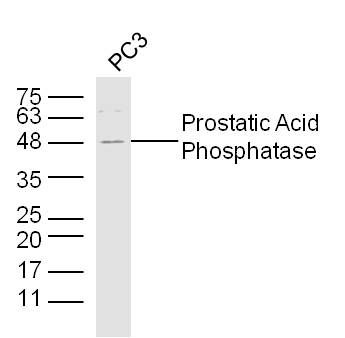
Fig1: Sample: PC3 Cell (Human) Lysate at 40 ug Primary: Anti-Prostatic Acid Phosphatase (ER1915-48) at 1/300 dilution Secondary: IRDye800CW Goat Anti-Rabbit IgG at 1/20000 dilution Predicted band size: 41 kD Observed band size: 48 kD| Product Name | Prostatic Acid Phosphatase |
|---|---|
| Antibody Type | Primary Antibodies |
| Antigen Alias | Acid phosphatase prostate ACP 3 ACP3 ACPP Ecto-5'-nucleotidase PAP PPAP_HUMAN Prostatic acid phosphatase Thiamine monophosphatase TMPase 5'-NT 5'-nucleotidase. |
| Product description | A non-specific tyrosine phosphatase that dephosphorylates a diverse number of substrates under acidic conditions (pH 4-6) including alkyl, aryl, and acyl orthophosphate monoesters and phosphorylated proteins. Has lipid phosphatase activity and inactivates lysophosphatidic acid in seminal plasma. |
| Immunogen | KLH conjugated synthetic peptide derived from human Prostatic Acid Phosphatase 21-120/386 |
| Clonality | Polyclonal |
|---|---|
| Isotype | IgG |
| Host Species | Rabbit |
| Tested Applications | WB |
| WB:1:500-2000: |
|
| Species Reactivity | HumanMouseRatDogHorse |
| Concentration | 1mg/ml |
| Alternative Names | Acid phosphatase prostate ACP 3 ACP3 ACPP Ecto-5'-nucleotidase PAP PPAP_HUMAN Prostatic acid phosphatase Thiamine monophosphatase TMPase 5'-NT 5'-nucleotidase. |
|---|---|
| Molecular Weight(MW) | 41 KDa |
| Cellular Localization | Isoform 1: Secreted. Isoform 2: Cell membrane. ;Isoform 2: the cellular form also has ecto-5'-nucleotidase activity in dorsal root ganglion (DRG) neurons. Generates adenosine from AMP which acts as a pain suppressor. Acts as a tumor suppressor of prostate cancer through dephosphorylation of ERBB2 and deactivation of MAPK-mediated signaling. |
| SwissProt ID | P24666 |
|---|
Application
Fig1: Sample: PC3 Cell (Human) Lysate at 40 ug Primary: Anti-Prostatic Acid Phosphatase (ER1915-48) at 1/300 dilution Secondary: IRDye800CW Goat Anti-Rabbit IgG at 1/20000 dilution Predicted band size: 41 kD Observed band size: 48 kD| Positive Control | Highly expressed in the prostate, restricted to glandular and ductal epithelial cells. |
|---|---|
| Application Notes | WB:1:500-2000: |
| Form | Liquid |
|---|---|
| Storage Instructions | Store at -20℃ for one year. Avoid repeated freeze/thaw cycles. The lyophilized antibody is stable at room temperature for at least one month and for greater than a year when kept at -20℃. When reconstituted in sterile pH 7.4 0.01M PBS or diluent of antibody the antibody is stable for at least two weeks at 2-4℃. |
| Storage Buffer | 0.01M TBS(pH7.4) with 1% BSA, 0.03% Proclin300 and 50% Glycerol. |


