Application
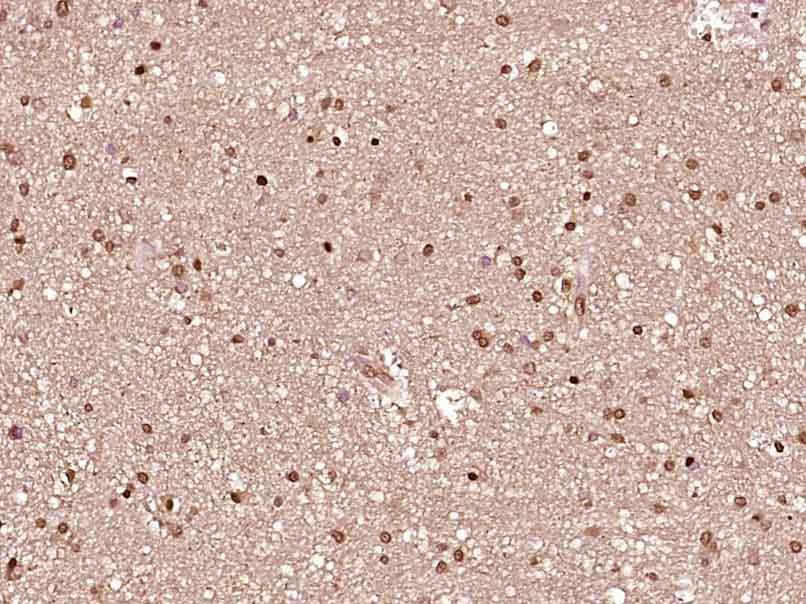
Fig1: Paraformaldehyde-fixed, paraffin embedded (Human brain glioma); Antigen retrieval by boiling in sodium citrate buffer (pH6.0) for 15min; Block endogenous peroxidase by 3% hydrogen peroxide for 20 minutes; Blocking buffer (normal goat serum) at 37℃ for 30min; Antibody incubation with (RAR Beta) Polyclonal Antibody, Unconjugated (ER1915-71) at 1:400 overnight at 4℃, followed by operating according to SP Kit(Rabbit) (sp-0023) instructionsand DAB staining.Application
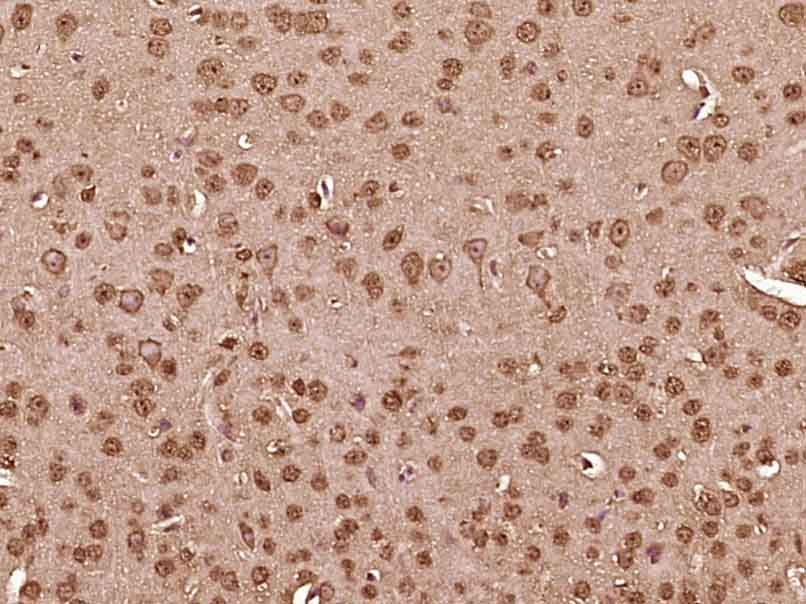
Fig2: Paraformaldehyde-fixed, paraffin embedded (Mouse brain); Antigen retrieval by boiling in sodium citrate buffer (pH6.0) for 15min; Block endogenous peroxidase by 3% hydrogen peroxide for 20 minutes; Blocking buffer (normal goat serum) at 37℃ for 30min; Antibody incubation with (RAR Beta) Polyclonal Antibody, Unconjugated (ER1915-71) at 1:400 overnight at 4℃, followed by operating according to SP Kit(Rabbit) (sp-0023) instructionsand DAB staining.Application
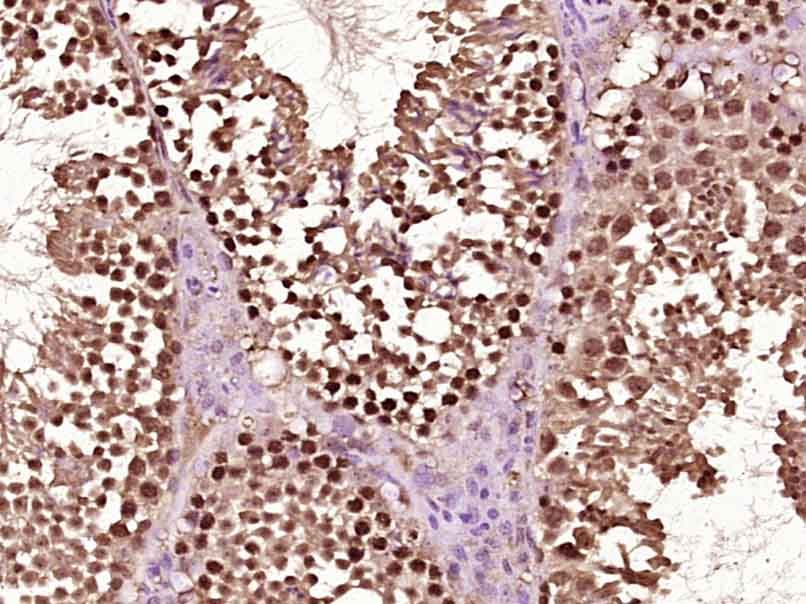
Fig3: Paraformaldehyde-fixed, paraffin embedded (Mouse testis); Antigen retrieval by boiling in sodium citrate buffer (pH6.0) for 15min; Block endogenous peroxidase by 3% hydrogen peroxide for 20 minutes; Blocking buffer (normal goat serum) at 37℃ for 30min; Antibody incubation with (RAR Beta) Polyclonal Antibody, Unconjugated (ER1915-71) at 1:400 overnight at 4℃, followed by operating according to SP Kit(Rabbit) (sp-0023) instructionsand DAB staining.Application
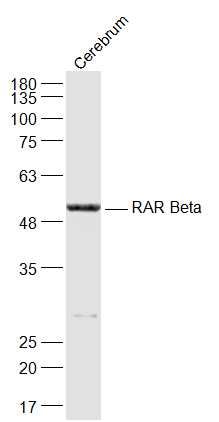
Fig4: Sample: Cerebrum (Mouse) Lysate at 40 ug Primary: Anti-RAR Beta (ER1915-71) at 1/1000 dilution Secondary: IRDye800CW Goat Anti-Rabbit IgG at 1/20000 dilution Predicted band size: 50 kD Observed band size: 50 kDApplication
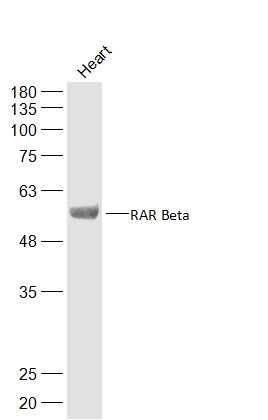
Fig5: Sample: Heart (Mouse) Lysate at 40 ug Primary: Anti-RAR Beta (ER1915-71) at 1/500 dilution Secondary: IRDye800CW Goat Anti-Rabbit IgG at 1/20000 dilution Predicted band size: 50 kD Observed band size: 50 kD| Product Name | RAR Beta |
|---|---|
| Antibody Type | Primary Antibodies |
| Antigen Alias | Retinoic acid R-beta HAP HBV activated protein HBV-activated protein Hepatitis B virus activated protein NR1B2 Nuclear receptor subfamily 1 group B member 2 RAR B RAR beta RAR epsilon RARB Retinoic acid receptor beta 2 Retinoic acid receptor beta 4 Retinoic acid receptor beta 5 Retinoic acid receptor beta Retinoic acid receptor beta polypeptide RRB 2 RARB_HUMAN RRB2. |
| Product description | Receptor for retinoic acid. Retinoic acid receptors bind as heterodimers to their target response elements in response to their ligands, all-trans or 9-cis retinoic acid, and regulate gene expression in various biological processes. The RXR/RAR heterodimers bind to the retinoic acid response elements (RARE) composed of tandem 5'-AGGTCA-3' sites known as DR1-DR5. In the absence or presence of hormone ligand, acts mainly as an activator of gene expression due to weak binding to corepressors. In concert with RARG, required for skeletal growth, matrix homeostasis and growth plate function. |
| Immunogen | KLH conjugated synthetic peptide derived from human RAR Beta 155-250/482 |
| Clonality | Polyclonal |
|---|---|
| Isotype | IgG |
| Host Species | Rabbit |
| Tested Applications | WBIHC-P |
| WB:1:500-2000: IHC-P:1:400-800: |
|
| Species Reactivity | HumanMouseRatChickenDogPigCow |
| Concentration | 1mg/ml |
| Alternative Names | Retinoic acid R-beta
HAP
HBV activated protein HBV-activated protein Hepatitis B virus activated protein NR1B2 Nuclear receptor subfamily 1 group B member 2 RAR B RAR beta RAR epsilon RARB Retinoic acid receptor beta 2 Retinoic acid receptor beta 4 Retinoic acid receptor beta 5 Retinoic acid receptor beta Retinoic acid receptor beta polypeptide RRB 2 RARB_HUMAN RRB2. |
|---|---|
| Molecular Weight(MW) | 50 KDa |
| Cellular Localization | Isoform Beta-1: Nucleus. Isoform Beta-2: Nucleus. Isoform Beta-4: Cytoplasm. |
| SwissProt ID | P10826 |
|---|
Application
Fig1: Paraformaldehyde-fixed, paraffin embedded (Human brain glioma); Antigen retrieval by boiling in sodium citrate buffer (pH6.0) for 15min; Block endogenous peroxidase by 3% hydrogen peroxide for 20 minutes; Blocking buffer (normal goat serum) at 37℃ for 30min; Antibody incubation with (RAR Beta) Polyclonal Antibody, Unconjugated (ER1915-71) at 1:400 overnight at 4℃, followed by operating according to SP Kit(Rabbit) (sp-0023) instructionsand DAB staining.
Application
Fig2: Paraformaldehyde-fixed, paraffin embedded (Mouse brain); Antigen retrieval by boiling in sodium citrate buffer (pH6.0) for 15min; Block endogenous peroxidase by 3% hydrogen peroxide for 20 minutes; Blocking buffer (normal goat serum) at 37℃ for 30min; Antibody incubation with (RAR Beta) Polyclonal Antibody, Unconjugated (ER1915-71) at 1:400 overnight at 4℃, followed by operating according to SP Kit(Rabbit) (sp-0023) instructionsand DAB staining.
Application
Fig3: Paraformaldehyde-fixed, paraffin embedded (Mouse testis); Antigen retrieval by boiling in sodium citrate buffer (pH6.0) for 15min; Block endogenous peroxidase by 3% hydrogen peroxide for 20 minutes; Blocking buffer (normal goat serum) at 37℃ for 30min; Antibody incubation with (RAR Beta) Polyclonal Antibody, Unconjugated (ER1915-71) at 1:400 overnight at 4℃, followed by operating according to SP Kit(Rabbit) (sp-0023) instructionsand DAB staining.
Application
Fig4: Sample: Cerebrum (Mouse) Lysate at 40 ug Primary: Anti-RAR Beta (ER1915-71) at 1/1000 dilution Secondary: IRDye800CW Goat Anti-Rabbit IgG at 1/20000 dilution Predicted band size: 50 kD Observed band size: 50 kD
Application
Fig5: Sample: Heart (Mouse) Lysate at 40 ug Primary: Anti-RAR Beta (ER1915-71) at 1/500 dilution Secondary: IRDye800CW Goat Anti-Rabbit IgG at 1/20000 dilution Predicted band size: 50 kD Observed band size: 50 kD| Application Notes | WB:1:500-2000: IHC-P:1:400-800: |
|---|
| Form | Liquid |
|---|---|
| Storage Instructions | Store at -20℃ for one year. Avoid repeated freeze/thaw cycles. The lyophilized antibody is stable at room temperature for at least one month and for greater than a year when kept at -20℃. When reconstituted in sterile pH 7.4 0.01M PBS or diluent of antibody the antibody is stable for at least two weeks at 2-4℃. |
| Storage Buffer | 0.01M TBS(pH7.4) with 1% BSA, 0.03% Proclin300 and 50% Glycerol. |


