Application
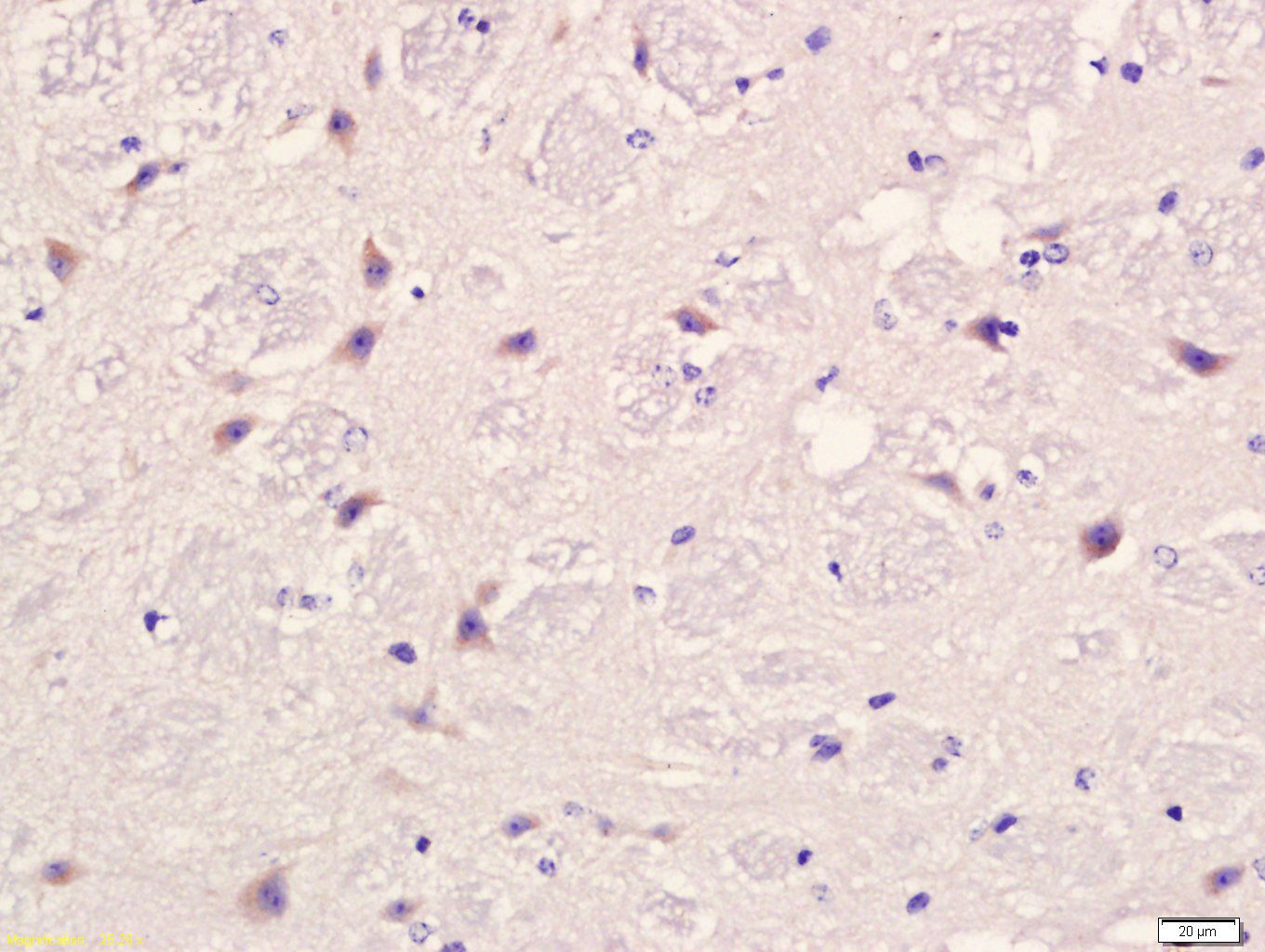
Fig1: Tissue/cell: mouse brain tissue; 4% Paraformaldehyde-fixed and paraffin-embedded; Antigen retrieval: citrate buffer ( 0.01M, pH 6.0 ), Boiling bathing for 15min; Block endogenous peroxidase by 3% Hydrogen peroxide for 30min; Blocking buffer (normal goat serum,C-0005) at 37℃ for 20 min; Incubation: Anti-uPA Receptor Polyclonal Antibody, Unconjugated(ER1918-43) 1:500, overnight at 4℃, followed by conjugation to the secondary antibody(SP-0023) and DAB(C-0010) stainingApplication
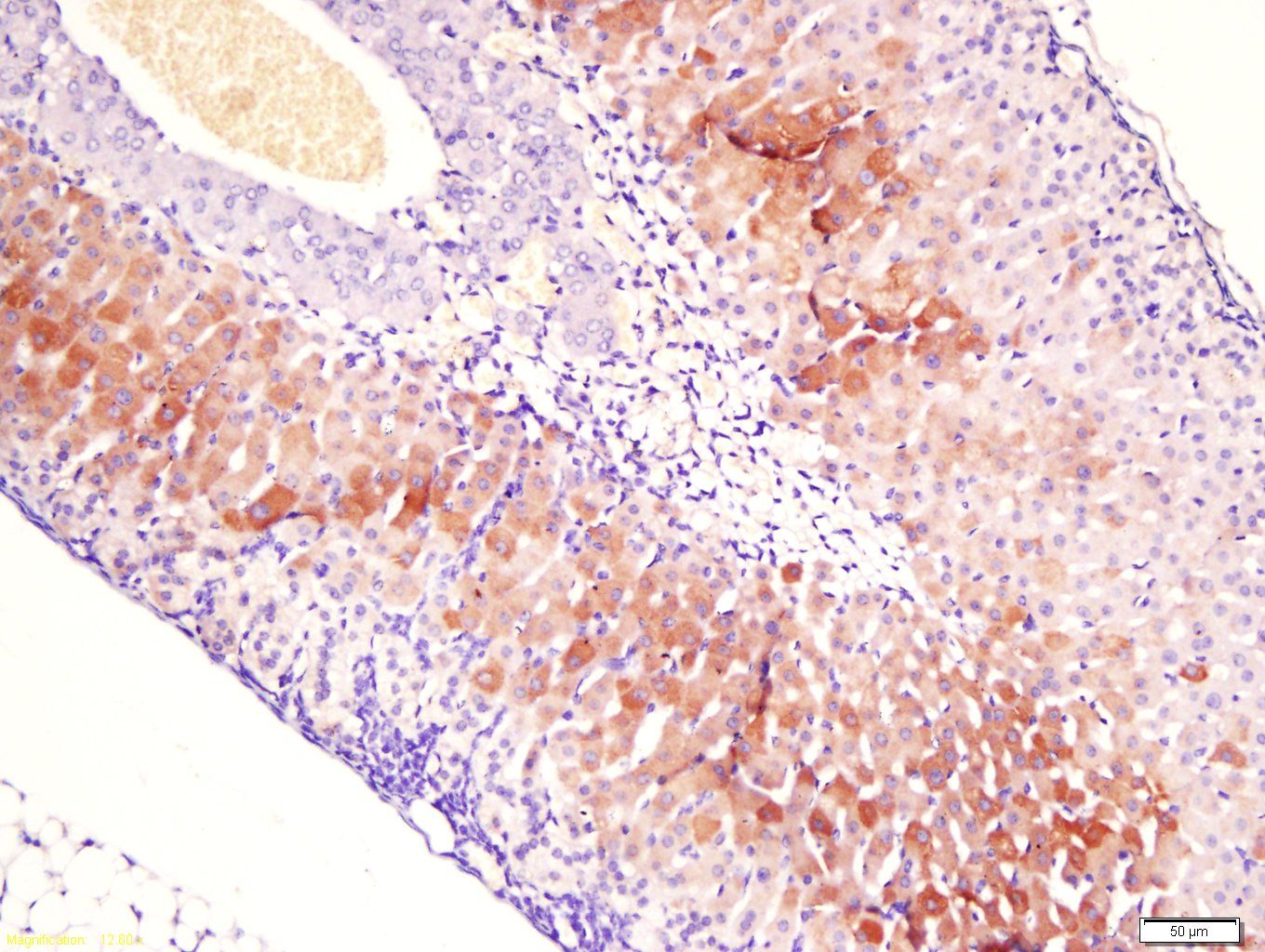
Fig2: Tissue/cell: mouse adrenal gland; 4% Paraformaldehyde-fixed and paraffin-embedded; Antigen retrieval: citrate buffer ( 0.01M, pH 6.0 ), Boiling bathing for 15min; Block endogenous peroxidase by 3% Hydrogen peroxide for 30min; Blocking buffer (normal goat serum,C-0005) at 37℃ for 20 min; Incubation: Anti-uPA Receptor Polyclonal Antibody, Unconjugated(ER1918-43) 1:500, overnight at 4℃, followed by conjugation to the secondary antibody(SP-0023) and DAB(C-0010) stainingApplication
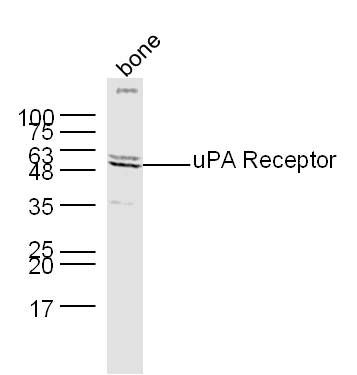
Fig3: Sample: bone (Mouse) Lysate at 40 ug Primary: Anti-uPA Receptor (ER1918-43) at 1/300 dilution Secondary: IRDye800CW Goat Anti-Rabbit IgG at 1/20000 dilution Predicted band size: 31 kD Observed band size: 48 kD| Product Name | uPA Receptor |
|---|---|
| Antibody Type | Primary Antibodies |
| Antigen Alias | PLAUR Plasminogen activator,urokinase receptor Urokinase plasminogen activator surface receptor Monocyte activation antigen Mo3 uPAR U-PAR MO3 UPAR CD 87 CD87 CD87 antigen MO 3 MO3 Monocyte activation antigen Mo3 Plasminogen activator urokinase receptor U PAR u plasminogen activator receptor UPA receptor UPAR Urinary plasminogen activator receptor URKR Urokinase plasminogen activator receptor Urokinase plasminogen activator surface receptor. |
| Product description | The Urokinase receptor, also known as uPA receptor or uPAR or CD87 (Cluster of Differentiation 87), is a multidomain glycoprotein tethered to the cell membrane with a glycosylphosphotidylinositol (GPI) anchor. uPAR was originally identified as a saturable binding site for urokinase on the cell surface. uPAR is a part of the plasminogen activation system, which in the healthy body is involved in tissue reorganization events such as mammary gland involution and wound healing. An important mechanism in this degradation is the proteolysis cascade initiated by the plasminogen activation system. uPAR binds urokinase and thus restricts plasminogen activation to the immediate vicinity of the cell membrane. Thus uPAR seems to be an important player in the regulation of this process. However the components of the plasminogen activation system have been found to be highly expressed in many malignant tumors, indicating that tumors are able to hijack the system, and use it in metastasis. uPAR has been involved in various other non-proteolytical processes related to cancer, such as cell migration, cell cycle regulation, and cell adhesion. When uPA is bound to the receptor, there is cleavage between the GPI-anchor and the uPAR, releasing suPAR. |
| Immunogen | KLH conjugated synthetic peptide derived from human PLAUR 201-300/335 |
| Clonality | Polyclonal |
|---|---|
| Isotype | IgG |
| Host Species | Rabbit |
| Tested Applications | WBIHC-P |
| WB:1:500-2000: IHC-P:1:400-800: |
|
| Species Reactivity | HumanMouseRatDogCowSheep |
| Concentration | 1mg/ml |
| Alternative Names | PLAUR
Plasminogen activator urokinase receptor Urokinase plasminogen activator surface receptor Monocyte activation antigen Mo3 uPAR U-PAR MO3 UPAR CD 87 CD87 CD87 antigen MO 3 MO3 Monocyte activation antigen Mo3 Plasminogen activator urokinase receptor U PAR u plasminogen activator receptor UPA receptor UPAR Urinary plasminogen activator receptor URKR Urokinase plasminogen activator receptor Urokinase plasminogen activator surface receptor. |
|---|---|
| Molecular Weight(MW) | 31 KDa |
| Cellular Localization | Isoform 1: Cell membrane; Lipid-anchor, GPI-anchor. Isoform 2: Secreted (Probable). |
| SwissProt ID | Q03405 |
|---|
Application
Fig1: Tissue/cell: mouse brain tissue; 4% Paraformaldehyde-fixed and paraffin-embedded; Antigen retrieval: citrate buffer ( 0.01M, pH 6.0 ), Boiling bathing for 15min; Block endogenous peroxidase by 3% Hydrogen peroxide for 30min; Blocking buffer (normal goat serum,C-0005) at 37℃ for 20 min; Incubation: Anti-uPA Receptor Polyclonal Antibody, Unconjugated(ER1918-43) 1:500, overnight at 4℃, followed by conjugation to the secondary antibody(SP-0023) and DAB(C-0010) staining
Application
Fig2: Tissue/cell: mouse adrenal gland; 4% Paraformaldehyde-fixed and paraffin-embedded; Antigen retrieval: citrate buffer ( 0.01M, pH 6.0 ), Boiling bathing for 15min; Block endogenous peroxidase by 3% Hydrogen peroxide for 30min; Blocking buffer (normal goat serum,C-0005) at 37℃ for 20 min; Incubation: Anti-uPA Receptor Polyclonal Antibody, Unconjugated(ER1918-43) 1:500, overnight at 4℃, followed by conjugation to the secondary antibody(SP-0023) and DAB(C-0010) staining
Application
Fig3: Sample: bone (Mouse) Lysate at 40 ug Primary: Anti-uPA Receptor (ER1918-43) at 1/300 dilution Secondary: IRDye800CW Goat Anti-Rabbit IgG at 1/20000 dilution Predicted band size: 31 kD Observed band size: 48 kD| Positive Control | Expressed in neurons of the rolandic area of the brain (at protein level). Expressed in the brain. |
|---|---|
| Application Notes | WB:1:500-2000: IHC-P:1:400-800: |
| Form | Liquid |
|---|---|
| Storage Instructions | Store at -20℃ for one year. Avoid repeated freeze/thaw cycles. |
| Storage Buffer | 0.01M TBS(pH7.4) with 1% BSA, 0.03% Proclin300 and 50% Glycerol. |


