Application
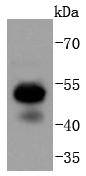
Fig1: Western blot analysis of RUNX1+RUNX2+RUNX3 on Jurkat cells lysates using anti-RUNX1+RUNX2+RUNX3 antibody at 1/1,000 dilution.Application
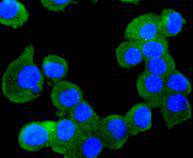
Fig2: ICC staining RUNX1+RUNX2+RUNX3 in N2A cells (green). The nuclear counter stain is DAPI (blue). Cells were fixed in paraformaldehyde, permeabilised with 0.25% Triton X100/PBS.Application
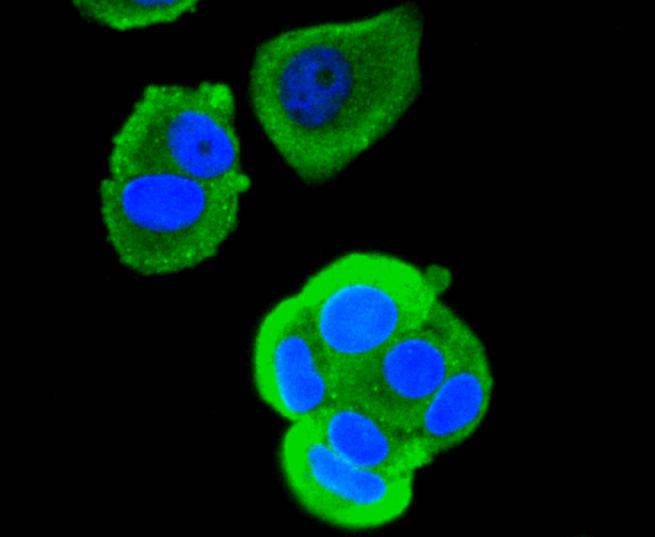
Fig3: ICC staining RUNX1+RUNX2+RUNX3 in MCF-7 cells (green). The nuclear counter stain is DAPI (blue). Cells were fixed in paraformaldehyde, permeabilised with 0.25% Triton X100/PBS.Application
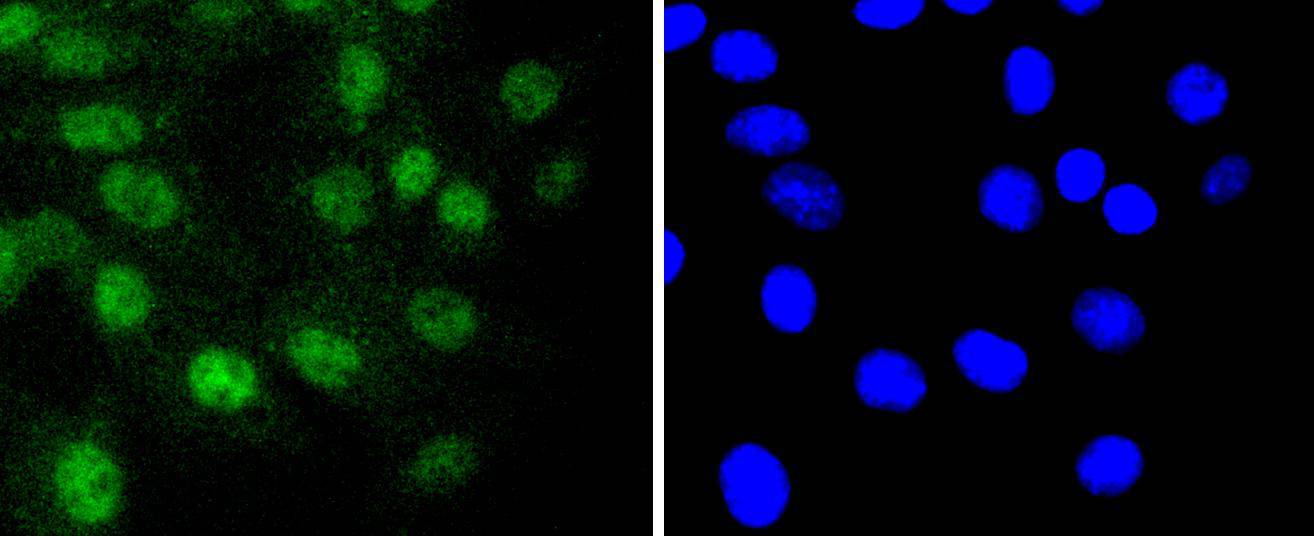
Fig4: ICC staining RUNX1+RUNX2+RUNX3 in SHG-44 cells (green). The nuclear counter stain is DAPI (blue). Cells were fixed in paraformaldehyde, permeabilised with 0.25% Triton X100/PBS.Application
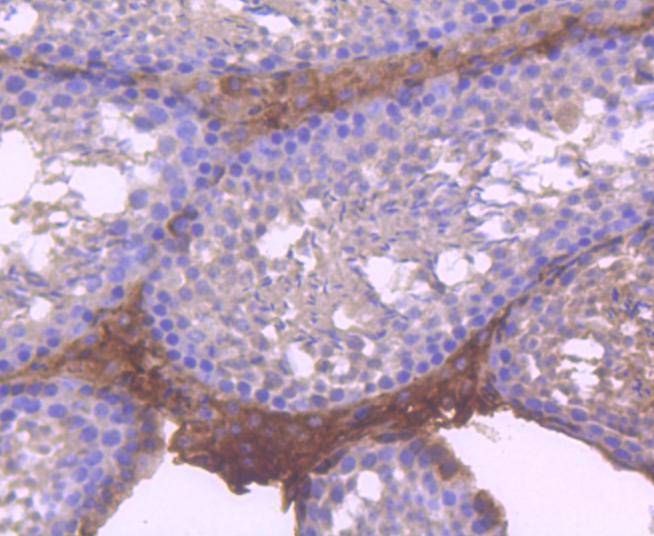
Fig5: Immunohistochemical analysis of paraffin-embedded mouse testis tissue using anti-RUNX1+RUNX2+RUNX3 antibody. Counter stained with hematoxylin.Application
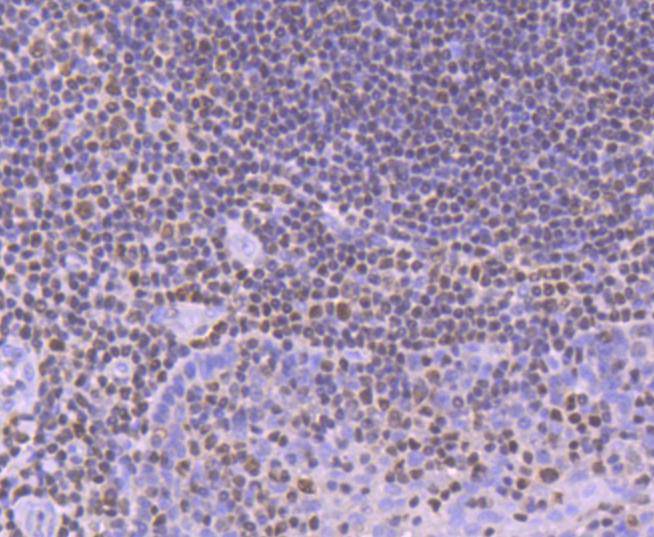
Fig6: Immunohistochemical analysis of paraffin-embedded human tonsil tissue using anti-RUNX1+RUNX2+RUNX3 antibody. Counter stained with hematoxylin.Application
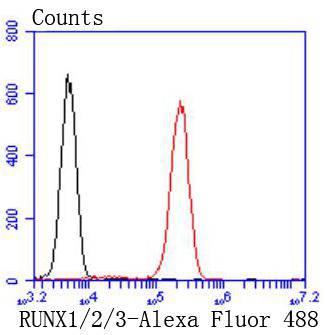
Fig7: Flow cytometric analysis of Jurkat cells with RUNX1+RUNX2+RUNX3 antibody at 1/50 dilution (red) compared with an unlabelled control (cells without incubation with primary antibody; black). Alexa Fluor 488-conjugated goat anti rabbit IgG was used as the secondary antibody.| Product Name | RUNX1+RUNX2+RUNX3 [SD0803] |
|---|---|
| Antibody Type | Primary Antibodies |
| Product description | The mammalian Runt-related transcription factor (RUNX) family comprises three members, RUNX1 (also designated AML-1, PEBP2αB, CBFA2), RUNX2 (also designated AML-3, PEBP2αA, CBFA1, Osf2) and RUNX3 (also designated AML-2, PEBPαC, CBFA3). RUNX family members are DNA-binding proteins that regulate the expression of genes involved in cellular differentiation and cell cycle progression. RUNX1 is involved in hematopoiesis and is frequently targeted in human leukemia by chromosomal translocations that fuse the DNA-binding domain of RUNX1 to other transcription factors and corepressor molecules. In addition to its role in leukemogenesis, RUNX1 is also involved in sensory neuron diversification. RUNX1 promotes axonal growth, is selectively expressed in neural crest-derived TrkA+ sensory neurons and mediates TrkA transactivation in migratory neural crest cells. RUNX2 is essential for skeletal mineralization in that it stimulates osteoblast differentiation of mesenchymal stem cells, promotes chondrocyte hypertrophy and contributes to endothelial cell migration and vascular invasion of developing bones. Regulating RUNX2 expression may be a useful therapeutic tool for promoting bone formation. Mutations in the C-terminus of RUNX2 are associated with cleidocranial dysplasia syndrome, an autosomal-dominant skeletal dysplasia syndrome that is characterized by widely patent calvarial sutures, clavicular hypoplasia, supernumerary teeth, and short stature. RUNX3 is expressed in cells of hematopoietic origin, including myeloid and B-cell lines and spleen. By playing a role in controlling the growth and differentiation of gastric epithelial cells, RUNX3 is a strong candidate as a gastric cancer tumor suppressor. Specifically, hypermethylation inactivates the gene encoding RUNX3. The detection of hypermethylation at multiple regions within the RUNX3 CpG island may aid in the diagnosis and risk assessment of gastric cancer. |
| Immunogen | recombinant protein |
| Clonality | Monoclonal |
|---|---|
| Isotype | IgG |
| Host Species | Recombinant rabbit |
| Tested Applications | WBICC/IFIHCIPFC |
| WB:1:1,000-1:2,000 ICC:1:50-1:200 IHC:1:50-1:200 FC:1:50-1:100 |
|
| Species Reactivity | HumanMouseRat |
| Concentration | 1mg/ml |
| Molecular Weight(MW) | 49 kDa |
|---|---|
| Cellular Localization | Nucleus, Cytoplasm. |
Application
Fig1: Western blot analysis of RUNX1+RUNX2+RUNX3 on Jurkat cells lysates using anti-RUNX1+RUNX2+RUNX3 antibody at 1/1,000 dilution.
Application
Fig2: ICC staining RUNX1+RUNX2+RUNX3 in N2A cells (green). The nuclear counter stain is DAPI (blue). Cells were fixed in paraformaldehyde, permeabilised with 0.25% Triton X100/PBS.
Application
Fig3: ICC staining RUNX1+RUNX2+RUNX3 in MCF-7 cells (green). The nuclear counter stain is DAPI (blue). Cells were fixed in paraformaldehyde, permeabilised with 0.25% Triton X100/PBS.
Application
Fig4: ICC staining RUNX1+RUNX2+RUNX3 in SHG-44 cells (green). The nuclear counter stain is DAPI (blue). Cells were fixed in paraformaldehyde, permeabilised with 0.25% Triton X100/PBS.
Application
Fig5: Immunohistochemical analysis of paraffin-embedded mouse testis tissue using anti-RUNX1+RUNX2+RUNX3 antibody. Counter stained with hematoxylin.
Application
Fig6: Immunohistochemical analysis of paraffin-embedded human tonsil tissue using anti-RUNX1+RUNX2+RUNX3 antibody. Counter stained with hematoxylin.
Application
Fig7: Flow cytometric analysis of Jurkat cells with RUNX1+RUNX2+RUNX3 antibody at 1/50 dilution (red) compared with an unlabelled control (cells without incubation with primary antibody; black). Alexa Fluor 488-conjugated goat anti rabbit IgG was used as the secondary antibody.| Positive Control | Jurkat, MCF-7, N2A, SHG-44, human tonsil tissue, mouse testis tissue. |
|---|---|
| Application Notes | WB:1:1,000-1:2,000 ICC:1:50-1:200 IHC:1:50-1:200 FC:1:50-1:100 |
| Form | Liquid |
|---|---|
| Storage Instructions | Store at +4℃ after thawing. Aliquot store at -20℃ or -80℃. Avoid repeated freeze / thaw cycles. |
| Storage Buffer | 1*TBS (pH7.4), 1%BSA, 40%Glycerol. Preservative: 0.05% Sodium Azide. |


