Application
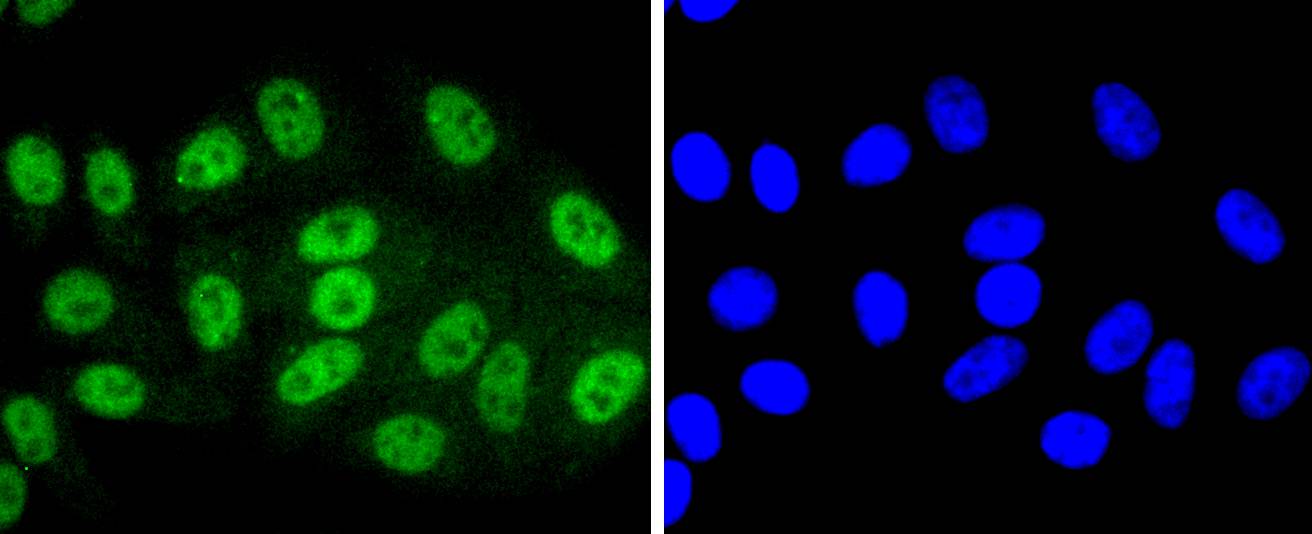
Fig1: ICC staining Phospho-SIRT1(T530) in HepG2 cells (green). The nuclear counter stain is DAPI (blue). Cells were fixed in paraformaldehyde, permeabilised with 0.25% Triton X100/PBS.Application
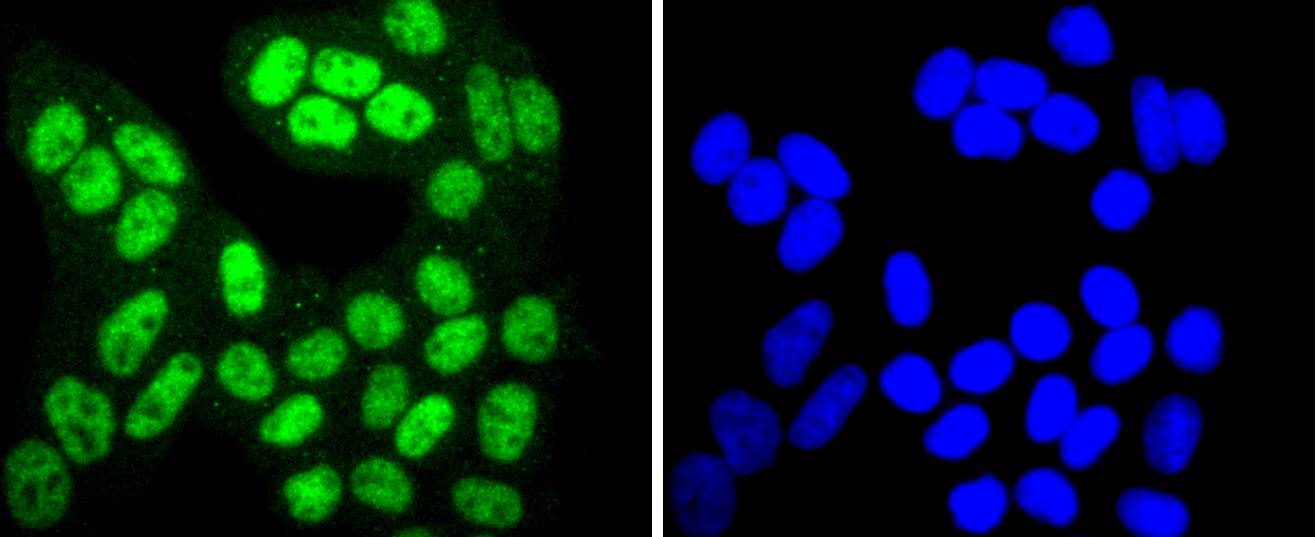
Fig2: ICC staining Phospho-SIRT1(T530) in Hela cells (green). The nuclear counter stain is DAPI (blue). Cells were fixed in paraformaldehyde, permeabilised with 0.25% Triton X100/PBS.Application
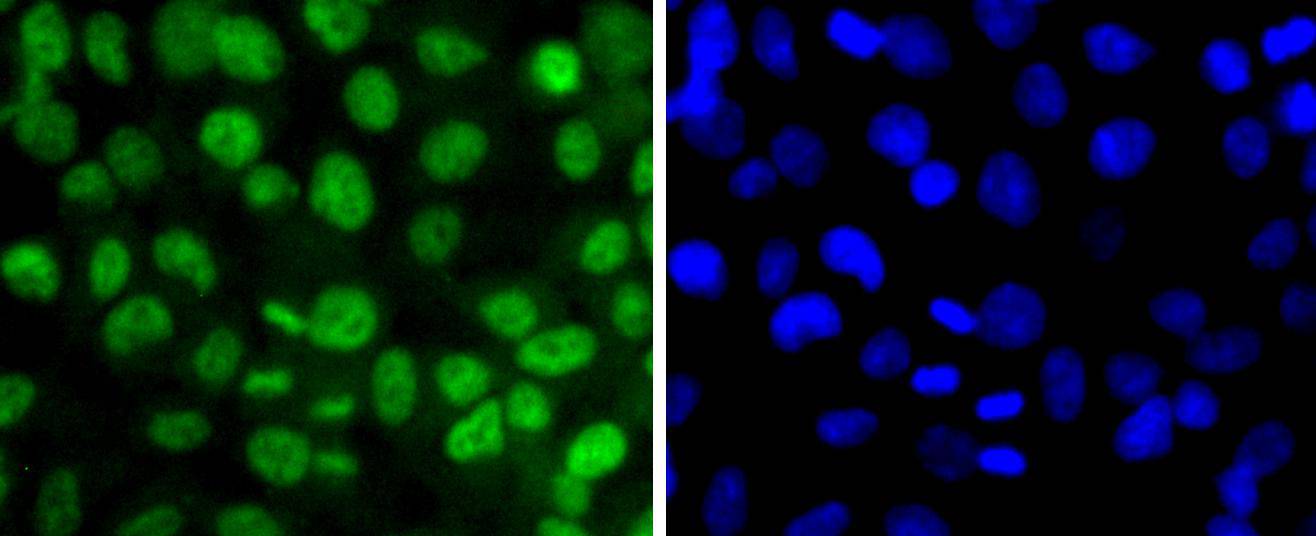
Fig3: ICC staining Phospho-SIRT1(T530) in 293 cells (green). The nuclear counter stain is DAPI (blue). Cells were fixed in paraformaldehyde, permeabilised with 0.25% Triton X100/PBS.Application
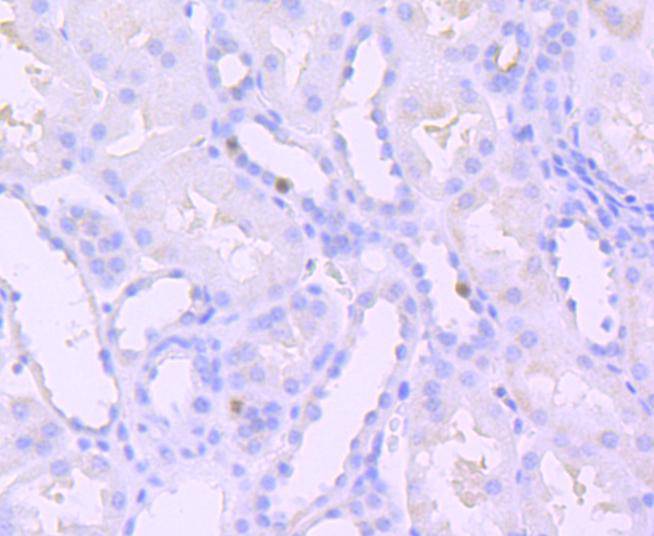
Fig4: Immunohistochemical analysis of paraffin-embedded human kidney tissue using anti-Phospho-SIRT1(T530) antibody. Counter stained with hematoxylin.Application
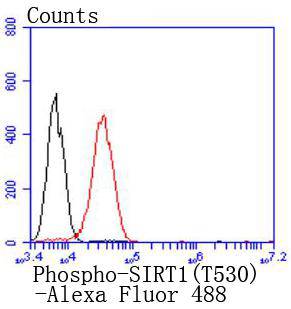
Fig5: Flow cytometric analysis of 293 cells with Phospho-SIRT1(T530) antibody at 1/50 dilution (red) compared with an unlabelled control (cells without incubation with primary antibody; black). Alexa Fluor 488-conjugated goat anti rabbit IgG was used as the secondary antibody.| Product Name | Phospho-SIRT1(T530) [JJ206-6] |
|---|---|
| Antibody Type | Primary Antibodies |
| Antigen Alias | 75SirT1 antibody hSIR2 antibody hSIRT1 antibody HST2, S. cerevisiae, homolog of antibody NAD dependent deacetylase sirtuin 1 antibody NAD dependent protein deacetylase sirtuin 1 antibody OTTHUMP00000198111 antibody OTTHUMP00000198112 antibody Regulatory protein SIR2 homolog 1 antibody SIR1_HUMAN antibody SIR2 antibody SIR2 like 1 antibody SIR2 like protein 1 antibody SIR2, S.cerevisiae, homolog-like 1 antibody SIR2-like protein 1 antibody SIR2ALPHA antibody SIR2L1 antibody Sirt1 antibody SirtT1 75 kDa fragment antibody Sirtuin (silent mating type information regulation 2 homolog) 1 (S. cerevisiae) antibody Sirtuin 1 antibody Sirtuin type 1 antibody |
| Product description | The silent information regulator (SIR2) family of genes are highly-conserved from prokaryotes to eukaryotes and are involved in diverse processes, including transcriptional regulation, cell cycle progression, DNA-damage repair and aging. In S. cerevisiae, Sir2p deacetylates histones in an NAD-dependent manner, which regulates silencing at the telomeric, rDNA and silent mating-type loci. Sir2p is the founding member of a large family, designated sirtuins, which contain a conserved catalytic domain. The human homologs, which include SIRT1-7, are divided into four main branches: SIRT1-3 are class I, SIRT4 is class II, SIRT5 is class III and SIRT6-7 are class IV. SIRT1 has the closest homology to the yeast Sir2p and is widely expressed in fetal and adult tissues. SIRT1 is highly expressed in heart, brain and skeletal muscle, with low expression in lung and placenta. SIRT1 regulates the p53-dependent DNA damage response pathway by binding to and deacetylating p53, specifically at Lys 382. |
| Immunogen | Synthetic phospho-peptide corresponding to residues surrounding Thr530 of human SIRT1. |
| Modification | p-T530 |
| Clonality | Monoclonal |
|---|---|
| Isotype | IgG |
| Host Species | Recombinant rabbit |
| Tested Applications | WBICC/IFIHCFC |
| WB:1:1,000 ICC:1:100-1:500 IHC:1:50-1:200 FC:1:50-1:100 |
|
| Species Reactivity | Human |
| Concentration | 1mg/ml |
| Alternative Names | 75SirT1 antibody
hSIR2 antibody
hSIRT1 antibody
HST2 S. cerevisiae homolog of antibody NAD dependent deacetylase sirtuin 1 antibody NAD dependent protein deacetylase sirtuin 1 antibody OTTHUMP00000198111 antibody OTTHUMP00000198112 antibody Regulatory protein SIR2 homolog 1 antibody SIR1_HUMAN antibody SIR2 antibody SIR2 like 1 antibody SIR2 like protein 1 antibody SIR2 S.cerevisiae homolog-like 1 antibody SIR2-like protein 1 antibody SIR2ALPHA antibody SIR2L1 antibody Sirt1 antibody SirtT1 75 kDa fragment antibody Sirtuin (silent mating type information regulation 2 homolog) 1 (S. cerevisiae) antibody Sirtuin 1 antibody Sirtuin type 1 antibody |
|---|---|
| Molecular Weight(MW) | 82 kDa |
| Cellular Localization | Nucleus, Cytoplasm. |
| SwissProt ID | Q96EB6 |
|---|
Application
Fig1: ICC staining Phospho-SIRT1(T530) in HepG2 cells (green). The nuclear counter stain is DAPI (blue). Cells were fixed in paraformaldehyde, permeabilised with 0.25% Triton X100/PBS.
Application
Fig2: ICC staining Phospho-SIRT1(T530) in Hela cells (green). The nuclear counter stain is DAPI (blue). Cells were fixed in paraformaldehyde, permeabilised with 0.25% Triton X100/PBS.
Application
Fig3: ICC staining Phospho-SIRT1(T530) in 293 cells (green). The nuclear counter stain is DAPI (blue). Cells were fixed in paraformaldehyde, permeabilised with 0.25% Triton X100/PBS.
Application
Fig4: Immunohistochemical analysis of paraffin-embedded human kidney tissue using anti-Phospho-SIRT1(T530) antibody. Counter stained with hematoxylin.
Application
Fig5: Flow cytometric analysis of 293 cells with Phospho-SIRT1(T530) antibody at 1/50 dilution (red) compared with an unlabelled control (cells without incubation with primary antibody; black). Alexa Fluor 488-conjugated goat anti rabbit IgG was used as the secondary antibody.| Positive Control | 293, Hela, HepG2, human kidney tissue. |
|---|---|
| Application Notes | WB:1:1,000 ICC:1:100-1:500 IHC:1:50-1:200 FC:1:50-1:100 |
| Form | Liquid |
|---|---|
| Storage Instructions | Store at +4℃ after thawing. Aliquot store at -20℃ or -80℃. Avoid repeated freeze / thaw cycles. |
| Storage Buffer | 1*TBS (pH7.4), 1%BSA, 40%Glycerol. Preservative: 0.05% Sodium Azide. |


