Application
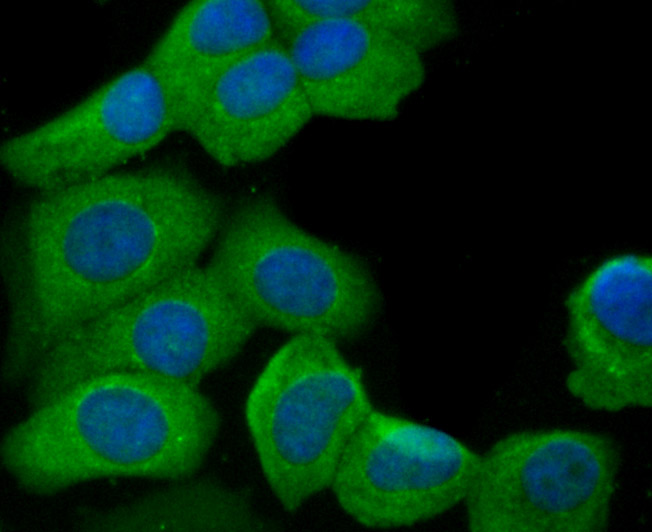
Fig1: ICC staining MTOR in MCF-7 cells (green). The nuclear counter stain is DAPI (blue). Cells were fixed in paraformaldehyde, permeabilised with 0.25% Triton X100/PBS.Application
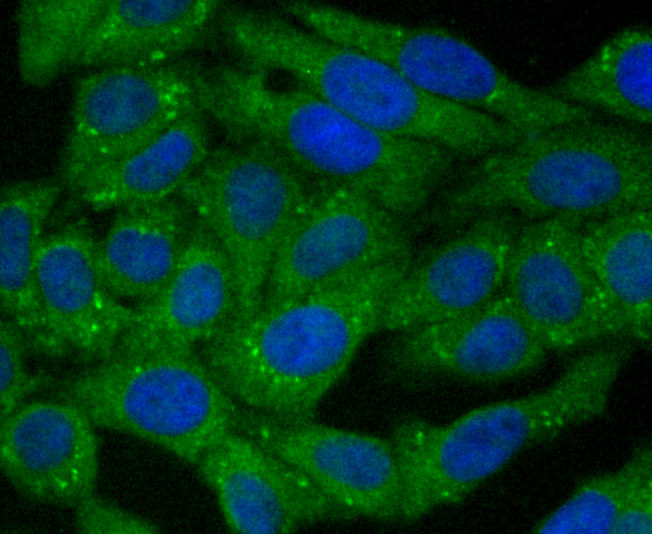
Fig2: ICC staining MTOR in HepG2 cells (green). The nuclear counter stain is DAPI (blue). Cells were fixed in paraformaldehyde, permeabilised with 0.25% Triton X100/PBS.Application
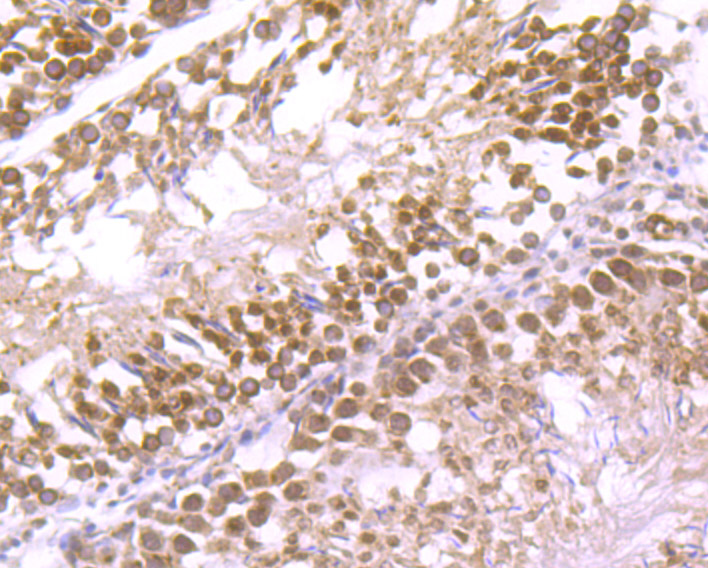
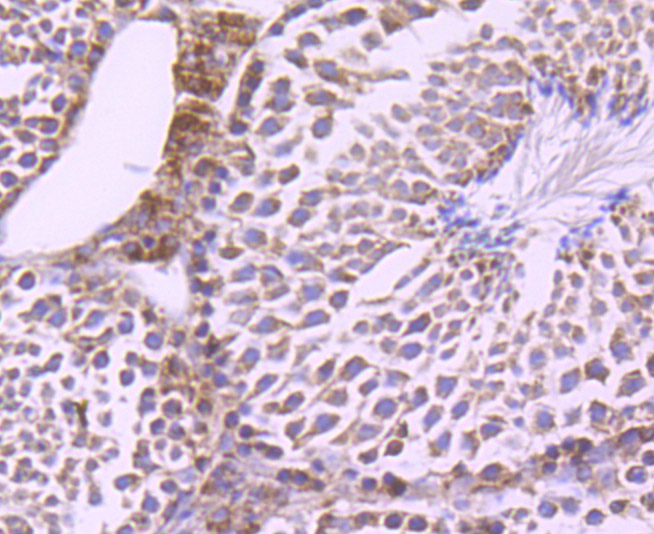
Fig3: Immunohistochemical analysis of paraffin-embedded rat testis tissue using anti-MTOR antibody. Counter stained with hematoxylin.Application
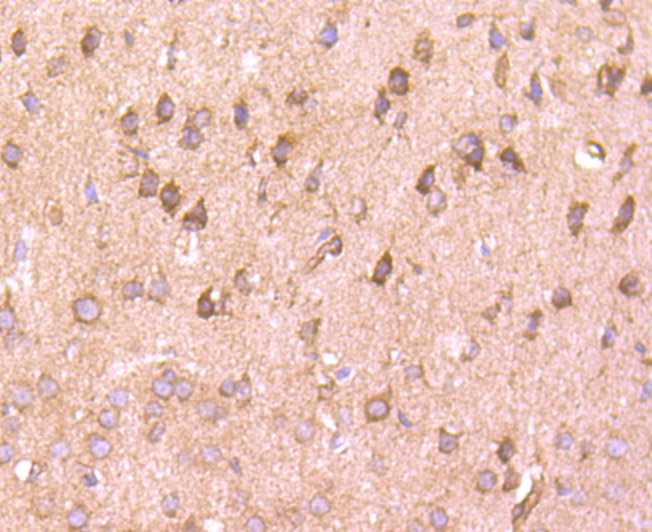
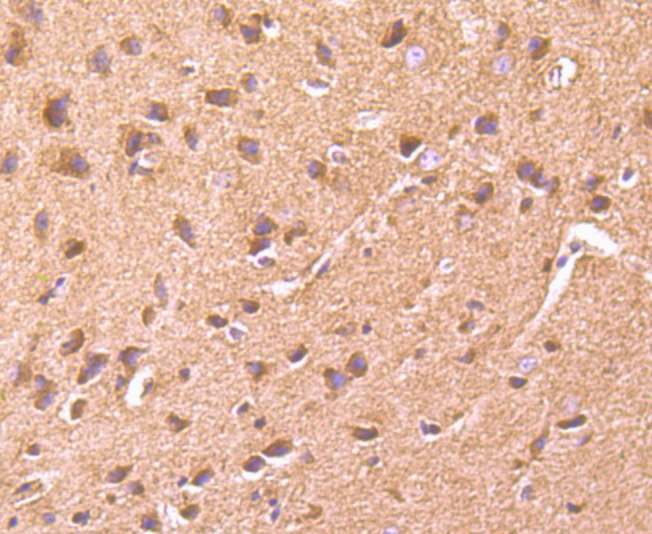
Fig4: Immunohistochemical analysis of paraffin-embedded rat brain tissue using anti-MTOR antibody. Counter stained with hematoxylin.Application
Fig5: Immunohistochemical analysis of paraffin-embedded mouse testis tissue using anti-MTOR antibody. Counter stained with hematoxylin.Application
Fig6: Immunohistochemical analysis of paraffin-embedded mouse brain tissue using anti-MTOR antibody. Counter stained with hematoxylin.| Product Name | MTOR |
|---|---|
| Antibody Type | Primary Antibodies |
| Antigen Alias | dJ576K7.1 (FK506 binding protein 12 rapamycin associated protein 1) antibody FK506 binding protein 12 rapamycin associated protein 1 antibody FK506 binding protein 12 rapamycin associated protein 2 antibody FK506 binding protein 12 rapamycin complex associated protein 1 antibody FK506-binding protein 12-rapamycin complex-associated protein 1 antibody FKBP rapamycin associated protein antibody FKBP12 rapamycin complex associated protein antibody FKBP12-rapamycin complex-associated protein 1 antibody FKBP12-rapamycin complex-associated protein antibody FLJ44809 antibody FRAP antibody FRAP1 antibody FRAP2 antibody Mammalian target of rapamycin antibody Mechanistic target of rapamycin antibody mTOR antibod MTOR_HUMAN antibody OTTHUMP00000001983 antibody RAFT1 antibody Rapamycin and FKBP12 target 1 antibody Rapamycin associated protein FRAP2 antibody Rapamycin target protein 1 antibody Rapamycin target protein antibody RAPT1 antibody Serine/threonine-protein kinase mTOR antibody |
| Product description | The mechanistic target of rapamycin (mTOR), also known as the mammalian target of rapamycin and FK506-binding protein 12-rapamycin-associated protein 1 (FRAP1), is a kinase that in humans is encoded by the MTOR gene. mTOR is a member of the phosphatidylinositol 3-kinase-related kinase family of protein kinases. mTOR links with other proteins and serves as a core component of two distinct protein complexes, mTOR complex 1 and mTOR complex 2, which regulate different cellular processes. In particular, as a core component of both complexes, mTOR functions as a serine/threonine protein kinase that regulates cell growth, cell proliferation, cell motility, cell survival, protein synthesis, autophagy, and transcription. As a core component of mTORC2, mTOR also functions as a tyrosine protein kinase that promotes the activation of insulin receptors and insulin-like growth factor 1 receptors. mTORC2 has also been implicated in the control and maintenance of the actin cytoskeleton. |
| Immunogen | Peptide |
| Clonality | Polyclonal |
|---|---|
| Isotype | IgG |
| Host Species | Rabbit |
| Tested Applications | ICCIHC |
| ICC:1:50-1:200 IHC:1:50-1:200 WB:1:200-1:500 |
|
| Species Reactivity | HumanMouseRat |
| Concentration | 1mg/ml |
| Alternative Names | dJ576K7.1 (FK506 binding protein 12 rapamycin associated protein 1) antibody FK506 binding protein 12 rapamycin associated protein 1 antibody FK506 binding protein 12 rapamycin associated protein 2 antibody FK506 binding protein 12 rapamycin complex associated protein 1 antibody FK506-binding protein 12-rapamycin complex-associated protein 1 antibody FKBP rapamycin associated protein antibody FKBP12 rapamycin complex associated protein antibody FKBP12-rapamycin complex-associated protein 1 antibody FKBP12-rapamycin complex-associated protein antibody FLJ44809 antibody FRAP antibody FRAP1 antibody FRAP2 antibody Mammalian target of rapamycin antibody Mechanistic target of rapamycin antibody mTOR antibod MTOR_HUMAN antibody OTTHUMP00000001983 antibody RAFT1 antibody Rapamycin and FKBP12 target 1 antibody Rapamycin associated protein FRAP2 antibody Rapamycin target protein 1 antibody Rapamycin target protein antibody RAPT1 antibody Serine/threonine-protein kinase mTOR antibody |
|---|---|
| Molecular Weight(MW) | 289 kDa |
| Cellular Localization | Endoplasmic reticulum, mitochondrion, nucleus. |
| SwissProt ID | P42345 |
|---|
Application
Fig1: ICC staining MTOR in MCF-7 cells (green). The nuclear counter stain is DAPI (blue). Cells were fixed in paraformaldehyde, permeabilised with 0.25% Triton X100/PBS.
Application
Fig2: ICC staining MTOR in HepG2 cells (green). The nuclear counter stain is DAPI (blue). Cells were fixed in paraformaldehyde, permeabilised with 0.25% Triton X100/PBS.
Application
Fig3: Immunohistochemical analysis of paraffin-embedded rat testis tissue using anti-MTOR antibody. Counter stained with hematoxylin.
Application
Fig4: Immunohistochemical analysis of paraffin-embedded rat brain tissue using anti-MTOR antibody. Counter stained with hematoxylin.
Application
Fig5: Immunohistochemical analysis of paraffin-embedded mouse testis tissue using anti-MTOR antibody. Counter stained with hematoxylin.
Application
Fig6: Immunohistochemical analysis of paraffin-embedded mouse brain tissue using anti-MTOR antibody. Counter stained with hematoxylin.| Positive Control | MCF-7, HepG2, rat testis tissue, rat brain tissue, mouse testis tissue, mouse brain tissue. |
|---|---|
| Application Notes | ICC:1:50-1:200 IHC:1:50-1:200 WB:1:200-1:500 |
| Form | Liquid |
|---|---|
| Storage Instructions | Store at +4℃ after thawing. Aliquot store at -20℃ or -80℃. Avoid repeated freeze / thaw cycles. |
| Storage Buffer | 1*TBS (pH7.4), 1%BSA, 40%Glycerol. Preservative: 0.05% Sodium Azide. |


