Application
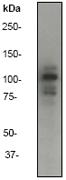
Fig1: Western blot analysis on MCF-7 cell lysate using anti-E-Cadherin.Application
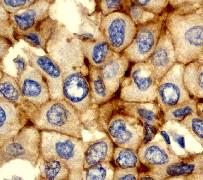
Fig2: Immunohistochemical analysis of paraffin-embedded human breast carcinoma using anti-E-cadherin.| Product Name | E-Cadherin |
|---|---|
| Antibody Type | Primary Antibodies |
| Antigen Alias | Arc 1 antibody CADH1_HUMAN antibody Cadherin 1 antibody cadherin 1 type 1 E-cadherin antibody Cadherin1 antibody CAM 120/80 antibody CD 324 antibody CD324 antibody CD324 antigen antibody cdh1 antibody CDHE antibody E-Cad/CTF3 antibody E-cadherin antibody ECAD antibody Epithelial cadherin antibody epithelial calcium dependant adhesion protein antibody LCAM antibody Liver cell adhesion molecule antibody UVO antibody Uvomorulin antibody |
| Product description | E-Cadherin, a member of the cadherin superfamily, is implicated as a key player in different cellular processes including development, morphology, polarity, migration and tissue integrity (1-2). E-cadherin is a glycoprotein with an extracellular domain that interacts with other E-cadherin molecules on adjacent cells, thereby establishing adhesion between epithelial cells. Established as a tumor and metastasis suppressor, E-cadherin expression is frequently down-regulated or extinguished in malignancy which strongly correlates with poor prognosis (3-4). Mutations in E-cadherin are found in gastric, breast, colorectal, thyroid and ovarian cancer (5). |
| Immunogen | peptide |
| Clonality | Polyclonal |
|---|---|
| Isotype | IgG |
| Host Species | Rabbit |
| Tested Applications | WBICCIHCIP |
| WB:1:1,000 ICC:1:100 IHC:1:100 IP:1:50 |
|
| Species Reactivity | HumanMouse |
| Concentration | 1mg/ml |
| Alternative Names | Arc 1 antibody CADH1_HUMAN antibody Cadherin 1 antibody cadherin 1 type 1 E-cadherin antibody Cadherin1 antibody CAM 120/80 antibody CD 324 antibody CD324 antibody CD324 antigen antibody cdh1 antibody CDHE antibody E-Cad/CTF3 antibody E-cadherin antibody ECAD antibody Epithelial cadherin antibody epithelial calcium dependant adhesion protein antibody LCAM antibody Liver cell adhesion molecule antibody UVO antibody Uvomorulin antibody |
|---|---|
| Molecular Weight(MW) | 135kDa |
| Cellular Localization | Endosome, Cell junction, Cell membrane Golgi apparatus |
| SwissProt ID | P12830 |
|---|
Application
Fig1: Western blot analysis on MCF-7 cell lysate using anti-E-Cadherin.
Application
Fig2: Immunohistochemical analysis of paraffin-embedded human breast carcinoma using anti-E-cadherin.| Positive Control | MCF-7. |
|---|---|
| Application Notes | WB:1:1,000 ICC:1:100 IHC:1:100 IP:1:50 |
| Form | Liquid |
|---|---|
| Storage Instructions | Store at -20 ℃. Stable for 12 months from date of receipt |
| Storage Buffer | 1*TBS (pH7.4), 0.5%BSA, 40%Glycerol. Preservative: 0.05% Sodium Azide. |


