WB
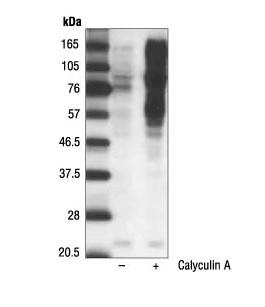
Western blot analysis of extracts from A431 cells, untreated or calyculin A-treated, using Phospho-(Ser/Thr) Phe Antibody.| Product Name | Phospho-(Ser/Thr) Phe Antibody |
|---|---|
| Antibody Type | Primary Antibodies |
| Immunogen | synthetic phospho-serine/threonine-phenylalanine-containing peptide |
| Clonality | monoclonal |
|---|---|
| Isotype | IgG |
| Host Species | Rabbit |
| Tested Applications | ELISAIPWB |
| WB:1:1000 IP:1:100 ELISA:1:1000-1:10000 |
|
| Species Reactivity | All |
| Concentration | 1mg/ml |
| Purification | Protein A |
| Function | A hallmark of signal transduction pathways is the reversible phosphorylation of serine and threonine residues within specific sequences, or motifs, in target proteins. Specific signaling motifs include not only sequences that are recognized by protein kinases (1), but also those that are recognized by phosphorylation-dependent binding proteins such as 14-3-3 (2). These modular phosphoprotein interacting domains are critical elements in modulating, directing and amplifying intracellular communications. CST has pioneered the development of phospho-motif specific antibodies, which are invaluable tools for probing the complexity of phospho-regulatory pathways. Many critical protein kinases can be regulated by phosphorylation at a specific serine or threonine surrounded by phenylalanine or tyrosine. For example, Akt, a kinase that regulates cell survival, is activated by phosphorylation at Ser473, a site surrounded by phenylalanine and tyrosine (3). RSK1, p70S6K, and certain PKC isoforms also contain a similar consensus phosphorylation site. Phosphorylation of these sites is required for kinase activity (4,5). The Phospho-(Ser/Thr) Phe Antibody is a powerful tool for discovery of new proteins containing this important regulatory motif. |
|---|
WB
Western blot analysis of extracts from A431 cells, untreated or calyculin A-treated, using Phospho-(Ser/Thr) Phe Antibody.| Application Notes | WB:1:1000 IP:1:100 ELISA:1:1000-1:10000 |
|---|
| Form | Liquid |
|---|---|
| Storage Instructions | Store at –20°C. Do not aliquot the antibody. |
| Storage Buffer | Supplied in 10 mM sodium HEPES (pH 7.5), 150 mM NaCl, 100 µg/ml BSA and 50% glycerol. |


