WB
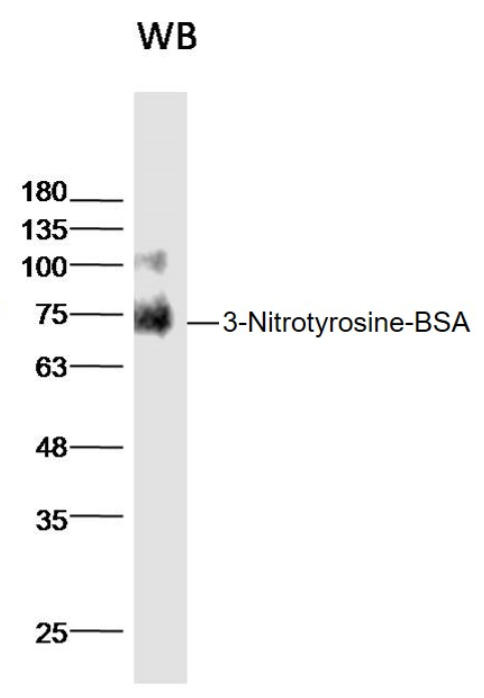
Primary:Anti-3-Nitrotyrosine at 1/300 dilution Secondary: IRDye800CW Goat Anti Rabbit IgG at 1/20000 dilution.IHC
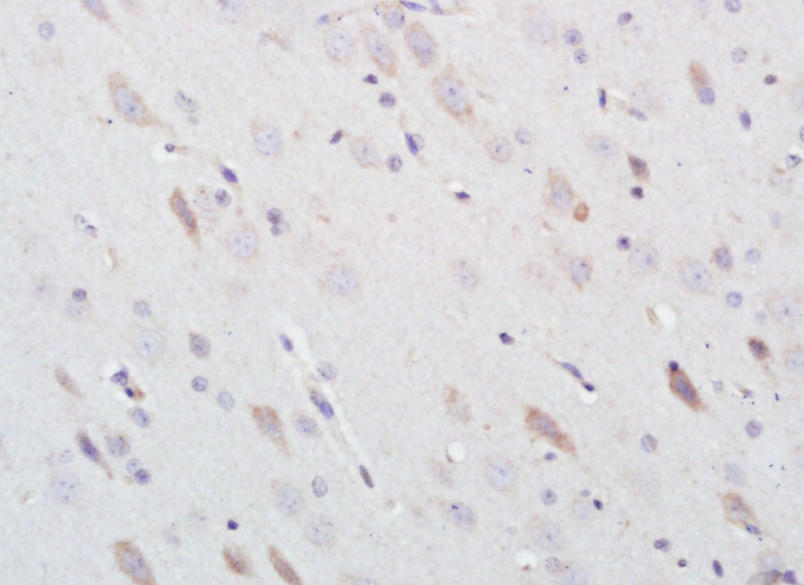
Tissue/cell: rat brain tissue; 4% Paraformaldehyde-fixed and paraffin embedded; Antigen retrieval: citrate buffer ( 0.01M, pH 6.0 ), Boiling bathing for 15min; Block endogenous peroxidase by 3% Hydrogen peroxide for 30min; Blocking buffer (normal goat serum) at 37℃ for 20 min; Incubation: Anti-Nitro tyrosine Polyclonal Antibody, Unconjugated 1:500, overnight at 4°C, followed by conjugation to the secondary antibody and DAB staining.FC
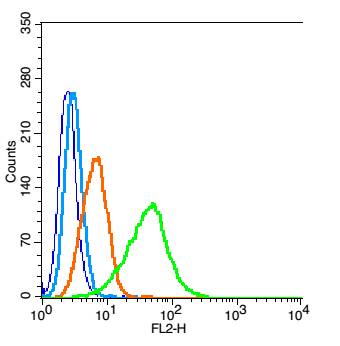
Blank control: Hela(blue), the cells were fixed with 2% paraformaldehyde (10 min) and then permeabilized with ice-cold 90% methanol for 30 min on ice.. Isotype Control Antibody: Rabbit IgG(orange) ; Secondary Antibody: Goat anti rabbit IgG-FITC(white blue), Dilution: 1:100 in 1 X PBS containing 0.5% BSA ; Primary Antibody Dilution: 1μg in 100 μL1X PBS containing 0.5% BSA(green).IF-P
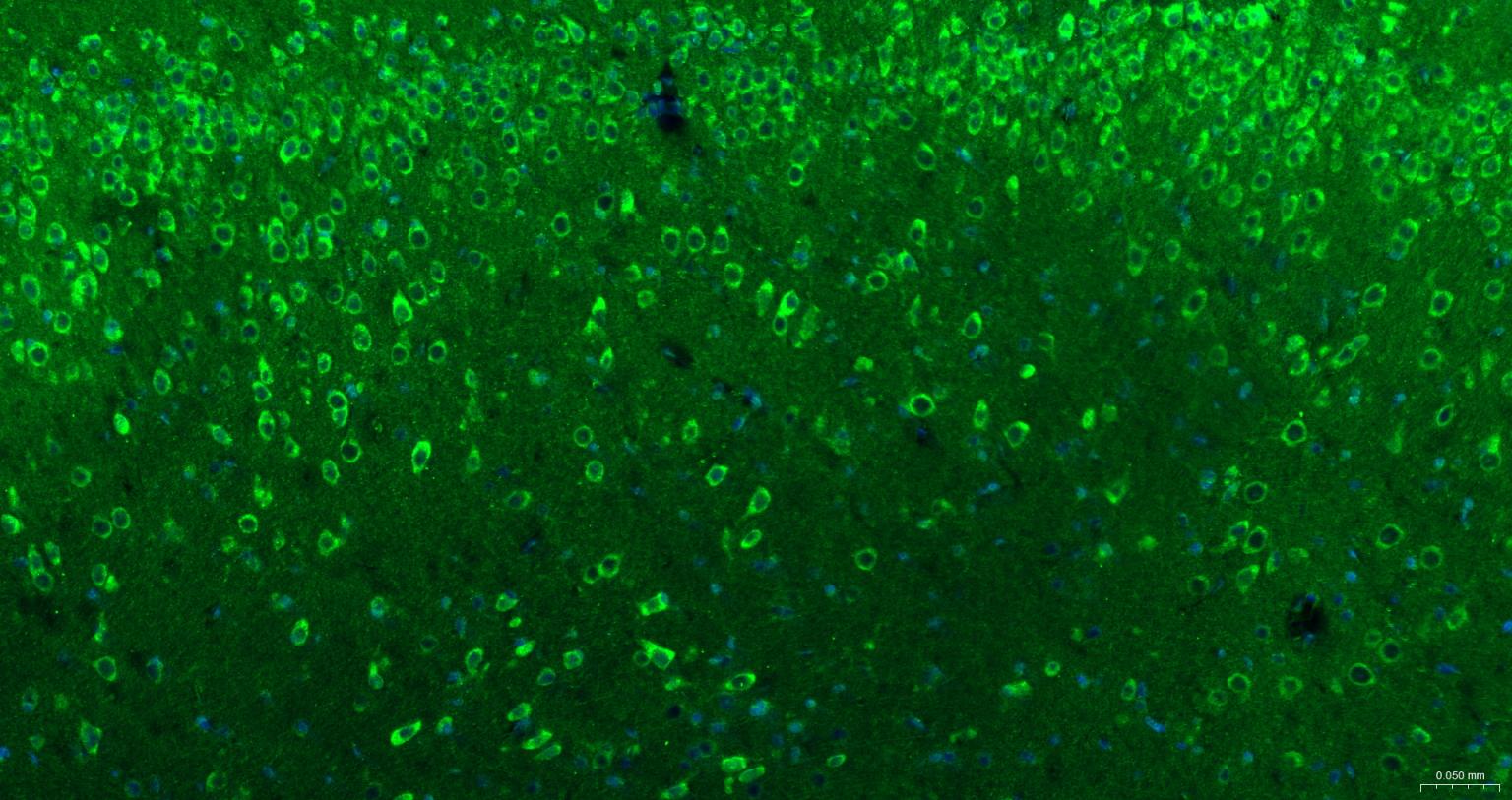
Paraformaldehyde-fixed, paraffin embedded Rat cerebrum; Antigen retrieval by boiling in sodium citrate buffer (pH6.0) for 15 min; The section was incubated with 3-Nitrotyrosine Polyclonal Antibody, Unconjugated at 1:200 overnight at 4°C. Followed by conjugated Goat Anti-Rabbit IgG antibody (green), DAPI (blue) was used to stain the cell nuclei.| Product Name | 3-Nitrotyrosine Rabbit pAb |
|---|---|
| Antibody Type | Primary Antibodies |
| Immunogen | KLH conjugated Nitrotyrosine |
| Clonality | Polyclonal |
|---|---|
| Isotype | IgG |
| Host Species | Rabbit |
| Tested Applications | FCIF-PIHCWB |
| WB:1:300 IHC:1:100-1:500 FC:1ug/Test IF-P:1:100-1:500 |
|
| Species Reactivity | All |
| Concentration | 1mg/ml |
| Purification | Protein A |
| Alternative Names | NO tyrosine nTyr Nitrotyrosine nitro-Tyrosine nitro Tyrosine. 3-Nitrotyrosine |
|---|---|
| Molecular Weight(MW) | 38kDa |
| Function | Nitrotyrosine is a marker for inflammation and nitric oxide (NO) production and is formed in the presence of the active metabolite NO. Because nitrotyrosine is a stable product of multiple pathways, such as the formation of peroxynitrite, its plasma concentration may be a useful determinant of NO-dependent damage in vivo. Nitrotyrosine has been detected in inflammatory processes such as septic shock, rheumatoid arthritis, celiac disease, atherosclerotic plaques and chronic renal failure. Protein tyrosine nitration results in a post-translational modification that is increasingly receiving attention as an important component of nitric oxide signaling. While multiple nonenzymatic mechanisms are known to be capable of producing nitrated tyrosine residues, most tyrosine nitration events involve catalysis by metalloproteins such as myeloperoxidase, eosinophilperoxidase, myoglobin, the cytochrome P-450s, superoxide dismutase and prostacyclin synthase. Various studies have shown that protein tyrosinenitration is limited to specific proteins and that the process is selective. For example, exposure of human surfactant protein A, SP-A, to oxygen-nitrogen intermediates generated by activated alveolar macrophages resulted in specific nitration of SP-A at tyrosines 164 and 166, while addition of 1.2 mMCO 2 resulted in additional nitration at tyrosine 161. The presence of nitrotyrosine-containing proteins has shown high correlation to disease states such as atherosclerosis, Alzheimer’s disease, Parkinson’s disease and amyotrophic lateral sclerosis. |
| Cellular Localization | Cytoplasm. |
WB
Primary:Anti-3-Nitrotyrosine at 1/300 dilution Secondary: IRDye800CW Goat Anti Rabbit IgG at 1/20000 dilution.
IHC
Tissue/cell: rat brain tissue; 4% Paraformaldehyde-fixed and paraffin embedded; Antigen retrieval: citrate buffer ( 0.01M, pH 6.0 ), Boiling bathing for 15min; Block endogenous peroxidase by 3% Hydrogen peroxide for 30min; Blocking buffer (normal goat serum) at 37℃ for 20 min; Incubation: Anti-Nitro tyrosine Polyclonal Antibody, Unconjugated 1:500, overnight at 4°C, followed by conjugation to the secondary antibody and DAB staining.
FC
Blank control: Hela(blue), the cells were fixed with 2% paraformaldehyde (10 min) and then permeabilized with ice-cold 90% methanol for 30 min on ice.. Isotype Control Antibody: Rabbit IgG(orange) ; Secondary Antibody: Goat anti rabbit IgG-FITC(white blue), Dilution: 1:100 in 1 X PBS containing 0.5% BSA ; Primary Antibody Dilution: 1μg in 100 μL1X PBS containing 0.5% BSA(green).
IF-P
Paraformaldehyde-fixed, paraffin embedded Rat cerebrum; Antigen retrieval by boiling in sodium citrate buffer (pH6.0) for 15 min; The section was incubated with 3-Nitrotyrosine Polyclonal Antibody, Unconjugated at 1:200 overnight at 4°C. Followed by conjugated Goat Anti-Rabbit IgG antibody (green), DAPI (blue) was used to stain the cell nuclei.| Application Notes | WB:1:300 IHC:1:100-1:500 FC:1ug/Test IF-P:1:100-1:500 |
|---|
| Form | Liquid |
|---|---|
| Storage Instructions | Shipped at 4℃. Store at -20℃ for one year. Avoid repeated freeze/thaw cycles. |
| Storage Buffer | 0.01M TBS (pH7.4) with 1% BSA, 0.02% Proclin300 and 50% Glycerol. |


