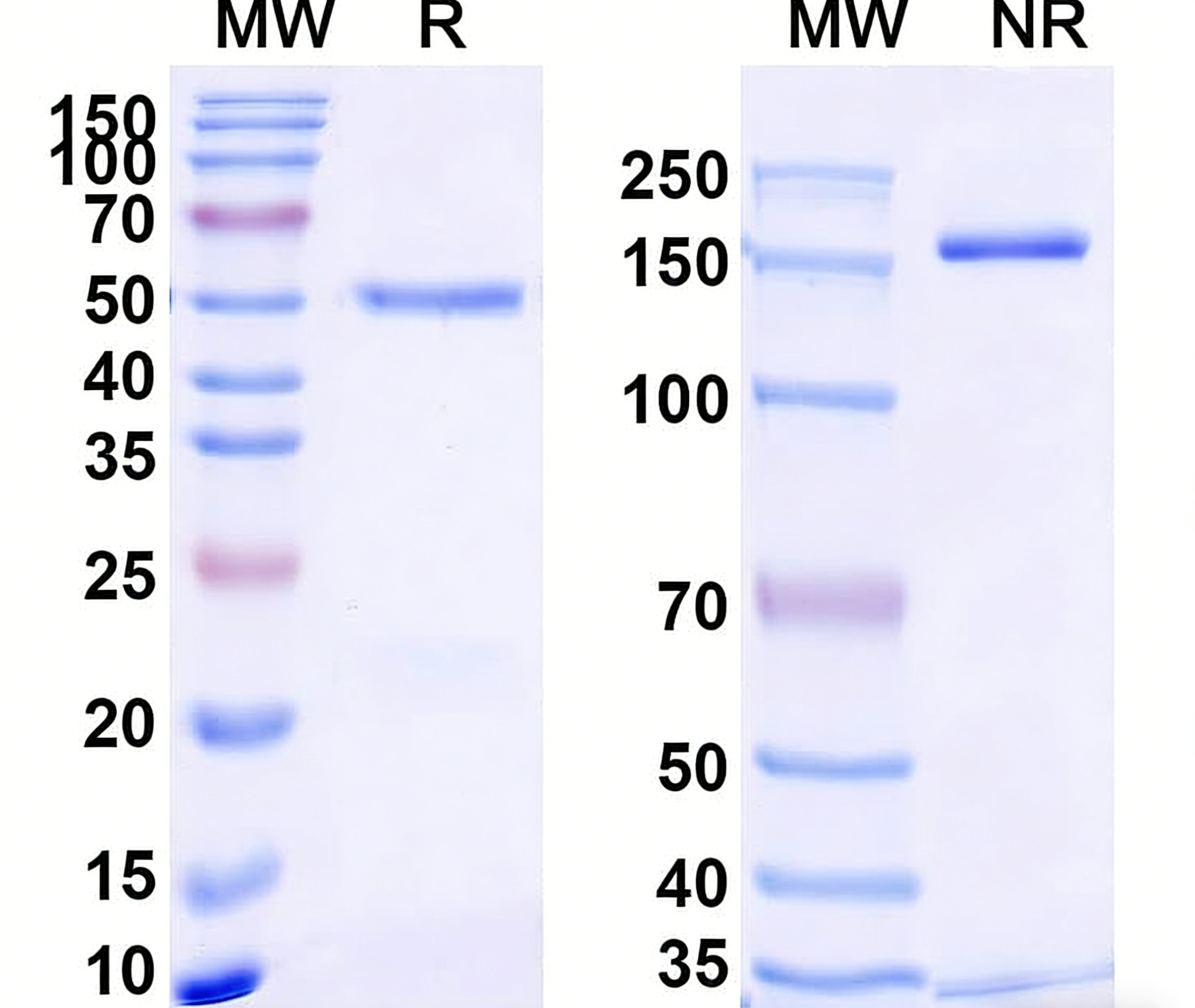
SDS-PAGE
SDS-PAGE for Anti-N1-Phosphohistidine (1-pHis) Antibody| Product Name | Anti-N1-Phosphohistidine (1-pHis) Antibody |
|---|---|
| Antibody Type | Primary Antibodies |
| Product description | Phosphorylation plays a critical role in regulating protein activity and diverse cellular signaling events in cells. Owing to limitations in tools for detecting phosphohistidine (pHis), most studies have focused on phosphorylation of serine, threonine, and tyrosine residues. Histidine phosphorylation can occur at the N1 (1-pHis) or N3 (3-pHis) positions of the imidazole ring. The development of peptides containing stable phosphotriazolylalanine analogs of 1-pHis and 3-pHis (1-pTza and 3-pTza, respectively) has enabled the generation of antibodies for studying N1 and N3 histidine phosphorylation in signaling events. Accumulating evidence indicates that histidine kinases are associated with cancer and tumor metastasis. The first identified metastasis suppressor gene encodes Nm23-H1 (also known as NME1, nucleoside diphosphate kinase A, or NDPK-A), one of the two well-characterized mammalian histidine kinases. Nm23-H1/Nme1 and the closely related Nm23-H2 (Nme2/NDPK-B) catalyze phosphate transfer from ATP to nucleoside diphosphates (NDPs) via a 1-pHis enzyme intermediate. Nm23-H1/-H2 also possess histidine kinase activity, transferring phosphate from their active-site pHis to histidine residues in target proteins. Metabolic enzymes such as phosphoglycerate mutase (PGAM), succinyl-CoA synthetase (SCS), and ATP-citrate lyase (ACL) also utilize pHis as an enzyme intermediate. In contrast to NME1/2, PGAM employs 3-pHis as its catalytic intermediate. Beyond eukaryotes, histidine phosphorylation is well-documented in bacterial two-component signaling pathways involved in chemotaxis, wherein phosphate is transferred from a pHis formed in a receptor/sensor protein to an aspartate residue in a cognate response regulator, with the receptor/sensor protein functioning essentially as an aspartate kinase. |
| Clonality | Monoclonal |
|---|---|
| Isotype | IgG |
| Host Species | Rabbit |
| Tested Applications | ELISAWB |
| WB:1:500-1:2000 ELISA:1:1000-1:10000 |
|
| Species Reactivity | All |
| Concentration | 1mg/ml |
| Purification | Protein A/G |
| Target | N1-Phosphohistidine, 1-pHis |
|---|
SDS-PAGE
SDS-PAGE for Anti-N1-Phosphohistidine (1-pHis) Antibody| Application Notes | WB:1:500-1:2000 ELISA:1:1000-1:10000 |
|---|
| Form | Liquid |
|---|---|
| Storage Instructions | Use a manual defrost freezer and avoid repeated freeze thaw cycles. Store at 2 to 8°C for frequent use. Store at -20 to -80°C for twelve months from the date of receipt. |
| Storage Buffer | 0.01M PBS pH 7.4 |


