WB
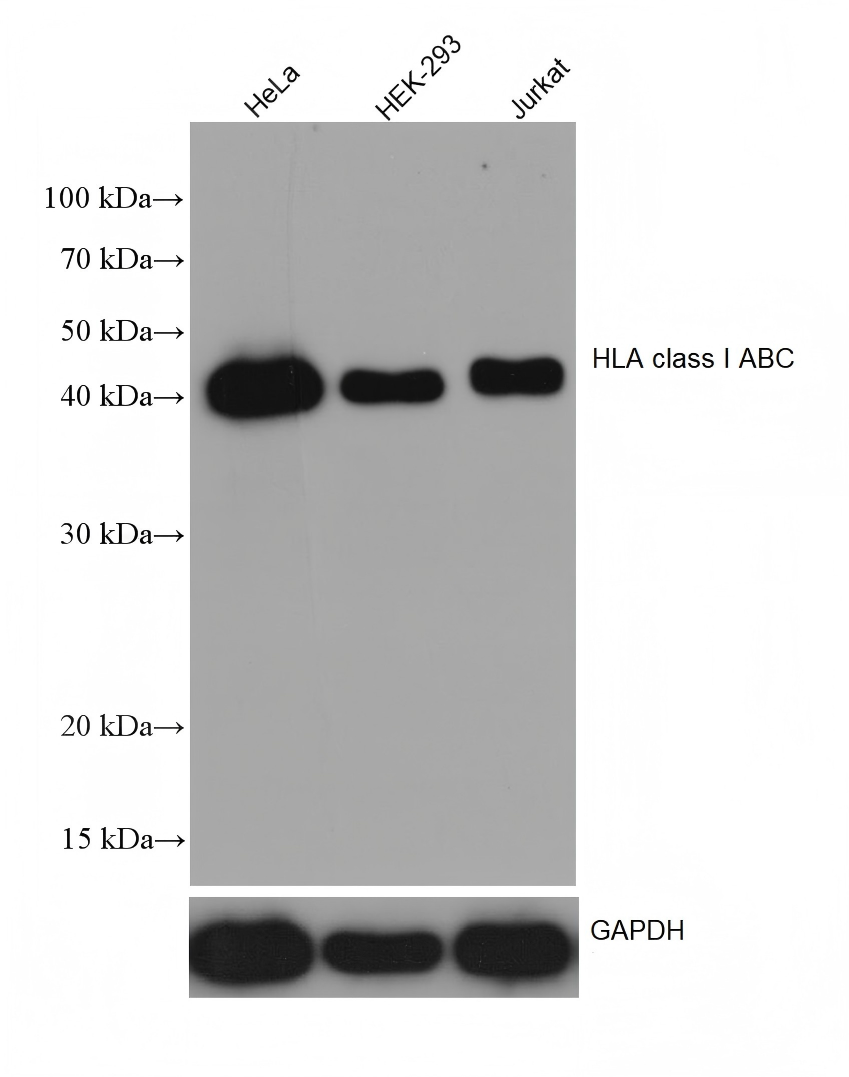
Various lysates were subjected to SDS PAGE followed by western blot with HLA class I ABC antibody at dilution of 1:10000 incubated at room temperature for 1.5 hours. The membrane was stripped and reblotted with HRP-conjugated GAPDH Monoclonal antibody as loading control.IP
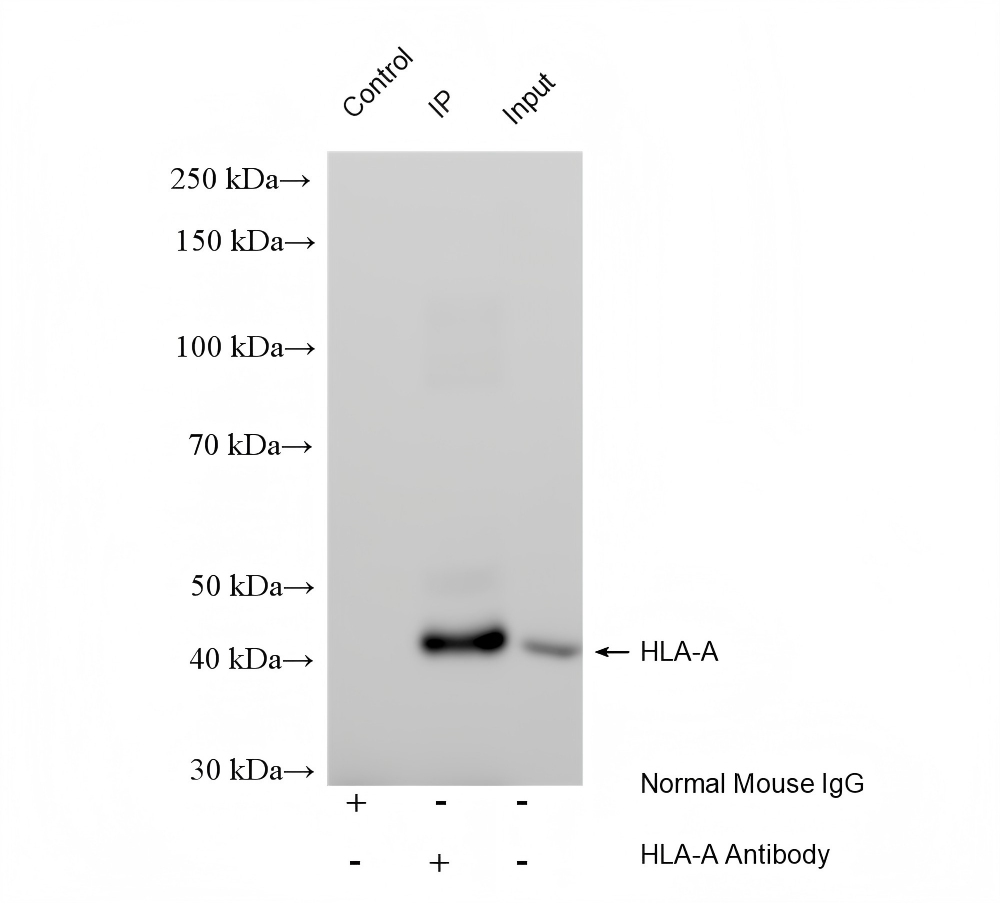
IP result of anti-HLA class I ABC (4ug; Detection:1:4000) with HepG2 cells lysate 2000 ug.IHC
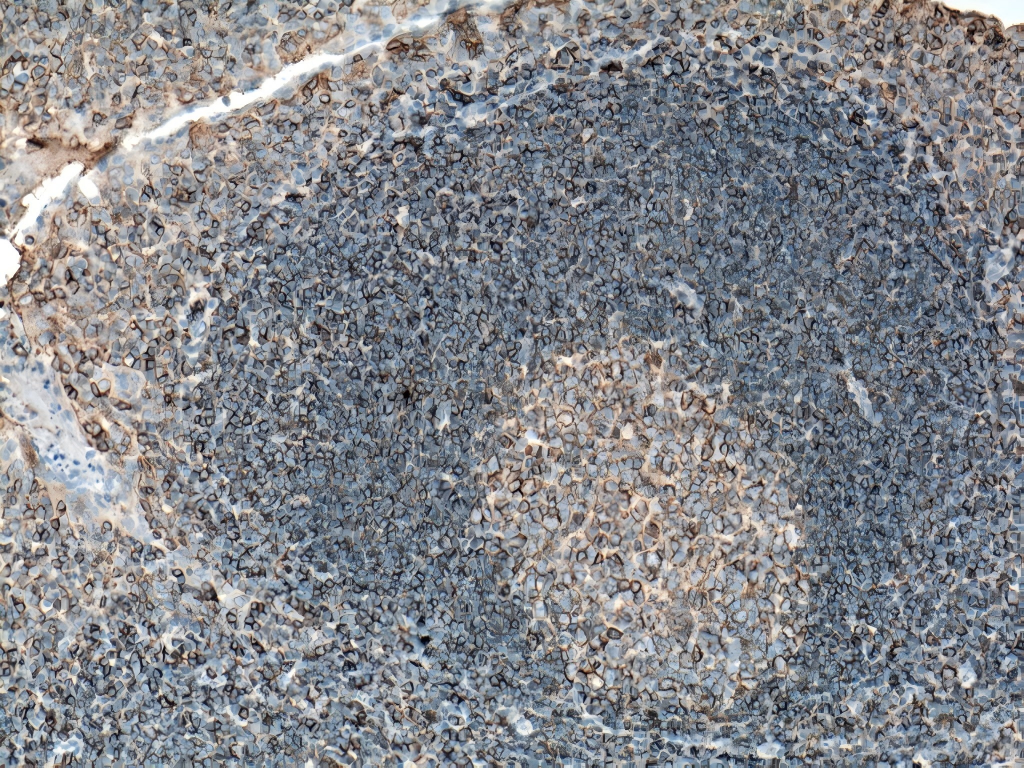
Immunohistochemical analysis of paraffin-embedded human tonsillitis tissue slide using HLA class I ABC antibody at dilution of 1:10000 (under 10x lens. Heat mediated antigen retrieval with Tris-EDTA buffer (pH 9.0).IHC
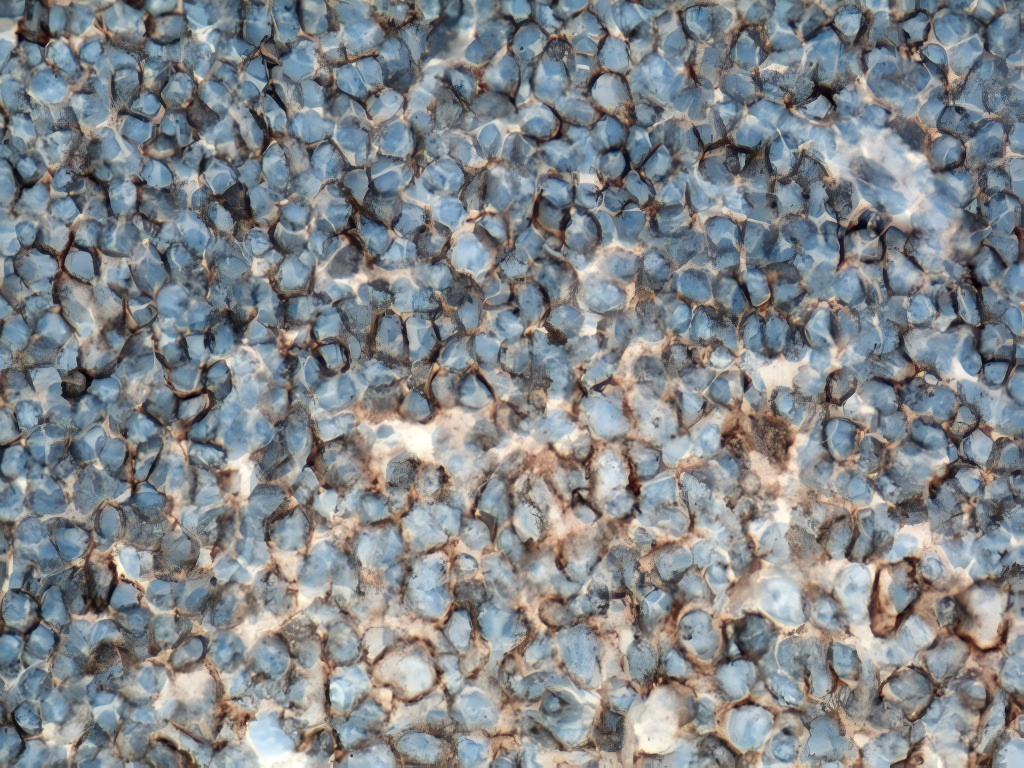
Immunohistochemical analysis of paraffin-embedded human tonsillitis tissue slide using HLA class I ABC antibody at dilution of 1:10000 (under 40x lens. Heat mediated antigen retrieval with Tris-EDTA buffer (pH 9.0).FC
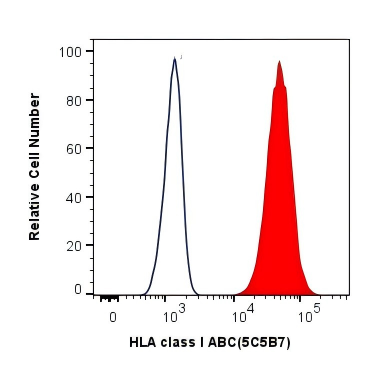
1X10^6 Raji cells were surface stained with 0.4 ug Anti-Human HLA class I ABC and CoraLite®488-Conjugated AffiniPure Goat Anti-Mouse IgG(H+L) at dilution 1:1000 (red), or 0.4 ug Mouse IgG2b Isotype Control (MPC-11) (blue). Cells were not fixed.ICC/IF
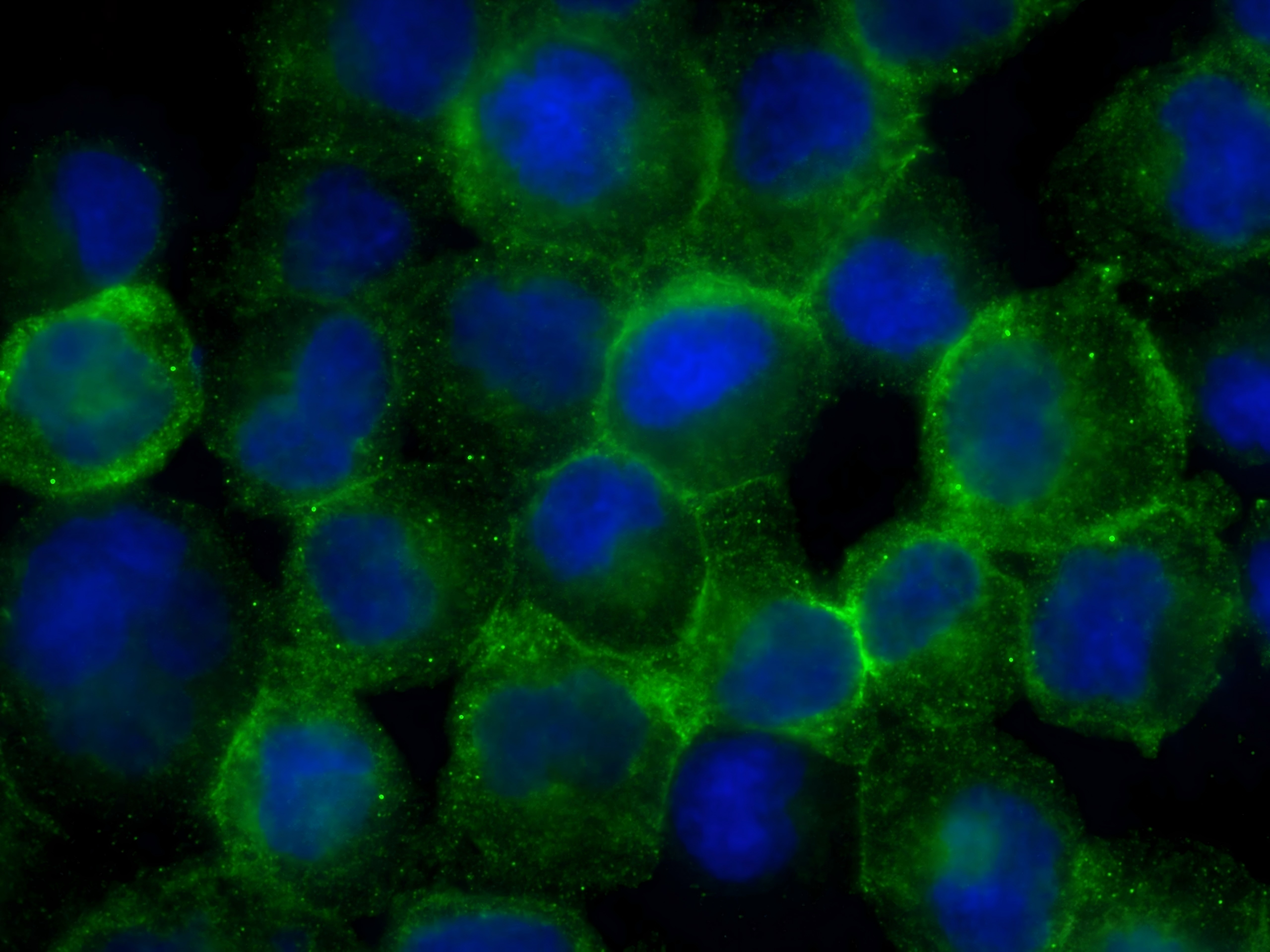
Immunofluorescent analysis of (4% PFA) fixed Raji cells using HLA class I ABC antibody at dilution of 1:800 and CoraLite®488-Conjugated AffiniPure Goat Anti-Mouse IgG(H+L).| Product Name | HLA class I ABC Monoclonal antibody |
|---|---|
| Antibody Type | Primary Antibodies |
| Immunogen | Recombinant human HLA class I (HLA-A) protein |
| Clonality | Monoclonal |
|---|---|
| Isotype | IgG2b |
| Host Species | Mouse |
| Tested Applications | FCICC/IFIHCIPWB |
| WB:1:5000-1:50000 ICC/IF:1:400-1:600 FC:0.40 ug per 10^6 cells in a 100 µl suspension IHC:1:1000-1:10000 IP:0.5-4.0 ug for 1.0-3.0 mg of total protein lysate |
|
| Species Reactivity | HumanPig |
| Concentration | 1mg/ml |
| Purification | Protein A |
| Gene Symbol | HLA-A |
|---|---|
| Gene Synonyms | HLAA |
| Gene Full Name | major histocompatibility complex, class I, A |
| Gene Summary | HLA-A belongs to the HLA class I heavy chain paralogues. This class I molecule is a heterodimer consisting of a heavy chain and a light chain (beta-2 microglobulin). The heavy chain is anchored in the membrane. Class I molecules play a central role in the immune system by presenting peptides derived from the endoplasmic reticulum lumen so that they can be recognized by cytotoxic T cells. They are expressed in nearly all cells. The heavy chain is approximately 45 kDa and its gene contains 8 exons. Exon 1 encodes the leader peptide, exons 2 and 3 encode the alpha1 and alpha2 domains, which both bind the peptide, exon 4 encodes the alpha3 domain, exon 5 encodes the transmembrane region, and exons 6 and 7 encode the cytoplasmic tail. Polymorphisms within exon 2 and exon 3 are responsible for the peptide binding specificity of each class one molecule. Typing for these polymorphisms is routinely done for bone marrow and kidney transplantation. More than 6000 HLA-A alleles have been described. The HLA system plays an important role in the occurrence and outcome of infectious diseases, including those caused by the malaria parasite, the human immunodeficiency virus (HIV), and the severe acute respiratory syndrome coronavirus (SARS-CoV). The structural spike and the nucleocapsid proteins of the novel coronavirus SARS-CoV-2, which causes coronavirus disease 2019 (COVID-19), are reported to contain multiple Class I epitopes with predicted HLA restrictions. Individual HLA genetic variation may help explain different immune responses to a virus across a population.[provided by RefSeq, Aug 2020] |
| Alternative Names | HLA-A 5C5B7 HLA A HLA class I HLA class I (HLA-A) |
| Molecular Weight(MW) | 41 kDa |
| Cellular Localization | Cell membrane,Endoplasmic reticulum,Membrane,MHC I. |
WB
Various lysates were subjected to SDS PAGE followed by western blot with HLA class I ABC antibody at dilution of 1:10000 incubated at room temperature for 1.5 hours. The membrane was stripped and reblotted with HRP-conjugated GAPDH Monoclonal antibody as loading control.
IP
IP result of anti-HLA class I ABC (4ug; Detection:1:4000) with HepG2 cells lysate 2000 ug.
IHC
Immunohistochemical analysis of paraffin-embedded human tonsillitis tissue slide using HLA class I ABC antibody at dilution of 1:10000 (under 10x lens. Heat mediated antigen retrieval with Tris-EDTA buffer (pH 9.0).
IHC
Immunohistochemical analysis of paraffin-embedded human tonsillitis tissue slide using HLA class I ABC antibody at dilution of 1:10000 (under 40x lens. Heat mediated antigen retrieval with Tris-EDTA buffer (pH 9.0).
FC
1X10^6 Raji cells were surface stained with 0.4 ug Anti-Human HLA class I ABC and CoraLite®488-Conjugated AffiniPure Goat Anti-Mouse IgG(H+L) at dilution 1:1000 (red), or 0.4 ug Mouse IgG2b Isotype Control (MPC-11) (blue). Cells were not fixed.
ICC/IF
Immunofluorescent analysis of (4% PFA) fixed Raji cells using HLA class I ABC antibody at dilution of 1:800 and CoraLite®488-Conjugated AffiniPure Goat Anti-Mouse IgG(H+L).| Application Notes | WB:1:5000-1:50000 ICC/IF:1:400-1:600 FC:0.40 ug per 10^6 cells in a 100 µl suspension IHC:1:1000-1:10000 IP:0.5-4.0 ug for 1.0-3.0 mg of total protein lysate |
|---|
| Form | Liquid |
|---|---|
| Storage Instructions | Store at -20°C. Stable for one year after shipment. |
| Storage Buffer | PBS with 0.02% sodium azide and 50% glycerol pH 7.3. |


