WB
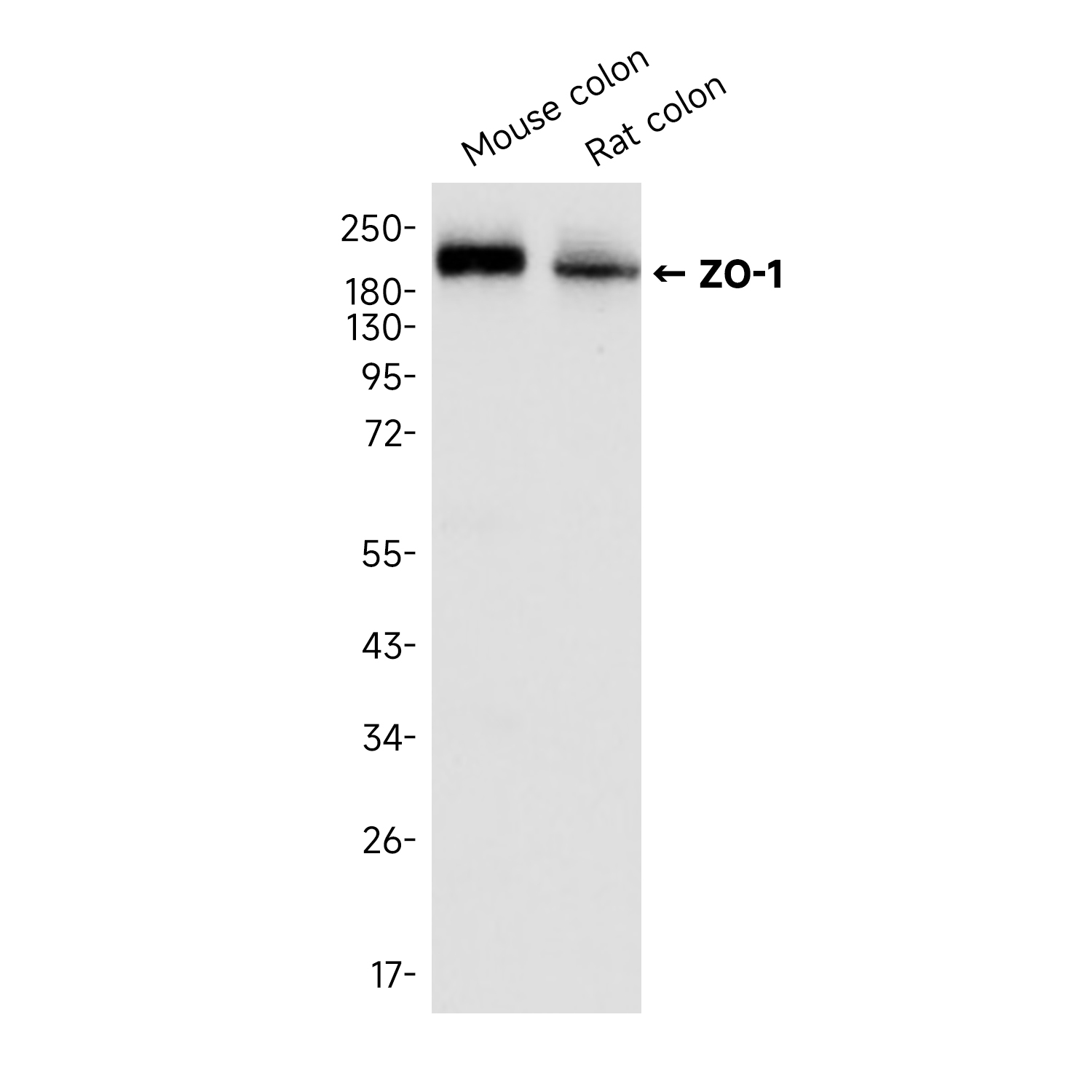
Western blot analysis of ZO-1 in mouse colon , rat colon lysates and using ZO-1 Goat pAb.IF
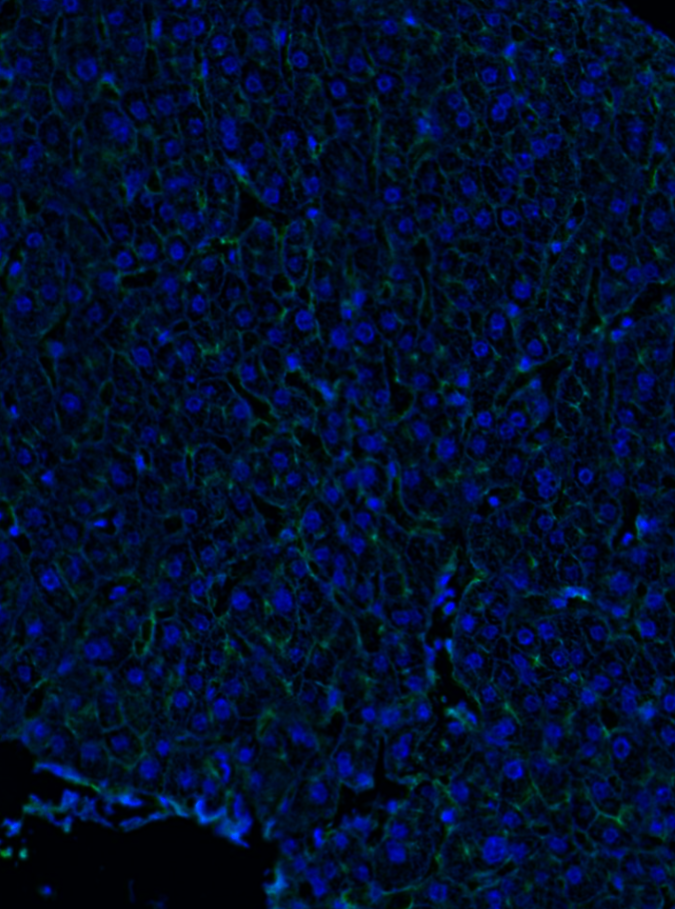
Immunofluorescence analysis of ZO-1(Green) in mouse liver tissue using ZO-1 Goat pAb, and DAPI(Blue)| Product Name | ZO-1 tight junction protein Goat pAb |
|---|---|
| Antibody Type | Primary Antibodies |
| Immunogen | Recombinant Human TJP1 |
| Modification | Unmodified |
| Clonality | Polyclonal |
|---|---|
| Isotype | IgG |
| Host Species | Goat |
| Tested Applications | WBIF |
| WB:1:500-1:1000 IHC:1:100-1:500 IF-P:1:100-1:500 ICC/IF:1:100-1:300 |
|
| Species Reactivity | HumanMouseRat |
| Concentration | 1mg/ml |
| Purification | Affinity Purified |
| Gene Symbol | TJP1 |
|---|---|
| Gene Synonyms | ZO-1 |
| Gene Full Name | tight junction protein 1 |
| Gene Summary | This gene encodes a member of the membrane-associated guanylate kinase (MAGUK) family of proteins, and acts as a tight junction adaptor protein that also regulates adherens junctions. Tight junctions regulate the movement of ions and macromolecules between endothelial and epithelial cells. The multidomain structure of this scaffold protein, including a postsynaptic density 95/disc-large/zona occludens (PDZ) domain, a Src homology (SH3) domain, a guanylate kinase (GuK) domain and unique (U) motifs all help to co-ordinate binding of transmembrane proteins, cytosolic proteins, and F-actin, which are required for tight junction function. Alternative splicing results in multiple transcript variants encoding different isoforms. [provided by RefSeq, Aug 2017] |
| Molecular Weight(MW) | 195 kDa |
| Function | ZO-1 forms complexes with either ZO-2 or ZO-3. In addition, these proteins can also associate with claudin, occludin and F-actin, at tight junction stands, where they provide a linkage between the actin cytoskeleton and the tight junction. ZO-1 expression is significantly reduced in many breast cancer lines. ZO-2 and ZO-3 are ubiquitously expressed within epithelial tight junctions, and unlike ZO-1, which is also expressed at cell junctions of cardiac myocytes, ZO-2 is not expressed in nonepithelial tissue. ZO-1 is a protein located on a cytoplasmic membrane surface of intercellular tight junctions. ZO-1 may be involved in signal transduction at cell-cell junctions. Two transcript variants encoding distinct isoforms have been identified for the ZO-1 gene. Diseases associated with ZO-1 dysfunction include Celiac Disease and Congenital Nephrotic Syndrome. |
| Cellular Localization | Cell junction,Cell membrane,Cell projection,Gap junction,Membrane,Tight junction |
WB
Western blot analysis of ZO-1 in mouse colon , rat colon lysates and using ZO-1 Goat pAb.
IF
Immunofluorescence analysis of ZO-1(Green) in mouse liver tissue using ZO-1 Goat pAb, and DAPI(Blue)| Application Notes | WB:1:500-1:1000 IHC:1:100-1:500 IF-P:1:100-1:500 ICC/IF:1:100-1:300 |
|---|
| Form | Liquid |
|---|---|
| Storage Instructions | Store at 4°C short term. Aliquot and store at -20°C long term. Avoid freeze/thaw cycles. |
| Storage Buffer | Liquid in PBS, 50% glycerol, 0.05% Proclin 300, 0.08%BSA |


