WB
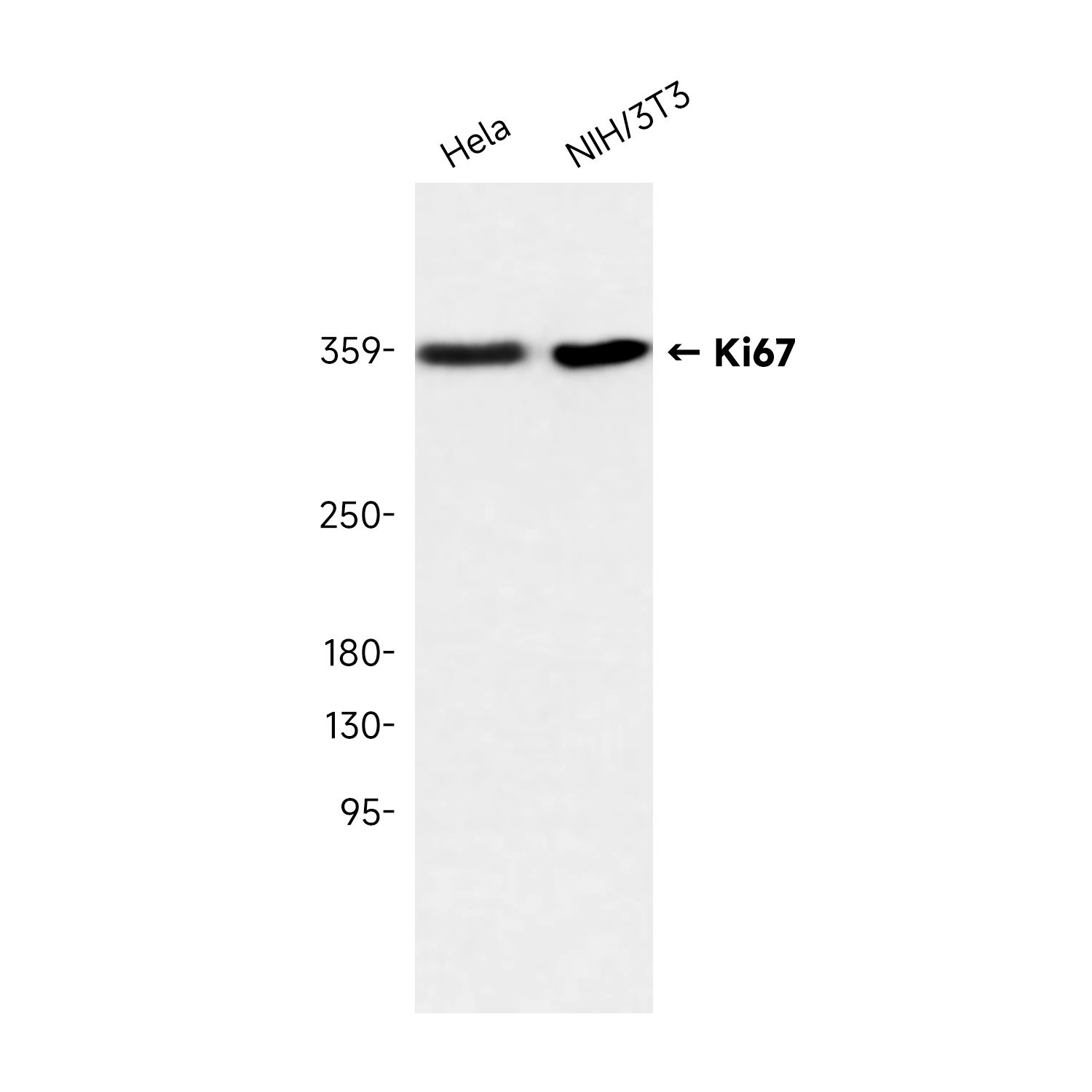
Western blot analysis of Ki67 in Hela , NIH/3T3 lysates and using Ki67 Goat pAb.IF
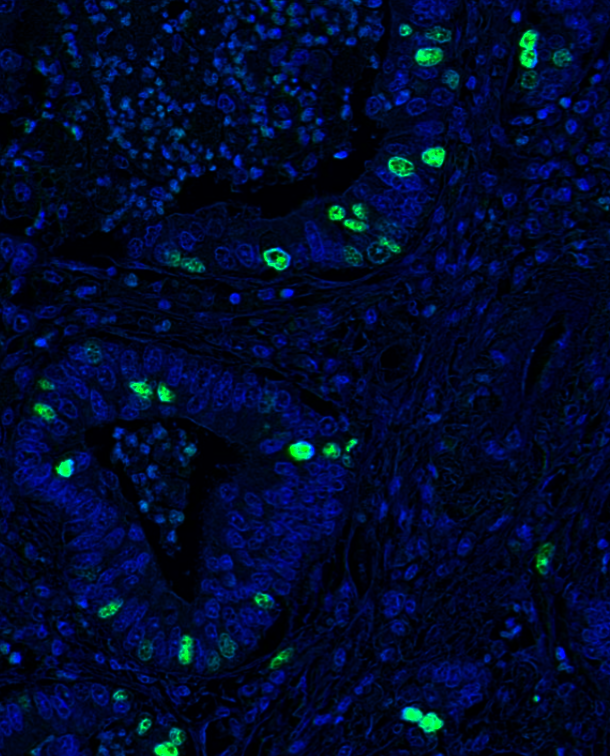
Immunofluorescence analysis of Ki67(Green) in human lung cancer tissue using Ki67 Goat pAb, and DAPI(Blue)| Product Name | Ki67 Goat pAb |
|---|---|
| Antibody Type | Primary Antibodies |
| Immunogen | Recombinant Human Ki67 |
| Modification | Unmodified |
| Clonality | Polyclonal |
|---|---|
| Isotype | IgG |
| Host Species | Goat |
| Tested Applications | WBIF |
| WB:1:500-1:1000 IHC:1:100-1:500 IF-P:1:100-1:500 ICC/IF:1:100-1:300 |
|
| Species Reactivity | HumanMouseRat |
| Concentration | 1mg/ml |
| Purification | Affinity Purified |
| Gene Symbol | MKI67 |
|---|---|
| Gene Synonyms | KIA MIB- MIB-1 PPP1R105 |
| Gene Full Name | marker of proliferation Ki-67 |
| Gene Summary | Enables RNA binding activity and molecular condensate scaffold activity. Involved in chromosome segregation and regulation of mitotic nuclear division. Located in chromosome; nucleolus; and nucleoplasm. Is active in condensed chromosome. Implicated in several diseases, including Crohn's disease; colorectal cancer; endocrine gland cancer (multiple); graft-versus-host disease; and human immunodeficiency virus infectious disease. Biomarker of several diseases, including Barrett's esophagus; autoimmune disease of musculoskeletal system (multiple); endocrine gland cancer (multiple); gastrointestinal system cancer (multiple); and lung cancer (multiple). [provided by Alliance of Genome Resources, Jul 2025] |
| Molecular Weight(MW) | 359 kDa |
| Function | The Ki-67 protein (also known as MKI67) is a cellular marker for proliferation. Ki67 is present during all active phases of the cell cycle (G1, S, G2 and M), but is absent in resting cells (G0). Cellular content of Ki-67 protein markedly increases during cell progression through S phase of the cell cycle. Therefore, the nuclear expression of Ki67 can be evaluated to assess tumor proliferation by immunohistochemistry. It has been demonstrated to be of prognostic value in breast cancer. In head and neck cancer, several studies have reported an association between high proliferative activity and poorer prognosis. |
| Cellular Localization | Chromosome,Nucleus |
WB
Western blot analysis of Ki67 in Hela , NIH/3T3 lysates and using Ki67 Goat pAb.
IF
Immunofluorescence analysis of Ki67(Green) in human lung cancer tissue using Ki67 Goat pAb, and DAPI(Blue)| Application Notes | WB:1:500-1:1000 IHC:1:100-1:500 IF-P:1:100-1:500 ICC/IF:1:100-1:300 |
|---|
| Form | Liquid |
|---|---|
| Storage Instructions | Store at 4°C short term. Aliquot and store at -20°C long term. Avoid freeze/thaw cycles. |
| Storage Buffer | Liquid in PBS, 50% glycerol, 0.05% Proclin 300, 0.08%BSA |


