WB
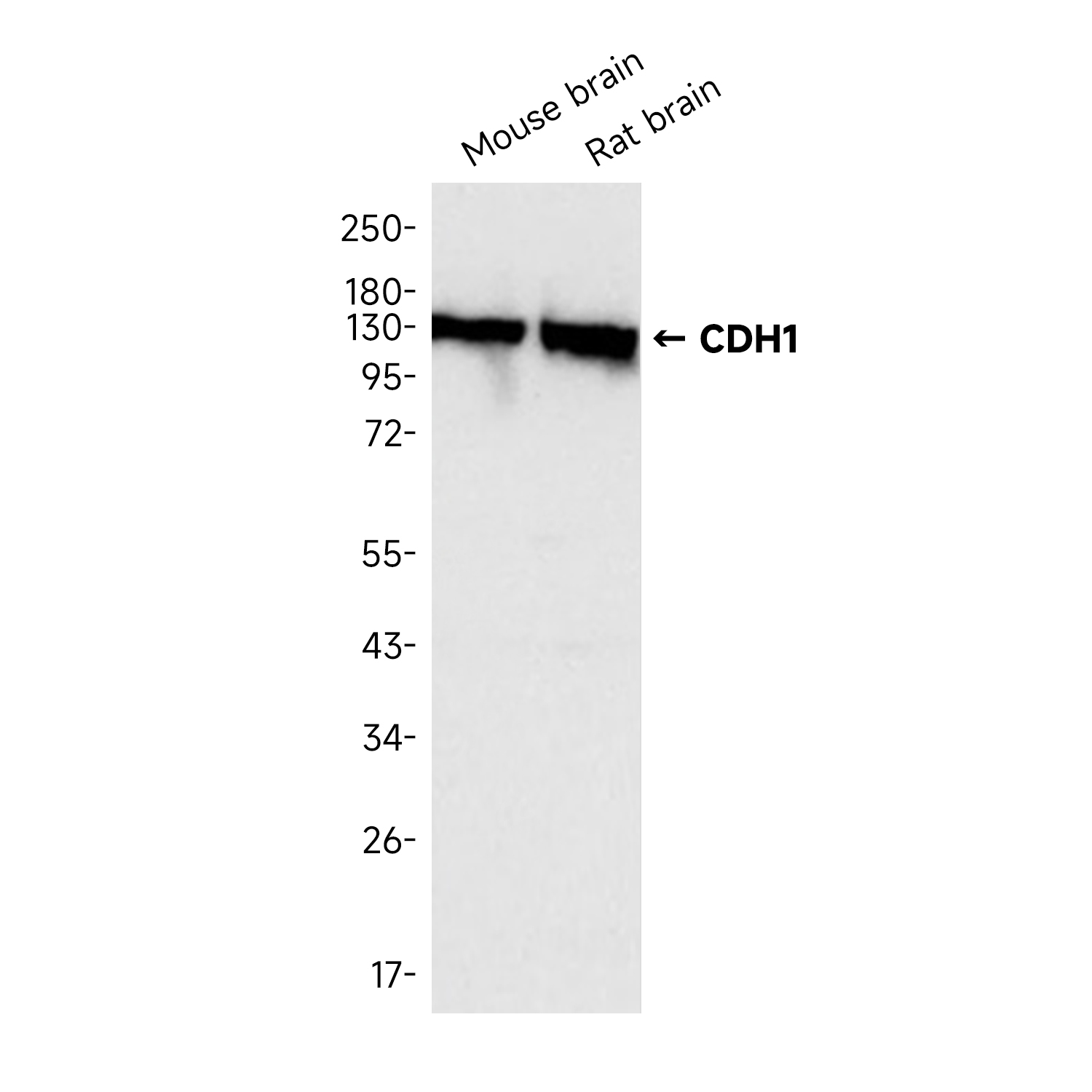
Western blot analysis of CDH1 in mouse brain , rat brain lysates and using CDH1 Goat pAb.IF
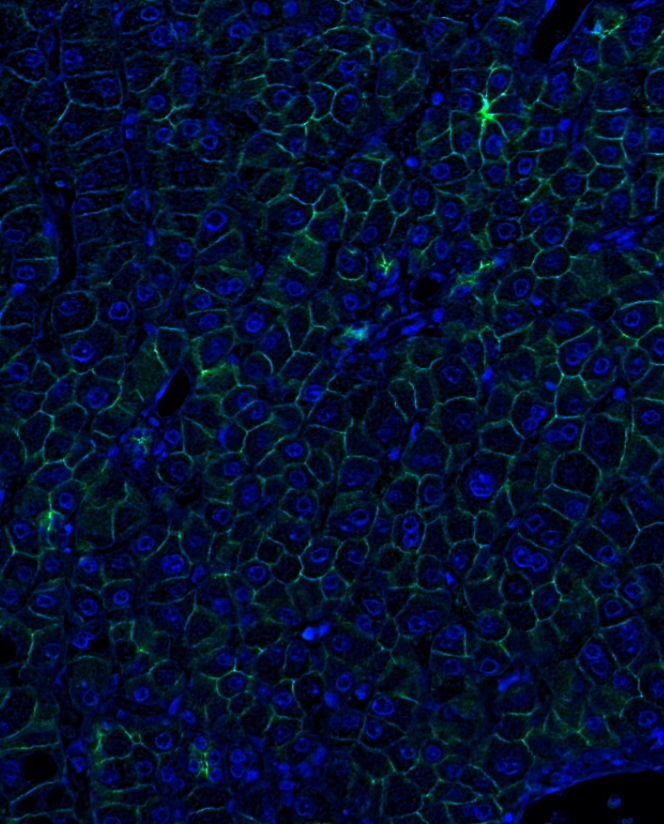
Immunofluorescence analysis of CDH1(Green) in mouse liver tissue using CDH1 Goat pAb, and DAPI(Blue)| Product Name | Pan Cadherin Goat pAb |
|---|---|
| Antibody Type | Primary Antibodies |
| Immunogen | Recombinant Human CDH1 |
| Modification | Unmodified |
| Clonality | Polyclonal |
|---|---|
| Isotype | IgG |
| Host Species | Goat |
| Tested Applications | WBIF |
| WB:1:500-1:1000 IHC:1:100-1:500 IF-P:1:100-1:500 ICC/IF:1:100-1:300 |
|
| Species Reactivity | HumanMouseRat |
| Concentration | 1mg/ml |
| Purification | Affinity Purified |
| Gene Symbol | CDH1 |
|---|---|
| Gene Synonyms | UVO CDHE ECAD LCAM Arc-1 BCDS1 CD324 |
| Gene Full Name | cadherin 1 |
| Gene Summary | This gene encodes a classical cadherin of the cadherin superfamily. Alternative splicing results in multiple transcript variants, at least one of which encodes a preproprotein that is proteolytically processed to generate the mature glycoprotein. This calcium-dependent cell-cell adhesion protein is comprised of five extracellular cadherin repeats, a transmembrane region and a highly conserved cytoplasmic tail. Mutations in this gene are correlated with gastric, breast, colorectal, thyroid and ovarian cancer. Loss of function of this gene is thought to contribute to cancer progression by increasing proliferation, invasion, and/or metastasis. The ectodomain of this protein mediates bacterial adhesion to mammalian cells and the cytoplasmic domain is required for internalization. This gene is present in a gene cluster with other members of the cadherin family on chromosome 16. [provided by RefSeq, Nov 2015] |
| Molecular Weight(MW) | 120 kDa(Observed band size: 130 kDa) |
| Function | E-Cadherin is a 120 kDa transmembrane glycoprotein that is localized in the adherens junctions of epithelial cells. There, it interacts with the cytoskeleton through the associated cytoplasmic catenin proteins. In addition to being a calcium-dependent adhesion molecule, E-Cadherin is also a critical regulator of epithelial junction formation. Its association with catenins is necessary for cell-cell adhesion. These E-cadherin/catenin complexes associate with corical actin bundles at both the zonula adherens and the lateral adhesion plaques. Tyrosine phosphorylation can disrupt these complexes, leading to changes in cell adhesion properties. E-Cadherin expression is often down-regulated in highly invasive, poorly differentiated carcinomas. Increased expression of E-Cadherin in these cells reduces invasiveness. Thus, loss of expression or function of E-Cadherin appears to be an important step in tumorigenic progression.Tissue specificity: Non-neural epithelial tissues. |
| Cellular Localization | Cell junction,Cell membrane,Cytoplasm,Endosome,Golgi apparatus,Membrane,Secreted |
WB
Western blot analysis of CDH1 in mouse brain , rat brain lysates and using CDH1 Goat pAb.
IF
Immunofluorescence analysis of CDH1(Green) in mouse liver tissue using CDH1 Goat pAb, and DAPI(Blue)| Application Notes | WB:1:500-1:1000 IHC:1:100-1:500 IF-P:1:100-1:500 ICC/IF:1:100-1:300 |
|---|
| Form | Liquid |
|---|---|
| Storage Instructions | Store at 4°C short term. Aliquot and store at -20°C long term. Avoid freeze/thaw cycles. |
| Storage Buffer | Liquid in PBS, 50% glycerol, 0.05% Proclin 300, 0.08%BSA |


