Application
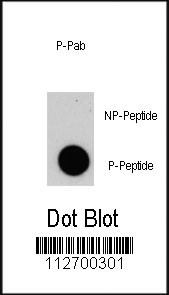
Dot blot analysis of anti-HSPA1A-pY41 Phospho-specific Pab on nitrocellulose membrane. 50ng of Phospho-peptide or Non Phospho-peptide per dot were adsorbed. Antibody working concentrations are 0.5ug per ml.| Product Name | Phospho-HSPA1A-pY41 Antibody |
|---|---|
| Antibody Type | Primary Antibodies |
| Modification | p-Y41 |
| Clonality | Polyclonal |
|---|---|
| Isotype | Ig |
| Host Species | Rabbit |
| Tested Applications | DB |
| DB:1:500 |
|
| Species Reactivity | Human |
| Concentration | 1mg/ml |
| Gene Synonyms | HSPA1 |
|---|---|
| Alternative Names | HSPA1A HSPA1 Heat shock 70 kDa protein 1A/1B Heat shock 70 kDa protein 1/2 |
| Molecular Weight(MW) | 70052 Da |
| Function | In cooperation with other chaperones, Hsp70s stabilize preexistent proteins against aggregation and mediate the folding of newly translated polypeptides in the cytosol as well as within organelles. These chaperones participate in all these processes through their ability to recognize nonnative conformations of other proteins. They bind extended peptide segments with a net hydrophobic character exposed by polypeptides during translation and membrane translocation, or following stress-induced damage. In case of rotavirus A infection, serves as a post-attachment receptor for the virus to facilitate entry into the cell |
| Tissue Specificity | HSPA1B is testis-specific. |
| Cellular Localization | Cytoplasm. Note=Localized in cytoplasmic mRNP granules containing untranslated mRNAs |
| Entrez Gene | 3304 |
|---|
Application
Dot blot analysis of anti-HSPA1A-pY41 Phospho-specific Pab on nitrocellulose membrane. 50ng of Phospho-peptide or Non Phospho-peptide per dot were adsorbed. Antibody working concentrations are 0.5ug per ml.| Application Notes | DB:1:500 |
|---|
| Form | Liquid |
|---|---|
| Storage Instructions | For short-term storage, store at 4° C. For long-term storage, aliquot and store at -20ºC or below. Avoid multiple freeze-thaw cycles. |
| Storage Buffer | Purified polyclonal antibody supplied in PBS with 0.09% (W/V) sodium azide. This antibody is first purified by protein A affinity chromatography. Then, the antibody fraction is peptide affinity purified in a 2-step procedure with peptides. The antibody is eluted with high and low pH buffers and neutralized immediately, followed by dialysis against PBS. |


