Application
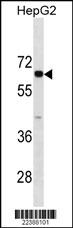
CLU Antibody (Cat. #AM2093a) western blot analysis in HepG2 cell line lysates (35ug/lane).This demonstrates the CLU antibody detected the CLU protein (arrow).| Product Name | CLU Antibody |
|---|---|
| Antibody Type | Primary Antibodies |
| Antigen Alias | CLU; APOJ; CLI; KUB1; Clusterin; Aging-associated gene 4 protein; Apolipoprotein J; Complement cytolysis inhibitor; Complement-associated protein SP-40, 40; Ku70-binding protein 1; NA1/NA2; Testosterone-repressed prostate message 2; Clusterin beta chain; A |
| Clonality | Monoclonal |
|---|---|
| Isotype | IgG3 |
| Clone Number | 503CT17.4.1 |
| Host Species | Mouse |
| Tested Applications | WB |
| WB:1:500~1600 |
|
| Species Reactivity | Human |
| Concentration | 1mg/ml |
| Gene Synonyms | APOJ CLI KUB1 |
|---|---|
| Alternative Names | CLU APOJ CLI KUB1 Clusterin Aging-associated gene 4 protein Apolipoprotein J Complement cytolysis inhibitor Complement-associated protein SP-40 40 Ku70-binding protein 1 NA1/NA2 Testosterone-repressed prostate message 2 Clusterin beta chain A |
| Molecular Weight(MW) | 52495 Da |
| Function | Isoform 1 functions as extracellular chaperone that prevents aggregation of nonnative proteins. Prevents stress- induced aggregation of blood plasma proteins. Inhibits formation of amyloid fibrils by APP, APOC2, B2M, CALCA, CSN3, SNCA and aggregation-prone LYZ variants (in vitro). Does not require ATP Maintains partially unfolded proteins in a state appropriate for subsequent refolding by other chaperones, such as HSPA8/HSC70 Does not refold proteins by itself. Binding to cell surface receptors triggers internalization of the chaperone-client complex and subsequent lysosomal or proteasomal degradation. Secreted isoform 1 protects cells against apoptosis and against cytolysis by complement. Intracellular isoforms interact with ubiquitin and SCF (SKP1-CUL1-F-box protein) E3 ubiquitin-protein ligase complexes and promote the ubiquitination and subsequent proteasomal degradation of target proteins. Promotes proteasomal degradation of COMMD1 and IKBKB. Modulates NF-kappa-B transcriptional activity. Nuclear isoforms promote apoptosis Mitochondrial isoforms suppress BAX-dependent release of cytochrome c into the cytoplasm and inhibit apoptosis. Plays a role in the regulation of cell proliferation |
| Tissue Specificity | Detected in blood plasma, cerebrospinal fluid, milk, seminal plasma and colon mucosa. Detected in the germinal center of colon lymphoid nodules and in colon parasympathetic ganglia of the Auerbach plexus (at protein level). Ubiquitous Detected in brain, testis, ovary, liver and pancreas, and at lower levels in kidney, heart, spleen and lung |
| Cellular Localization | Isoform 1: Secreted. Note=Can retrotranslocate from the secretory compartments to the cytosol upon cellular stress |
| Entrez Gene | 1191 |
|---|---|
| Nucleotide Accession | NP_001164609.1 |
Application
CLU Antibody (Cat. #AM2093a) western blot analysis in HepG2 cell line lysates (35ug/lane).This demonstrates the CLU antibody detected the CLU protein (arrow).| Application Notes | WB:1:500~1600 |
|---|
| Form | Liquid |
|---|---|
| Storage Instructions | For short-term storage, store at 4° C. For long-term storage, aliquot and store at -20ºC or below. Avoid multiple freeze-thaw cycles. |
| Storage Buffer | Mouse monoclonal antibody supplied in crude ascites with 0.09% (W/V) sodium azide. |


