Application
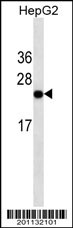
Glucagon Antibody (Cat. #AM1940a) western blot analysis in HepG2 cell line lysates (35ug/lane).This demonstrates the Glucagon antibody detected the Glucagon protein (arrow).| Product Name | Glucagon Antibody (ascites) |
|---|---|
| Antibody Type | Primary Antibodies |
| Antigen Alias | GCG; Glucagon; Glicentin; Glicentin-related polypeptide; Oxyntomodulin; Glucagon-like peptide 1; Incretin hormone; Glucagon-like peptide 1(7-37); Glucagon-like peptide 1(7-36); Glucagon-like peptide 2 |
| Clonality | Monoclonal |
|---|---|
| Isotype | IgG1 |
| Clone Number | 329CT36.10.10 |
| Host Species | Mouse |
| Tested Applications | WB |
| WB:1:500~8000 |
|
| Species Reactivity | Human |
| Concentration | 1mg/ml |
| Alternative Names | GCG Glucagon Glicentin Glicentin-related polypeptide Oxyntomodulin Glucagon-like peptide 1 Incretin hormone Glucagon-like peptide 1(7-37) Glucagon-like peptide 1(7-36) Glucagon-like peptide 2 |
|---|---|
| Molecular Weight(MW) | 20909 Da |
| Function | Glucagon plays a key role in glucose metabolism and homeostasis. Regulates blood glucose by increasing gluconeogenesis and decreasing glycolysis. A counterregulatory hormone of insulin, raises plasma glucose levels in response to insulin-induced hypoglycemia. Plays an important role in initiating and maintaining hyperglycemic conditions in diabetes GLP-2 stimulates intestinal growth and up-regulates villus height in the small intestine, concomitant with increased crypt cell proliferation and decreased enterocyte apoptosis. The gastrointestinal tract, from the stomach to the colon is the principal target for GLP-2 action. Plays a key role in nutrient homeostasis, enhancing nutrient assimilation through enhanced gastrointestinal function, as well as increasing nutrient disposal. Stimulates intestinal glucose transport and decreases mucosal permeability Glicentin may modulate gastric acid secretion and the gastro-pyloro-duodenal activity. May play an important role in intestinal mucosal growth in the early period of life |
| Tissue Specificity | Glucagon is secreted in the A cells of the islets of Langerhans. GLP-1, GLP-2, oxyntomodulin and glicentin are secreted from enteroendocrine cells throughout the gastrointestinal tract. GLP-1 and GLP-2 are also secreted in selected neurons in the brain |
| Cellular Localization | Secreted. |
| Entrez Gene | 2641 |
|---|---|
| Nucleotide Accession | NP_002045.1 |
Application
Glucagon Antibody (Cat. #AM1940a) western blot analysis in HepG2 cell line lysates (35ug/lane).This demonstrates the Glucagon antibody detected the Glucagon protein (arrow).| Application Notes | WB:1:500~8000 |
|---|
| Form | Liquid |
|---|---|
| Storage Instructions | For short-term storage, store at 4° C. For long-term storage, aliquot and store at -20ºC or below. Avoid multiple freeze-thaw cycles. |
| Storage Buffer | Mouse monoclonal antibody supplied in crude ascites with 0.09% (W/V) sodium azide. |


