Application
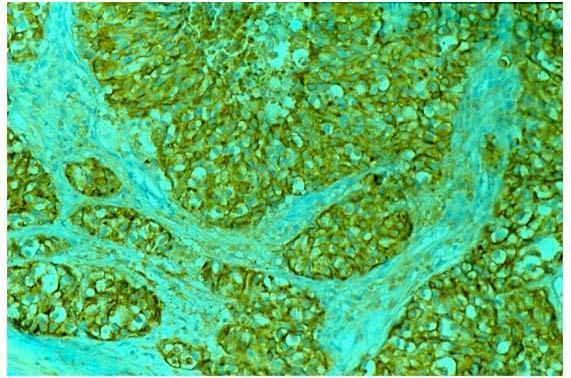
IHC imageWB
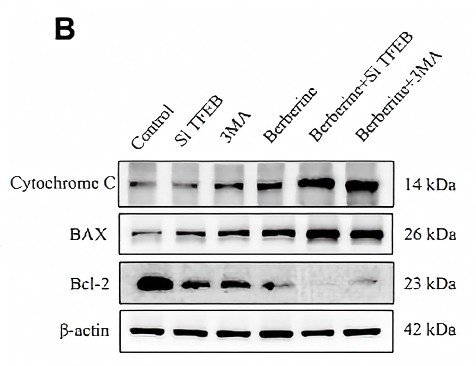
(B) The expression of apoptosis-related proteins BAX, Bcl-2, and cytochrome C was detected by western blotting following different treatments (100 μmol/L berberine, 10 h incubation). Data was analyzed by one-way ANOVA with Tukey HSD post-hoc test (vs. Control group). Analysis of variance and Student-Newman-Keuls post hoc tests were used to compare two group (vs. berberine group).| Product Name | Bcl-2 antibody |
|---|---|
| Antibody Type | Primary Antibodies |
| Product description | Rabbit polyclonal antibody to Bcl-2Bcl-2 family is a key regulator of apoptosis that function to either inhibit or promote cell death. Over expression of members such as Bcl-2 and Bcl-xL inhibit the apoptotic process (1,2). The Bcl-2 family members are also characterized by dimerizing to further modulate apoptosis. Bag-1, for example, has been found to form a heterodimer with Bcl-2 resulting in the enhancement of the anti-apoptotic effect of Bcl-2 (3,4). Bax and Bak have been shown to play a critical role in cytochrome c release from mitochondria and thus initiate apoptosis (6). Bad plays a critical role in the Bax-mediated apoptosis pathway by dimerizing with Bcl-xL, causing the displacement of Bax. The displacement of Bax allows apoptosis to proceed (7). Bcl-xS, a shorter version of Bcl-xL (lacking amino acids 126-188), apparently utilizes a different pathway than Bax to induce cell death. Some research suggests that Bcl-xS uses a novel mechanism for regulating caspase or it may use an alternate cell death effector pathway (8,9). |
| Immunogen | Synthetic peptide (Human) (N terminal). |
| Clonality | Polyclonal |
|---|---|
| Isotype | IgG |
| Host Species | Rabbit |
| Tested Applications | ICC/IFIHCIHC-FIPWB |
| For WB:1:200 | |
| Species Reactivity | HumanMouseRat |
| Concentration | 0.2mg/ml |
| Purification | Unpurified |
| Gene Synonyms | BCL2, P10415, 151430, 596, Bcl-2, Bcl 2 |
|---|---|
| Target | Bcl-2 |
| Tissue Specificity | Reacts with Bcl-2 |
| Cellular Localization | Endoplasmic reticulum, outer mitochondrial membrane and nuclear membrane. |
Application
IHC image
WB
(B) The expression of apoptosis-related proteins BAX, Bcl-2, and cytochrome C was detected by western blotting following different treatments (100 μmol/L berberine, 10 h incubation). Data was analyzed by one-way ANOVA with Tukey HSD post-hoc test (vs. Control group). Analysis of variance and Student-Newman-Keuls post hoc tests were used to compare two group (vs. berberine group).| Application Notes | For WB:1:200 |
|---|
| Form | Liquid |
|---|---|
| Storage Instructions | Store this product at 4 °C, do not freeze. The product is stable for one year from the date of shipment. |
| Storage Buffer | PBS with 0.1% sodium azide and 0.2% gelatin |


