Application
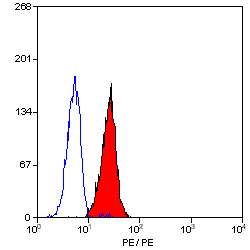
FACS ImageStaining of human peripheral blood granulocytes with Mouse anti Human CD58:RPEApplication
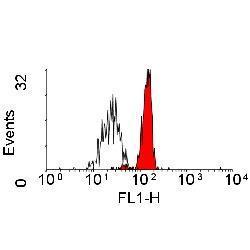
FACS ImageStaining of human peripheral blood monocytes with Mouse anti-Human CD58: Azide Free| Product Name | CD58 antibody |
|---|---|
| Antibody Type | Primary Antibodies |
| Product description | Mouse monoclonal [MEM-63] to human CD58:Azide FreeCD58, or LFA-3, is a membrane glycoprotein of 55-70kD. It occurs in two forms, one transmembrane with a cytoplasmic domain, the other form anchored in the membrane via a glycosylphosphatidylinositol tail. The complete amino acid sequence of both forms has been deduced from cDNA. It is heavily N-glycosylated. CD58 is a cell adhesion molecule which plays a critical role in facilitation of antigen specific recognition through interaction with CD2 on T lymphocytes[1]. It is a member of the immunoglobulin superfamily of molecules. CD58 has a wide tissue distribution, being present on erythrocytes, platelets, monocytes, a subset of lymphocytes, bone marrow cells, epithelium and endothelial cells [2]. There are approximately 5,000 CD58 molecules on each erythrocyte. There is reduced expression of CD58 on haemopoletic cells in individuals with paroxysmal nocturnal haemoglobinuria. |
| Clonality | Monoclonal |
|---|---|
| Isotype | IgG1 |
| Clone Number | MEM-63 |
| Host Species | Mouse |
| Tested Applications | FACSIHC-FIPFunctional Assay |
| For IHC-Fr, FuncS and IP: Use at an assay dependent dilution. Optimal concentrations/dilutions should be determined by the researcher.: |
|
| Species Reactivity | Human |
| Concentration | 1mg/ml |
| Purification | Affinity purified |
| Gene Synonyms | FLJ43722 CD58 FLJ23181 LFA3 LFA-3 LFA 3 |
|---|---|
| Target | CD58 |
| Tissue Specificity | Human CD58 |
Application
FACS ImageStaining of human peripheral blood granulocytes with Mouse anti Human CD58:RPE
Application
FACS ImageStaining of human peripheral blood monocytes with Mouse anti-Human CD58: Azide Free| Application Notes | For IHC-Fr, FuncS and IP: Use at an assay dependent dilution. Optimal concentrations/dilutions should be determined by the researcher.: |
|---|
| Form | Liquid |
|---|---|
| Storage Instructions | Keep as concentrated solution. Aliquot and store at -20ºC or below. Avoid freeze-thaw cycles. |
| Storage Buffer | Phosphate-buffered saline |


