Application
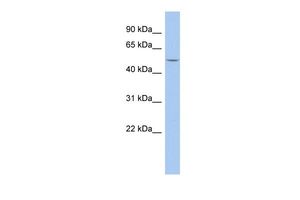
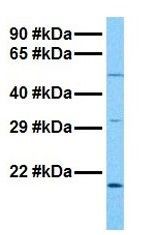
WB analysis of HT1080 cells using HERV-FRD antibody at 0.2-1μg/ml.Application
WB analysis of PANC1 cells using HERV-FRD antibody at 1μg/ml.| Product Name | HERV-FRD antibody, N-term |
|---|---|
| Antibody Type | Primary Antibodies |
| Product description | Rabbit Polyclonal antibody to HERV-FRDMany different human endogenous retrovirus (HERV) families are expressed in normal placental tissue at high levels, suggesting that HERVs are functionally important in reproduction. This gene is part of a human endogenous retrovirus provirus on chromosome 6 that has inactivating mutations in the gag and pol genes. This gene is the envelope glycoprotein gene which appears to have been selectively preserved. The gene's protein product plays a major role in placental development and trophoblast fusion. The protein has the characteristics of a typical retroviral envelope protein, including a cleavage site that separates the surface (SU) and transmembrane (TM) proteins which form a heterodimer. [provided by RefSeq, Jun 2012] |
| Immunogen | A synthetic peptide corresponding to a N-terminal region of Human HERV-FRD |
| Clonality | Polyclonal |
|---|---|
| Isotype | IgG |
| Host Species | Rabbit |
| Tested Applications | WB |
| *Optimal dilutions/concentrations should be determined by the researcher.
: |
|
| Species Reactivity | Human |
| Predicted Reactivity | Human: 100% |
| Concentration | 1mg/ml |
| Purification | Affinity purified |
| Gene Synonyms | UNQ6191 HERV W/FRD ERVFRD-1 ENVFRD ERVFRDE1 HERV FRD GLLL6191 |
|---|---|
| Target | HERV-FRD |
| Molecular Weight(MW) | 60 KDa (note) |
Application
WB analysis of HT1080 cells using HERV-FRD antibody at 0.2-1μg/ml.
Application
WB analysis of PANC1 cells using HERV-FRD antibody at 1μg/ml.| Positive Control | HT1080 , PANC1 |
|---|---|
| Application Notes | *Optimal dilutions/concentrations should be determined by the researcher.
: |
| Form | Liquid |
|---|---|
| Storage Instructions | Keep as concentrated solution. For short-term storage, store at 4ºC. For long-term storage, aliquot and store at -20ºC or below. Avoid multiple freeze-thaw cycles. |
| Storage Buffer | 1x PBS buffer with 0.09% (w/v) sodium azide and 2% sucrose. |


