Application
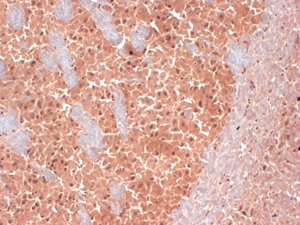
IHC analysis of KCNQ2 in human hippocampal tissues usingApplication
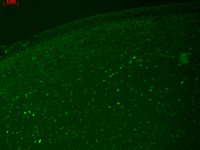
IHC analysis of KCNQ2 in frozen sections of mouse brain using| Product Name | KCNQ2 antibody |
|---|---|
| Antibody Type | Primary Antibodies |
| Product description | Mouse monoclonal antibody [S26A-23] to KCNQ2The M channel is a slowly activating and deactivating potassium channel that plays a critical role in the regulation of neuronal excitability. The M channel is formed by the association of the protein encoded by this gene and a related protein encoded by the KCNQ3 gene, both integral membrane proteins. M channel currents are inhibited by M1 muscarinic acetylcholine receptors and activated by retigabine, a novel anti-convulsant drug. Defects in this gene are a cause of benign familial neonatal convulsions type 1 (BFNC), also known as epilepsy, benign neonatal type 1 (EBN1). At least five transcript variants encoding five different isoforms have been found for this gene. [provided by RefSeq] |
| Immunogen | Fusion protein amino acids 1-59 of human KCNQ2, accession number O43526 |
| Clonality | Monoclonal |
|---|---|
| Isotype | IgG1 |
| Clone Number | S26A-23 |
| Host Species | Mouse |
| Tested Applications | IHCIHC-FIPWB |
| We recommend a working dilution of 1-10ug/mL (WB), 0.1-1.0ug/mL (Perox) (IHC/ICC), 1.0-10ug/mL (IF).: |
|
| Species Reactivity | HumanMouseRat |
| Concentration | 1mg/ml (Please refer to the vial label for the specific concentration) |
| Purification | Protein G |
| Gene Synonyms | KCNQ2 KV7.2 ENB1 voltage gated potassium channel subunit Kv7.2 KQT like2 BFNC KCNA11 KVEBN1. KvLQT2 HNSPC KQT like 2 EBN1 |
|---|---|
| Target | KCNQ2 |
| Molecular Weight(MW) | 95kDa (note) |
Application
IHC analysis of KCNQ2 in human hippocampal tissues using
Application
IHC analysis of KCNQ2 in frozen sections of mouse brain using| Application Notes | We recommend a working dilution of 1-10ug/mL (WB), 0.1-1.0ug/mL (Perox) (IHC/ICC), 1.0-10ug/mL (IF).: |
|---|
| Form | Liquid |
|---|---|
| Storage Instructions | Aliquot and store at -20 C. Avoid repeated freeze-thaw cycles. |
| Storage Buffer | PBS pH7.4, 50% glycerol |


