Application
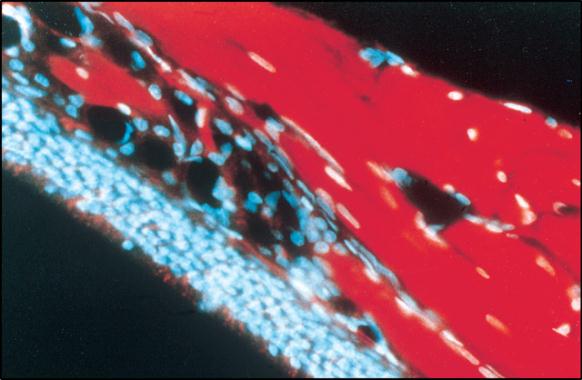
Staining of polyester wax section through adult rat olfactory sensory epithelium using Monoclonal Anti-MAP1b, clone No. AA6 showing intense reactivity in the olfactory nerve (red). Cell nuclei fluoresce blue due to Hoechst counterstain,| Product Name | MAP1B antibody [AA6] |
|---|---|
| Antibody Type | Primary Antibodies |
| Product description | Mouse monoclonal [AA6] to MAP1BMAP1b is the major microtubule associated protein in developing brain which changes its expression during development. In the newborn rat brain, it is a major component of microtubules but in the adult its level is ten-fold lower. This change in the level of expression occurs simultaneously with neuronal maturation. MAP1b is the first MAP to appear in growing axons during development as it is present from the first emergence of the nascent axon from the cell body. |
| Immunogen | Rat brain microtubule associated proteins. |
| Clonality | Monoclonal |
|---|---|
| Isotype | IgG1 |
| Clone Number | AA6 |
| Host Species | Mouse |
| Tested Applications | ICC/IFWB |
| WB: Use at a dilution of 1/500. Predicted molecular weight: 270 kDa. Optimal dilutions/concentrations should be determined by the end user. IF: Use at an assay dependent dilution. Use immunofluorescence or immunoperoxidase labelling methods. Staining of brain tissue shows selective labelling of dendritic trees. | |
| Species Reactivity | HumanMouseRatCatHamsterBovine |
| Concentration | 1mg/ml |
| Purification | Affinity purified |
| Gene Synonyms | Mtap1b |
|---|---|
| Target | MAP1B |
| Tissue Specificity | Monoclonal Anti-MAP1b does not react with tubulin of other Microtubule associated proteins. |
Application
Staining of polyester wax section through adult rat olfactory sensory epithelium using Monoclonal Anti-MAP1b, clone No. AA6 showing intense reactivity in the olfactory nerve (red). Cell nuclei fluoresce blue due to Hoechst counterstain,| Application Notes | WB: Use at a dilution of 1/500. Predicted molecular weight: 270 kDa. Optimal dilutions/concentrations should be determined by the end user. IF: Use at an assay dependent dilution. Use immunofluorescence or immunoperoxidase labelling methods. Staining of brain tissue shows selective labelling of dendritic trees. |
|---|
| Form | Liquid |
|---|---|
| Storage Instructions | Keep as concentrated solution. Store at 4ºC short term. For extended storage aliquot and store at -20ºC or below. Avoid freeze-thaw cycles. |
| Storage Buffer | Preservative: 15mM Sodium Azide |


