Application
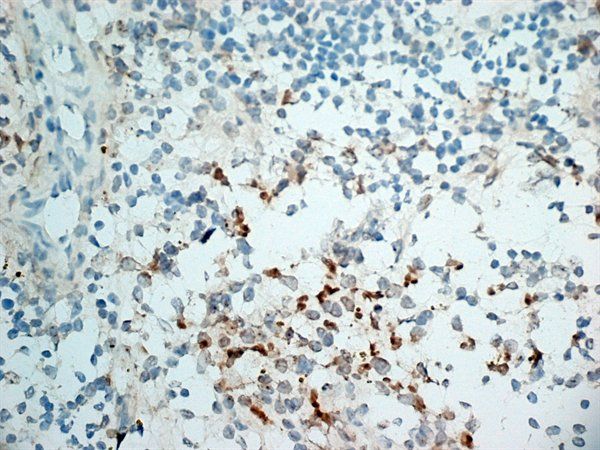
IHC-Fr analysis of human spleen tissue using NKG2D antibody [1D11].Application
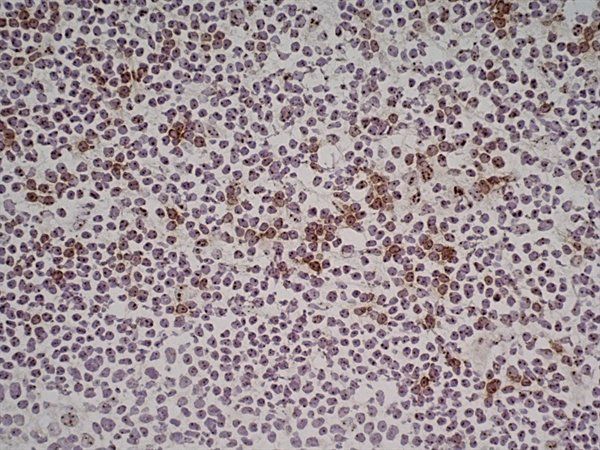
IHC-Fr analysis of human tonsil tissue using NKG2D antibody [1D11].| Product Name | NKG2D antibody |
|---|---|
| Antibody Type | Primary Antibodies |
| Product description | Mouse monoclonal antibody [1D11] to NKG2DNatural killer (NK) cells are lymphocytes that can mediate lysis of certain tumor cells and virus-infected cells without previous activation. They can also regulate specific humoral and cell-mediated immunity. NK cells preferentially express several calcium-dependent (C-type) lectins, which have been implicated in the regulation of NK cell function. The NKG2 gene family is located within the NK complex, a region that contains several C-type lectin genes preferentially expressed in NK cells. This gene encodes a member of the NKG2 family. The encoded transmembrane protein is characterized by a type II membrane orientation (has an extracellular C terminus) and the presence of a C-type lectin domain. It binds to a diverse family of ligands that include MHC class I chain-related A and B proteins and UL-16 binding proteins, where ligand-receptor interactions can result in the activation of NK and T cells. The surface expression of these ligands is important for the recognition of stressed ce |
| Clonality | Monoclonal |
|---|---|
| Isotype | IgG1 |
| Clone Number | 1D11 |
| Host Species | Mouse |
| Tested Applications | FACSIHC-FIP |
| Flow Cytometry: Max Dilution 1/100 Optimal dilution / concentration should be determined by the end user.: |
|
| Species Reactivity | Human |
| Concentration | 1mg/ml |
| Purification | Affinity purified |
| Gene Synonyms | KLR CD314 D12S2489E KLRK1 NKG2-D |
|---|---|
| Target | CD314 |
| Tissue Specificity | This antibody recognizes CD314, also known as natural killer receptor G2 (NKG2D) and as killer cell lectin-like receptor subfamily K, member 1 (KLRK1). |
Application
IHC-Fr analysis of human spleen tissue using NKG2D antibody [1D11].
Application
IHC-Fr analysis of human tonsil tissue using NKG2D antibody [1D11].| Application Notes | Flow Cytometry: Max Dilution 1/100 Optimal dilution / concentration should be determined by the end user.: |
|---|
| Form | Liquid |
|---|---|
| Storage Instructions | Store at +4°C or at -20°C if preferred. Storage in frost-free freezers is not recommended. Avoid repeated freezing and thawing as this may denature the antibody. Should this product contain a precipitate we recommend microcentrifugation before use. |
| Storage Buffer | Phosphate buffered saline containing 0.09% Sodium Azide |


