Application
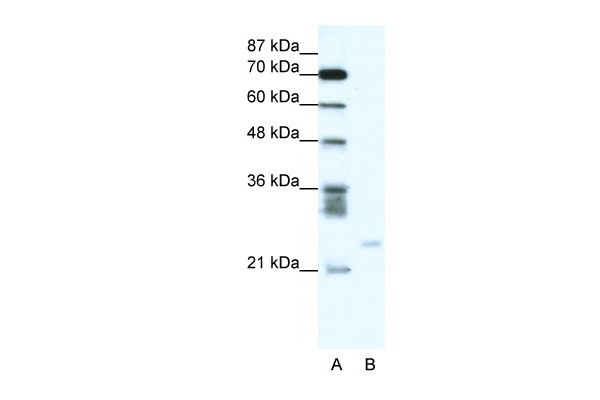
Antibody used in WB on Human Jurkat 0.2-1 ug/ml.| Product Name | BCL2A1 Antibody |
|---|---|
| Antibody Type | Primary Antibodies |
| Product description | BCL2A1s a member of the BCL-2 protein family. The proteins of this family form hetero- or homodimers and act as anti- and pro-apoptotic regulators that are involved in a wide variety of cellular activities such as embryonic development, homeostasis and tumorigenesis. The protein encoded by this gene is able to reduce the release of pro-apoptotic cytochrome c from mitochondria and block caspase activation. This gene is a direct transcription target of NF-kappa B in response to inflammatory mediators, and has been shown to be up-regulated by different extracellular signals, such as granulocyte-macrophage colony-stimulating factor (GM-CSF), CD40, phorbol ester and inflammatory cytokine TNF and IL-1, which suggests a cytoprotective function that is essential for lymphocyte activation as well as cell survival.1) Kunter, U., et al., (2005) Kidney Int. 68 (4), 1520-1532. |
| Immunogen | Antibody produced in rabbits immunized with a synthetic peptide corresponding a region of human BCL2A1. |
| Clonality | Polyclonal |
|---|---|
| Host Species | Rabbit |
| Tested Applications | ELISAWB |
| BCL2A1 antibody can be used for detection of BCL2A1 by ELISA at 1:12500. BCL2A1 antibody can be used for detection of BCL2A1 by western blot at 1 μg/mL, and HRP conjugated secondary antibody should be diluted 1:50,000 - 100,000. | |
| Species Reactivity | Human |
| Concentration | 1mg/ml |
| Purification | Affinity purified |
| Gene Symbol | BCL2A1 |
|---|---|
| Alternative Names | BCL2A1 GRS BFL1 ACC-1 ACC-2 HBPA1 BCL2L5 |
| Molecular Weight(MW) | 20 kDa |
Application
Antibody used in WB on Human Jurkat 0.2-1 ug/ml.| Positive Control | 1) Cat. No. 1205 - Jurkat Cell Lysate |
|---|---|
| Application Notes | BCL2A1 antibody can be used for detection of BCL2A1 by ELISA at 1:12500. BCL2A1 antibody can be used for detection of BCL2A1 by western blot at 1 μg/mL, and HRP conjugated secondary antibody should be diluted 1:50,000 - 100,000. |
| Form | Liquid |
|---|---|
| Storage Instructions | For short periods of storage (days) store at 4˚C. For longer periods of storage, store BCL2A1 antibody at -20˚C. As with any antibody avoid repeat freeze-thaw cycles. |
| Storage Buffer | Antibody is lyophilized in PBS buffer with 2% sucrose. Add 50 μL of distilled water. Final antibody concentration is 1 mg/mL. |


