Application
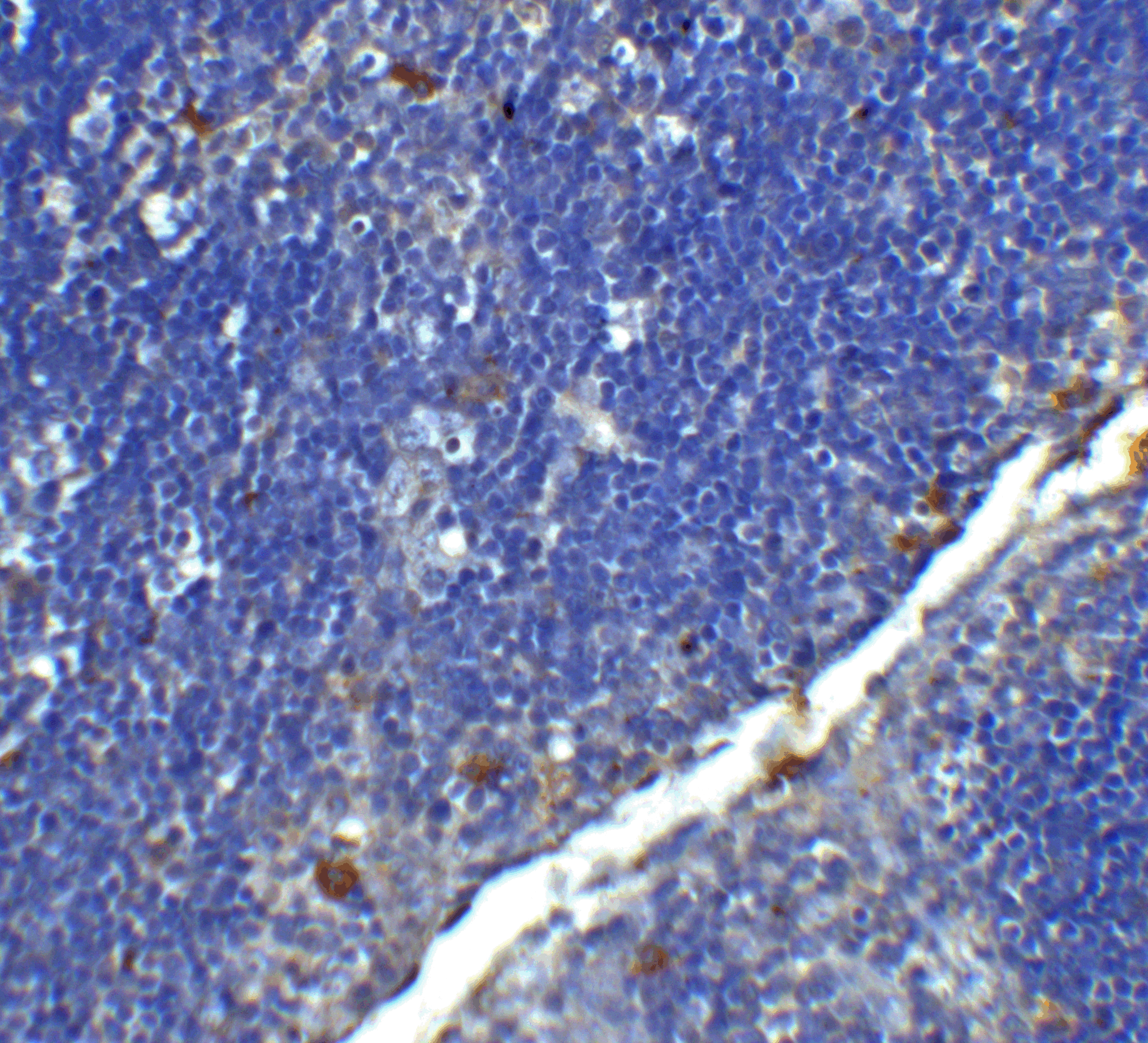
Immunohistochemistry of CD4 in human thymus tissue with CD4 antibody at 5 μg/ml.Application
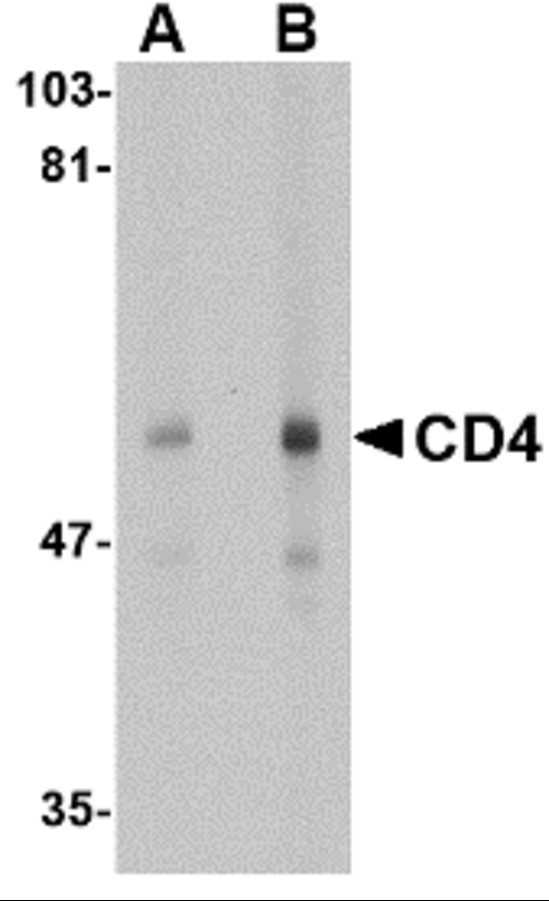
Western blot analysis of CD4 in human thymus tissue lysate with CD4 antibody at (A) 0.5 and (B) 1 μg/mL.| Product Name | CD4 Antibody |
|---|---|
| Antibody Type | Primary Antibodies |
| Antigen Alias | CD4 Antibody [9H5A8] : CD4mut |
| Product description | CD4 Monoclonal Antibody: CD4 is a member of the immunoglobulin superfamily and is implicated as associative recognition element in MHC (Major Histocompatibility Complex) class II-restricted immune response. On T-lymphocytes, it defines the helper/inducer subset. The mature 55 kd CD4 protein consists of a 372 amino acid extracellular segment composed of four tandem immunoglobulin-like VJ regions. The CD4 molecule is a major receptor for human immunodeficiency virus (HIV), binding directly to the envelope glycoprotein gp120 on HIV, with the co-receptors being CCR5 or CXCR4. It has been shown that the V-like domains are critical for binding with HIV envelope gp120.1) Bowers K, Pitcher C, and Marsh M. CD4 : a co-receptor in the immune response and HIV infection. Int. J. Biochem. Cell Biol. 1997; 29 :871-5. |
| Immunogen | Mouse monoclonal CD4 antibody was raised against a 193 amino acid recombinant protein from near the amino terminus of human CD4. |
| Clonality | Monoclonal |
|---|---|
| Isotype | IgG1 |
| Host Species | Mouse |
| Tested Applications | ELISAIHC-PWB |
| CD4 antibody can be used for detection of CD4 by Western blot at 0.5 - 1 μg/mL. Antibody can also be used for immunohistochemistry starting at 5 μg/mL: |
|
| Species Reactivity | HumanMouseRat |
| Concentration | 1mg/ml |
| Purification | Affinity purified |
| Gene Symbol | CD4 |
|---|---|
| Alternative Names | CD4 Antibody [9H5A8] : CD4mut |
Application
Immunohistochemistry of CD4 in human thymus tissue with CD4 antibody at 5 μg/ml.
Application
Western blot analysis of CD4 in human thymus tissue lysate with CD4 antibody at (A) 0.5 and (B) 1 μg/mL.| Positive Control | 1) Cat. No. 1314 - Human Thymus Tissue Lysate |
|---|---|
| Application Notes | CD4 antibody can be used for detection of CD4 by Western blot at 0.5 - 1 μg/mL. Antibody can also be used for immunohistochemistry starting at 5 μg/mL: |
| Form | Liquid |
|---|---|
| Storage Instructions | CD4 monoclonal antibody can be stored at -20˚C, stable for one year. |
| Storage Buffer | CD4 Monoclonal Antibody is supplied in PBS containing 0.02% sodium azide. |


