Application
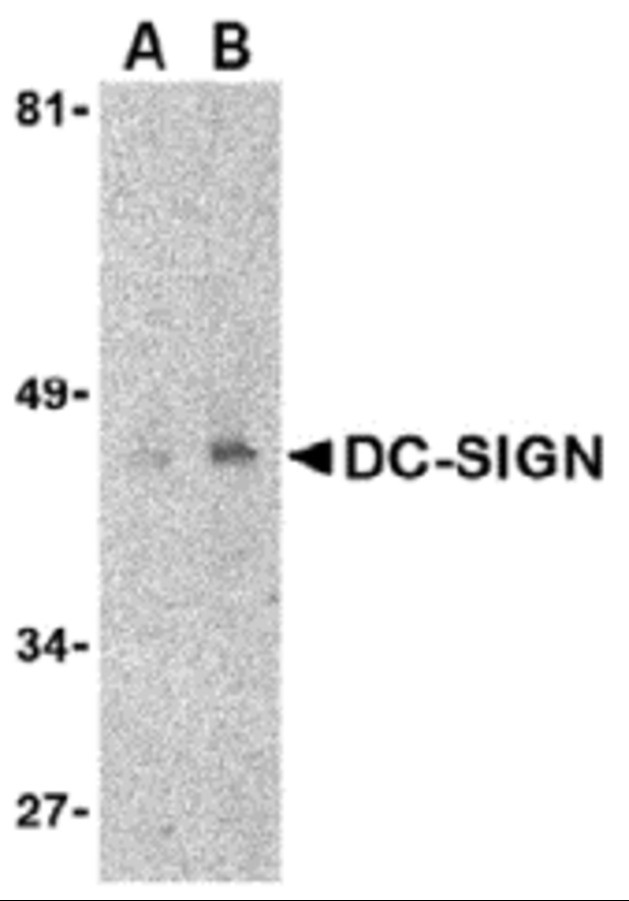
Western blot detection of DC-SIGN in human uterus tissue lysate at (A) 1 and (B) 2 μg/mL.Application
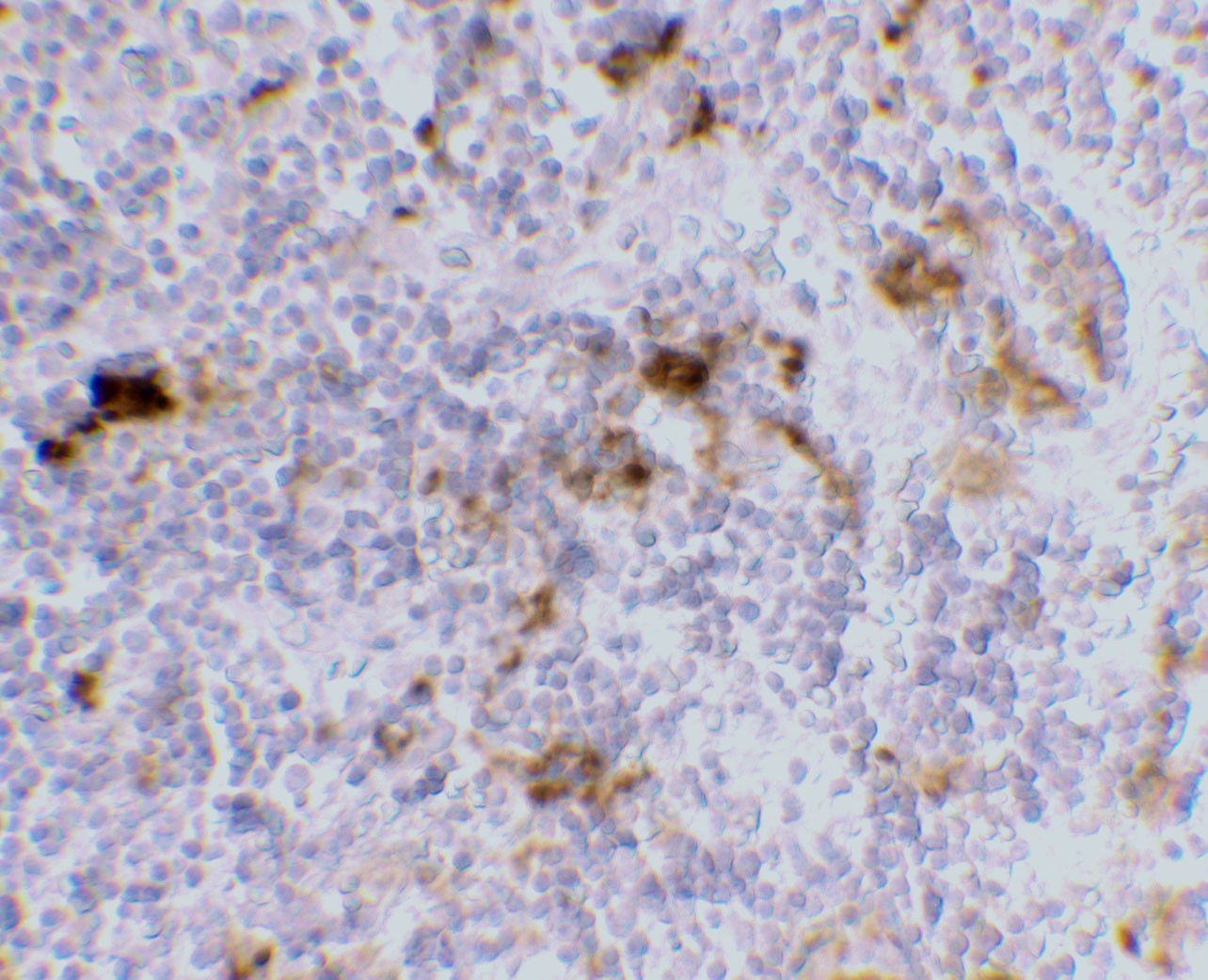
Immunohistochemistry of DC-SIGN in lymph node tissue with DC-SIGN antibody at 10 μg/mL.| Product Name | DC-SIGN Antibody [8B6] |
|---|---|
| Antibody Type | Primary Antibodies |
| Product description | DC-SIGN Monoclonal Antibody: Dendritic cells (DCs) that control immune responses were recently found to capture and transport HIV from the mucosal area to remote lymph nodes, where DCs hand over HIV to CD4+ T lymphocytes. DCs also amplify the amount of virus and extend the duration of viral infectivity. Multiple strains of HIV-1, HIV-2 and SIV bind to DCs via DC-SIGN. ICAM-3 is the natural ligand for DC-SIGN. A DC-SIGN homologue (termed DC-SIGNR, L-SIGN, and DC-SIGN2) was identified recently. DC-SIGN forms a novel gene family with DC-SIGNR and many alternatively spliced isoforms of DC-SIGN and DC-SIGNR are known to exisit. The expression of DC-SIGN was found in mucosal tissues including placenta, small intestine, and rectum.1) Geijtenbeek TB, Kwon DS, Torensma R, et al. DC-SIGN, a dendritic cell-specific HIV-1-binding protein that enhances trans-infection of T cells. Cell 2000; 100:587-97. |
| Immunogen | A recombinant His-tagged protein fragment corresponding to the extracellular region of human DC-SIGN. |
| Clonality | Monoclonal |
|---|---|
| Host Species | Mouse |
| Tested Applications | ELISAIHC-PWB |
| DC-SIGN antibody can be used for detection of DC-SIGN in Western Blot at 1 - 2 mg/mL and in immunohistochemistry at 5 - 10 mg/mL. | |
| Species Reactivity | Human |
| Concentration | 1mg/ml |
| Purification | Affinity purified |
| Gene Symbol | CD209 |
|---|---|
| Alternative Names | DC-SIGN Antibody [8B6] : CDSIGN CLEC4L DC-SIGN DC-SIGN1 |
| Sequence Similarities | 2) Cat. No. 1369 - Human Lymph node Tissue Lysate |
Application
Western blot detection of DC-SIGN in human uterus tissue lysate at (A) 1 and (B) 2 μg/mL.
Application
Immunohistochemistry of DC-SIGN in lymph node tissue with DC-SIGN antibody at 10 μg/mL.| Positive Control | 1) Cat. No. 1384 - Human Uterus Tissue Lysate |
|---|---|
| Application Notes | DC-SIGN antibody can be used for detection of DC-SIGN in Western Blot at 1 - 2 mg/mL and in immunohistochemistry at 5 - 10 mg/mL. |
| Form | Liquid |
|---|---|
| Storage Instructions | DC-SIGN monoclonal antibody can be stored at -20˚C, stable for one year. |
| Storage Buffer | DC-SIGN Monoclonal Antibody is supplied in PBS containing 0.02% sodium azide. |


