Application
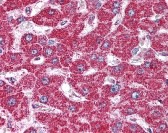
Immunohistochemistry staining of HSPD1 in liver formlin-fixed paraffin-embedded) tissue using HSPD1 Antibody.| Product Name | HSPD1 Antibody |
|---|---|
| Antibody Type | Primary Antibodies |
| Antigen Alias | HSPD1, 60 kDa chaperonin, CPN60, Heat shock protein 65, Heat shock protein 60, HSP-60, HSP60, HuCHA60, HLD4, HSP65, p60 lymphocyte protein, SPG13, Chaperonin 60, GROEL |
| Product description | HSP60, a 60 kDa member of Chaperonin family, is a mitochondrial protein that participates in protein folding, transport and secretion. HSP60 is a multi-functional protein whose roles include accelerating the maturation of pro-caspase 3 during apoptosis, LPS-binding, acting as a ligand for innate immune system and also binding to the surface of innate immune cells and stimulating proinflammatory reactivity. It induces the expression of IL-12 and IL-15 and also induces release of TNF-alpha, NO and IL-6. Reports suggest interaction of Hsp60 with integrin molecules during metastasis. Mutations in Hsp60 gene cause autosomal recessive spastic paraplegia 13. Hsp60 has been found to be involved in development of auto-immune disorders such as Rheumatoid arthritis, insulin-dependent diabetes mellitus, systemic sclerosis and atherosclerosis. |
| Immunogen | A portion of amino acids 150-200 of human Hsp60. |
| Clonality | Polyclonal |
|---|---|
| Host Species | Rabbit |
| Tested Applications | IHCWB |
| HSPD1 antibody can be used in ELISA, and immunohistochemistry starting at 10 μg/mL.: |
|
| Species Reactivity | BovineChimpanzeeDogHumanMonkey |
| Concentration | 1mg/ml |
| Purification | Protein G |
| Gene Symbol | HSPD1 |
|---|---|
| Alternative Names | HSPD1 60 kDa chaperonin CPN60 Heat shock protein 65 Heat shock protein 60 HSP-60 HSP60 HuCHA60 HLD4 HSP65 p60 lymphocyte protein SPG13 Chaperonin 60 GROEL |
| Tissue Specificity | The amino acid sequence used as immunogen is 100% homologous in a broad range of species including human, dog, mouse, rat, bovine, chimp, monkey, and orangutan. |
Application
Immunohistochemistry staining of HSPD1 in liver formlin-fixed paraffin-embedded) tissue using HSPD1 Antibody.| Application Notes | HSPD1 antibody can be used in ELISA, and immunohistochemistry starting at 10 μg/mL.: |
|---|
| Form | Liquid |
|---|---|
| Storage Instructions | HSPD1 antibody can be stored short term 4 ˚C. For long term storage aliquot and store at -20 ˚C. As with all antibodies avoid freeze/thaw cycles. |
| Storage Buffer | PBS, 0.2% gelatin, 0.05% sodium azide. |


