Application
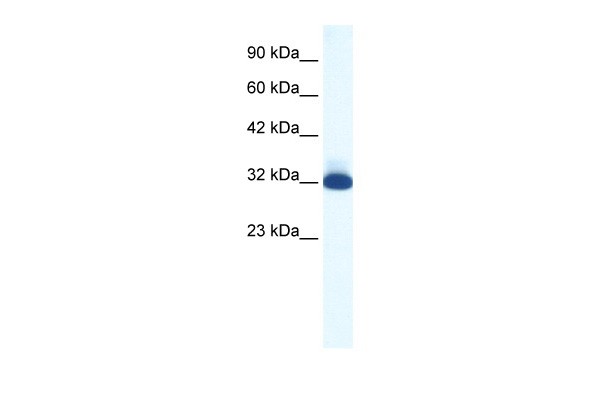
Antibody used in WB on Human HepG2 at 1.25 ug/ml.| Product Name | HTR1B Antibody |
|---|---|
| Antibody Type | Primary Antibodies |
| Antigen Alias | HTR1B, S12, 5-HT1B, HTR1D2, HTR1DB, 5-HT1DB |
| Product description | The pathophysiology of depression remains enigmatic, although abnormalities that involve serotonin signaling have been implicated. The serotonin 1B receptor [5-hydroxytryptamine (5-HT1B) receptor] interacts with p11. p11 increases localization of 5-HT1B receptors at the cell surface. p11 is increased in rodent brains by antidepressants or electroconvulsive therapy, but decreased in an animal model of depression and in brain tissue from depressed patients. Overexpression of p11 increases 5-HT1B receptor function in cells and recapitulates certain behaviors seen after antidepressant treatment in mice. p11 knockout mice exhibit a depression-like phenotype and have reduced responsiveness to 5-HT1B receptor agonists and reduced behavioral reactions to an antidepressant.1) L, et al., (2004) Biol. Psychiatry 55 (3), 225-233. |
| Immunogen | Antibody produced in rabbits immunized with a synthetic peptide corresponding a region of human HTR1B. |
| Clonality | Polyclonal |
|---|---|
| Host Species | Rabbit |
| Tested Applications | ELISAWB |
| HTR1B antibody can be used for detection of HTR1B by ELISA at 1:12500. HTR1B antibody can be used for detection of HTR1B by western blot at 1.25 μg/mL, and HRP conjugated secondary antibody should be diluted 1:50,000 - 100,000.: |
|
| Species Reactivity | Human |
| Concentration | 1mg/ml |
| Purification | Protein A |
| Gene Symbol | HTR1B |
|---|---|
| Alternative Names | HTR1B S12 5-HT1B HTR1D2 HTR1DB 5-HT1DB |
| Molecular Weight(MW) | 44 kDa |
Application
Antibody used in WB on Human HepG2 at 1.25 ug/ml.| Positive Control | 1) Cat. No. 1211 - HepG2 Cell Lysate |
|---|---|
| Application Notes | HTR1B antibody can be used for detection of HTR1B by ELISA at 1:12500. HTR1B antibody can be used for detection of HTR1B by western blot at 1.25 μg/mL, and HRP conjugated secondary antibody should be diluted 1:50,000 - 100,000.: |
| Form | Liquid |
|---|---|
| Storage Instructions | For short periods of storage (days) store at 4˚C. For longer periods of storage, store HTR1B antibody at -20˚C. As with any antibody avoid repeat freeze-thaw cycles. |
| Storage Buffer | IgG in phosphate buffered saline , pH 7.4, 150mM NaCl, 0.02% sodium azide and 50% glycerol.Store at -20 °C.Stable for 12 months from date of receipt |


