Application
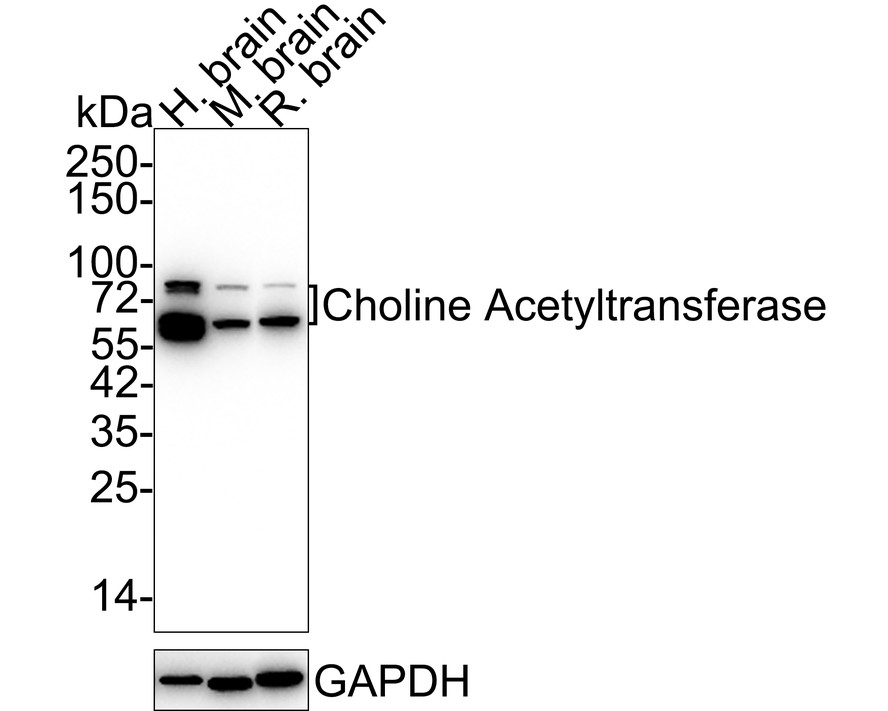
Fig1: Western blot analysis of Choline Acetyltransferase on different lysates with Rabbit anti-Choline Acetyltransferase antibody at 1/5,000 dilution. Lane 1: Human brain tissue lysate, Lane 2: Mouse brain tissue lysate, Lane 3: Rat brain tissue lysate, Lysates/proteins at 20 µg/Lane. Exposure time: 20 seconds; 4-20% SDS-PAGE gel. Proteins were transferred to a PVDF membrane and blocked with 5% NFDM/TBST for 1 hour at room temperature. The primary antibody at 1/5,000 dilution was used in 5% NFDM/TBST at 4℃ overnight. Goat Anti-Rabbit IgG - HRP Secondary Antibody at 1/50,000 dilution was used for 1 hour at room temperature.Application
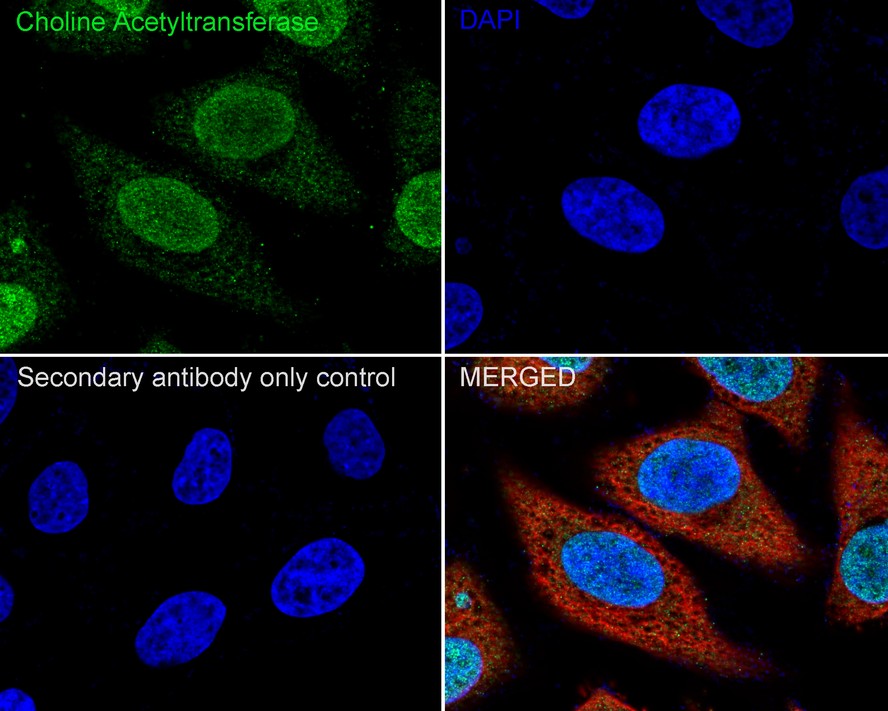
Fig2: Immunocytochemistry analysis of HeLa cells labeling Choline Acetyltransferase with Rabbit anti-Choline Acetyltransferase antibody at 1/100 dilution. Cells were fixed in 4% paraformaldehyde for 20 minutes at room temperature, permeabilized with 0.1% Triton X-100 in PBS for 5 minutes at room temperature, then blocked with 1% BSA in 10% negative goat serum for 1 hour at room temperature. Cells were then incubated with Rabbit anti-Choline Acetyltransferase antibody at 1/100 dilution in 1% BSA in PBST overnight at 4 ℃. Goat Anti-Rabbit IgG H&L (iFluor™ 488) was used as the secondary antibody at 1/1,000 dilution. PBS instead of the primary antibody was used as the secondary antibody only control. Nuclear DNA was labelled in blue with DAPI. Beta tubulin (red) was stained at 1/100 dilution overnight at +4℃. Goat Anti-Mouse IgG H&L (iFluor™ 594) was used as the secondary antibody at 1/1,000 dilution.Application
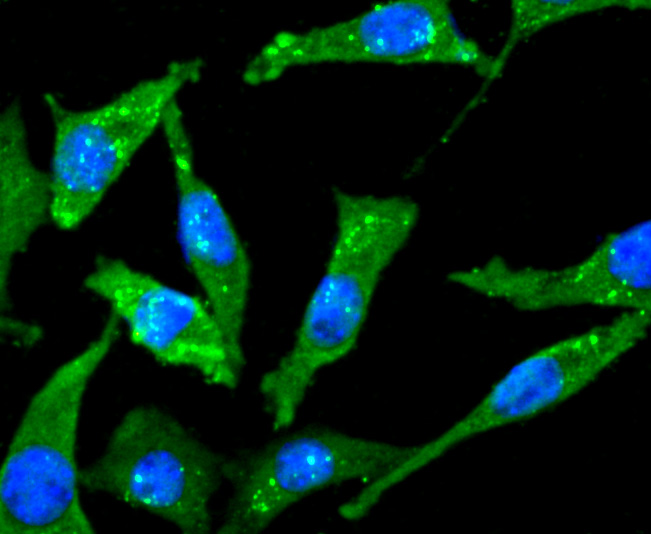
Fig3: ICC staining Choline Acetyltransferase in SH-SY5Y cells (green). The nuclear counter stain is DAPI (blue). Cells were fixed in paraformaldehyde, permeabilised with 0.25% Triton X100/PBS.Application
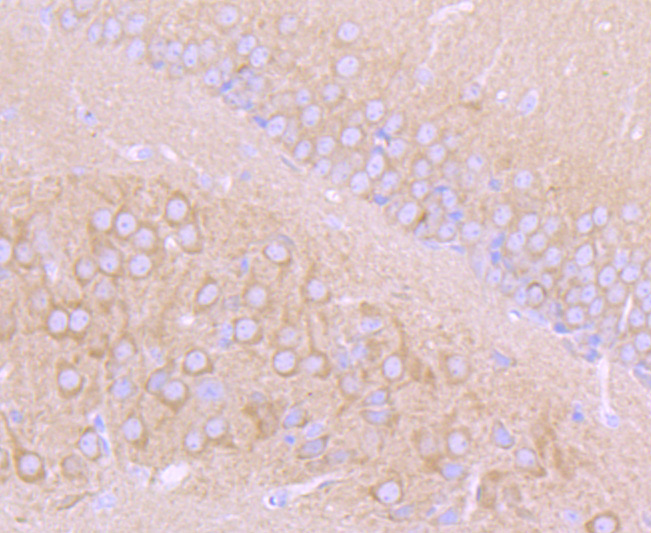
Fig4: Immunohistochemical analysis of paraffin-embedded mouse brain tissue using anti- Choline Acetyltransferase antibody. Counter stained with hematoxylin.Application
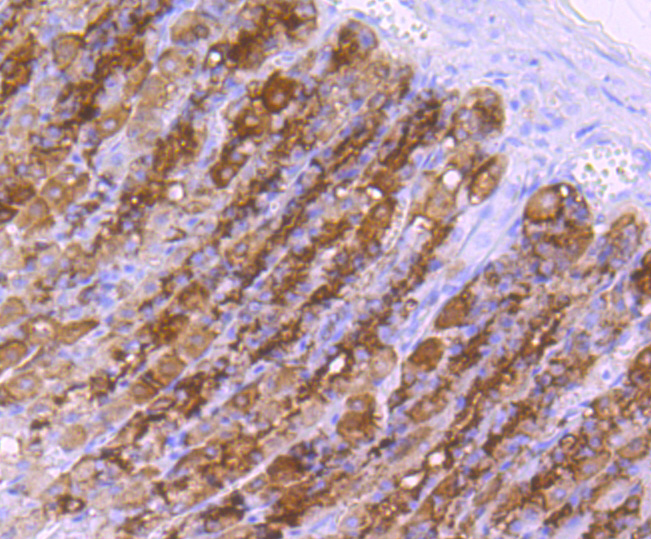
Fig5: Immunohistochemical analysis of paraffin-embedded rat stomach tissue using anti- Choline Acetyltransferase antibody. Counter stained with hematoxylin.Application
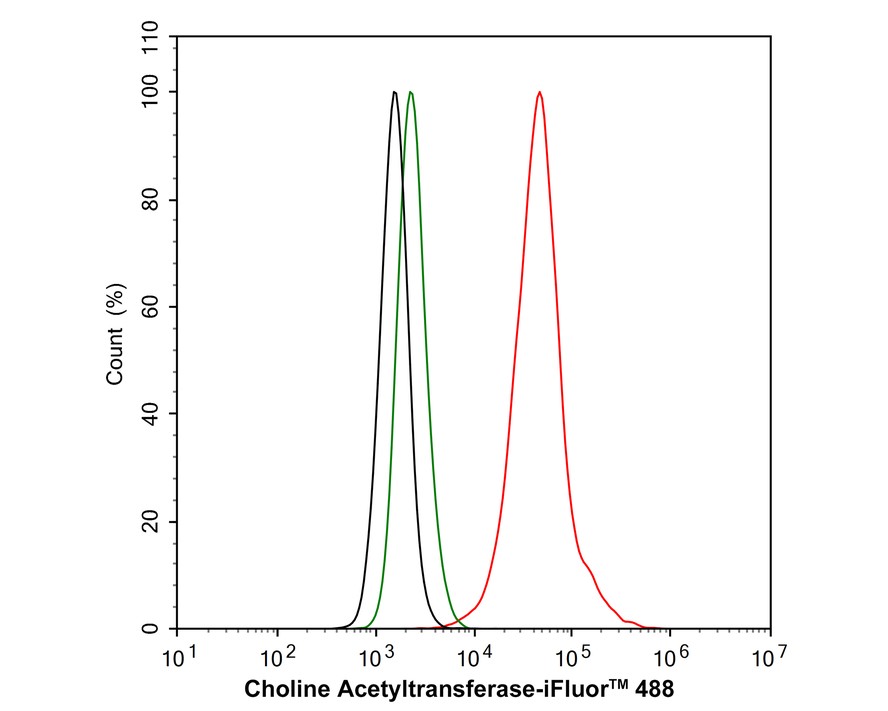
Fig6: Flow cytometric analysis of HeLa cells labeling Choline Acetyltransferase. Cells were fixed and permeabilized. Then stained with the primary antibody (1μg/mL) (red) compared with Rabbit IgG Isotype Control (green). After incubation of the primary antibody at +4℃ for an hour, the cells were stained with a iFluor™ 488 conjugate-Goat anti-Rabbit IgG Secondary antibody at 1/1,000 dilution for 30 minutes at +4℃. Unlabelled sample was used as a control (cells without incubation with primary antibody; black).| Product Name | Choline Acetyltransferase Recombinant Rabbit Monoclonal Antibody |
|---|---|
| Antibody Type | Primary Antibodies |
| Product description | Choline acetyltransferase (also designated choactase, choline O-acetyltransferase) synthesizes acetylcholine in cholinergic neurons. Multiple choactase mRNAs with different 5'-noncoding regions are expressed as R-, N1, N2-, S- and M-types. N1-, N2- and R-type mRNAs produce a single short enzyme, while M-type mRNA produces both long and short enzymes. The long enzyme is targeted to the nuclei of cells, whereas the short protein is found in cytoplasm. A novel NFkB binding site is located within the nerve growth factor-responsive enhancer element that is recognized by the NFkB protein p49, but not p65 or p50. Decreased choactase expression and increased NFkB activity are associated with aging and Alzheimer's disease, indicating that p49 is a negative regulator of choactase expression and suggesting a possible mechanism for aging-associated declines in cholinergic function. Phosphorylation of choactase has been shown to enhance choactase catalytic activity. Specifically, Serine 440 is found to be the phosphorylation site in a recombinant human short choactase by protein kinase C and is involved in regulation of the enzyme catalytic activity and binding to subcellular membranes. |
| Immunogen | Synthetic peptide within Human Choline Acetyltransferase aa 699-748 / 748. |
| Clonality | monoclonal |
|---|---|
| Isotype | IgG |
| Host Species | Recombinant rabbit |
| Tested Applications | FCICC/IFIHCWB |
| WB:1:5000 ICC:1:50-1:200 IHC:1:50-1:200 FC:1:1000 |
|
| Species Reactivity | HumanMouseRat |
| Concentration | 1mg/ml |
| Purification | Protein A |
| Gene Symbol | CHAT |
|---|---|
| Gene Synonyms | CMS6 CMS1A CMS1A2 CHOACTASE |
| Gene Full Name | choline O-acetyltransferase |
| Gene Summary | This gene encodes an enzyme which catalyzes the biosynthesis of the neurotransmitter acetylcholine. This gene product is a characteristic feature of cholinergic neurons, and changes in these neurons may explain some of the symptoms of Alzheimer's disease. Polymorphisms in this gene have been associated with Alzheimer's disease and mild cognitive impairment. Mutations in this gene are associated with congenital myasthenic syndrome associated with episodic apnea. Multiple transcript variants encoding different isoforms have been found for this gene, and some of these variants have been shown to encode more than one isoform. [provided by RefSeq, May 2010] |
| Alternative Names | Acetyl CoA choline O acetyltransferase antibody Acetyl CoA:choline O acetyltransferase antibody ChAT antibody CHOACTase antibody Choline acetylase antibody choline acetyltransferase antibody Choline O acetyltransferase antibody Choline O-acetyltransferase antibody CLAT_HUMAN antibody CMS1A antibody CMS1A2 antibody EC 2.3.1.6 antibody OTTHUMP00000019583 antibody OTTHUMP00000019584 antibody |
| Molecular Weight(MW) | 83kDa(Observed band size: 60-83kDa) |
| Cellular Localization | Cytoplasm. Nucleus. |
Application
Fig1: Western blot analysis of Choline Acetyltransferase on different lysates with Rabbit anti-Choline Acetyltransferase antibody at 1/5,000 dilution. Lane 1: Human brain tissue lysate, Lane 2: Mouse brain tissue lysate, Lane 3: Rat brain tissue lysate, Lysates/proteins at 20 µg/Lane. Exposure time: 20 seconds; 4-20% SDS-PAGE gel. Proteins were transferred to a PVDF membrane and blocked with 5% NFDM/TBST for 1 hour at room temperature. The primary antibody at 1/5,000 dilution was used in 5% NFDM/TBST at 4℃ overnight. Goat Anti-Rabbit IgG - HRP Secondary Antibody at 1/50,000 dilution was used for 1 hour at room temperature.
Application
Fig2: Immunocytochemistry analysis of HeLa cells labeling Choline Acetyltransferase with Rabbit anti-Choline Acetyltransferase antibody at 1/100 dilution. Cells were fixed in 4% paraformaldehyde for 20 minutes at room temperature, permeabilized with 0.1% Triton X-100 in PBS for 5 minutes at room temperature, then blocked with 1% BSA in 10% negative goat serum for 1 hour at room temperature. Cells were then incubated with Rabbit anti-Choline Acetyltransferase antibody at 1/100 dilution in 1% BSA in PBST overnight at 4 ℃. Goat Anti-Rabbit IgG H&L (iFluor™ 488) was used as the secondary antibody at 1/1,000 dilution. PBS instead of the primary antibody was used as the secondary antibody only control. Nuclear DNA was labelled in blue with DAPI. Beta tubulin (red) was stained at 1/100 dilution overnight at +4℃. Goat Anti-Mouse IgG H&L (iFluor™ 594) was used as the secondary antibody at 1/1,000 dilution.
Application
Fig3: ICC staining Choline Acetyltransferase in SH-SY5Y cells (green). The nuclear counter stain is DAPI (blue). Cells were fixed in paraformaldehyde, permeabilised with 0.25% Triton X100/PBS.
Application
Fig4: Immunohistochemical analysis of paraffin-embedded mouse brain tissue using anti- Choline Acetyltransferase antibody. Counter stained with hematoxylin.
Application
Fig5: Immunohistochemical analysis of paraffin-embedded rat stomach tissue using anti- Choline Acetyltransferase antibody. Counter stained with hematoxylin.
Application
Fig6: Flow cytometric analysis of HeLa cells labeling Choline Acetyltransferase. Cells were fixed and permeabilized. Then stained with the primary antibody (1μg/mL) (red) compared with Rabbit IgG Isotype Control (green). After incubation of the primary antibody at +4℃ for an hour, the cells were stained with a iFluor™ 488 conjugate-Goat anti-Rabbit IgG Secondary antibody at 1/1,000 dilution for 30 minutes at +4℃. Unlabelled sample was used as a control (cells without incubation with primary antibody; black).| Positive Control | Hela, N2A, SH-SY5Y, rat stomach tissue, mouse brain tissue. |
|---|---|
| Application Notes | WB:1:5000 ICC:1:50-1:200 IHC:1:50-1:200 FC:1:1000 |
| Form | Liquid |
|---|---|
| Storage Instructions | Store at +4℃ after thawing. Aliquot store at -20℃ or -80℃. Avoid repeated freeze / thaw cycles. |
| Storage Buffer | 1*TBS (pH7.4), 1%BSA, 40%Glycerol. Preservative: 0.05% Sodium Azide. |


