Application
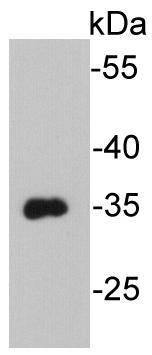
Fig1: Western blot analysis on recombinant VSV-G-tag protein using anti-VSV-G-tag Mouse mAb.| Product Name | VSV-G-tag [E0-G7] |
|---|---|
| Antibody Type | Primary Antibodies |
| Antigen Alias | Vesicular stomatitis virus glycoprotein tag antibody VSV epitope tag antibody VSV tag antibody VSV-G epitope tag antibody VSVG antibody vsvg tag antibody |
| Product description | Vesicular Stomatitis Virus (VSV) is an arbovirus in the family Rhabdoviridae, order Mononegavirales. VSV infects insects and mammals. The genome of VSV is a negative-sense RNA strand that encodes five major proteins: glycoprotein (G), matrix protein (M), nucleoprotein (NC), large protein (L) and phosphoprotein. The L protein and the phosphoprotein combine to catalyze the replication of VSV’s mRNA. After endocytosis, the G protein facilitates VSV’s entry into the cell by controlling virus attachment to the host cell as well as fusion of the viral envelope with the endosomal membrane. Transport of the G protein from the endoplasmic reticulum (ER) to the plasma membrane (PM) is temperature sensitive. Because of this property, VSV is commonly used in research labs to study the properties of viruses in the Rhabdoviridae family, and to study viral evolution. |
| Immunogen | peptide |
| Clonality | Monoclonal |
|---|---|
| Isotype | IgG1 |
| Host Species | Mouse |
| Tested Applications | WBIPICC/IF |
| WB:1:1,000-1:5,000 |
|
| Concentration | 2mg/ml |
| Alternative Names | Vesicular stomatitis virus glycoprotein tag antibody VSV epitope tag antibody VSV tag antibody VSV-G epitope tag antibody VSVG antibody vsvg tag antibody |
|---|
Application
Fig1: Western blot analysis on recombinant VSV-G-tag protein using anti-VSV-G-tag Mouse mAb.| Positive Control | Recombinant VSV-G-tag protein. |
|---|---|
| Application Notes | WB:1:1,000-1:5,000 |
| Form | Liquid |
|---|---|
| Storage Instructions | Store at +4℃ after thawing. Aliquot store at -20℃ or -80℃. Avoid repeated freeze / thaw cycles. |
| Storage Buffer | 1*TBS (pH7.4), 1%BSA, 40%Glycerol. Preservative: 0.05% Sodium Azide. |


