Application
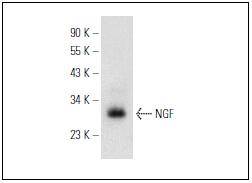
Fig1: Western blot analysis of NGF expression in mouse brain tissue extract.| Product Name | NGF beta [1G4] |
|---|---|
| Antibody Type | Primary Antibodies |
| Antigen Alias | Beta nerve growth factor antibody Beta NGF antibody Beta-nerve growth factor antibody Beta-NGF antibody HSAN5 antibody MGC161426 antibody MGC161428 antibody Nerve growth factor (beta polypeptide) antibody Nerve growth factor antibody Nerve growth factor beta antibody Nerve growth factor beta polypeptide antibody Nerve growth factor beta subunit antibody NGF antibody NGF_HUMAN antibody NGFB antibody NID67 antibody |
| Product description | Neurotrophins function to regulate naturally occurring cell death of neurons during development. The prototype neurotrophin is nerve growth factor (NGF), originally discovered in the 1950s as a soluble peptide promoting the survival of, and neurite outgrowth from, sympathetic ganglia. Three additional structurally homologous neurotrophic factors have been identified. These include brain-derived neurotrophic factor (BDNF), neurotrophin-3 (NT-3) and neurotrophin-4 (NT-4) (also designated NT-5). These various neurotrophins stimulate the in vitro survival of distinct, but partially overlapping, populations of neurons. The cell surface receptors through which neurotrophins mediate their activity have been identified. For instance, the Trk A receptor is the preferential receptor for NGF, but also binds NT-3 and NT-4. The Trk B receptor binds both BDNF and NT-4 equally well, and binds NT-3 to a lesser extent, while the Trk C receptor only binds NT-3. |
| Immunogen | Amino acids 122-149 at the N-terminus of mature NGF of human origin. |
| Clonality | Monoclonal |
|---|---|
| Isotype | IgG1 |
| Host Species | Mouse |
| Tested Applications | WBIPIF |
| WB:1:100-1:1,000 IP:1-2 μg per 100-500 μg of total protein(1 ml of cell lysate) IF:1:50-500 |
|
| Species Reactivity | HumanMouseRat |
| Concentration | 2mg/ml |
| Alternative Names | Beta nerve growth factor antibody Beta NGF antibody Beta-nerve growth factor antibody Beta-NGF antibody HSAN5 antibody MGC161426 antibody MGC161428 antibody Nerve growth factor (beta polypeptide) antibody Nerve growth factor antibody Nerve growth factor beta antibody Nerve growth factor beta polypeptide antibody Nerve growth factor beta subunit antibody NGF antibody NGF_HUMAN antibody NGFB antibody NID67 antibody |
|---|---|
| Molecular Weight(MW) | 27kDa |
| Cellular Localization | Secreted |
| SwissProt ID | P01138 |
|---|
Application
Fig1: Western blot analysis of NGF expression in mouse brain tissue extract.| Positive Control | Mouse brain tissue. |
|---|---|
| Application Notes | WB:1:100-1:1,000 IP:1-2 μg per 100-500 μg of total protein(1 ml of cell lysate) IF:1:50-500 |
| Form | Liquid |
|---|---|
| Storage Instructions | Store at +4℃ |
| Storage Buffer | 1*TBS (pH7.4), 1%BSA, 40%Glycerol. Preservative: 0.05% Sodium Azide. |


