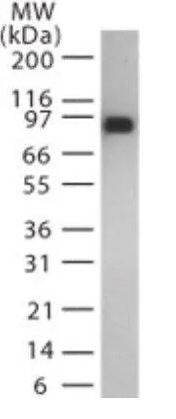
WB
WB analysis of recombinant anthrax LF protein using Anthrax LF antibody.| Product Name | Mouse monoclonal antibody to Anthrax LF |
|---|---|
| Antibody Type | Primary Antibodies |
| Immunogen | Against synthetic Anthrax LF corresponding to amino acids 779-792 of Bacillus anthracis origin. |
| Clonality | monoclonal |
|---|---|
| Isotype | IgG1 |
| Host Species | Mouse |
| Tested Applications | WB |
| WB:1:100-1:1000 |
|
| Predicted Reactivity | Bacillus anthracis |
| Concentration | 0.1mg/ml |
| Purification | Affinity purified |
| Gene Symbol | lef |
|---|---|
| Gene Full Name | anthrax toxin lethal factor |
| Molecular Weight(MW) | 93kDa |
| Function | The genus Bacillus consists of aerobic, Gram-positive, spore-forming, rod shaped bacterium. Bacillus anthracis causes anthrax, an acute infectious disease of cattle, sheep, goats, camels, antelopes and other herbivores that is highly lethal in some forms. B. anthracis spores can persist in the soil for many years as they are resistant to heat, cold, radiation, desiccation and disinfectants. The anthrax toxin produced by Bacillus anthracis has two components: edema factor (EF) and lethal factor (LF). The EF inactivates neutrophils so that they cannot phagocytose bacteria, and the LF, a zinc dependent metalloprotease, cleaves the mitogen activated protein kinase kinase (MAPKK) enzymes of the MAPK signaling pathway, thereby impairing their function. The overall result is an impaired innate and adaptive immune response with an overproduction of TNF-α and interleukin-1-β, ultimately leading to septic shock and death. The anthrax lethal factor also targets endothelial cells, causing vascular leakage and ultimately hypovolemic shock. |
WB
WB analysis of recombinant anthrax LF protein using Anthrax LF antibody.| Application Notes | WB:1:100-1:1000 |
|---|
| Form | Liquid |
|---|---|
| Storage Instructions | Store at 4° C, **DO NOT FREEZE**. Stable for one year from the date of shipment. Non-hazardous. No MSDS required. |
| Storage Buffer | Each vial contains 100 µg IgG1 in 1.0 ml of PBS with < 0.1% sodium azide and 0.1% gelatin. |


