IHC
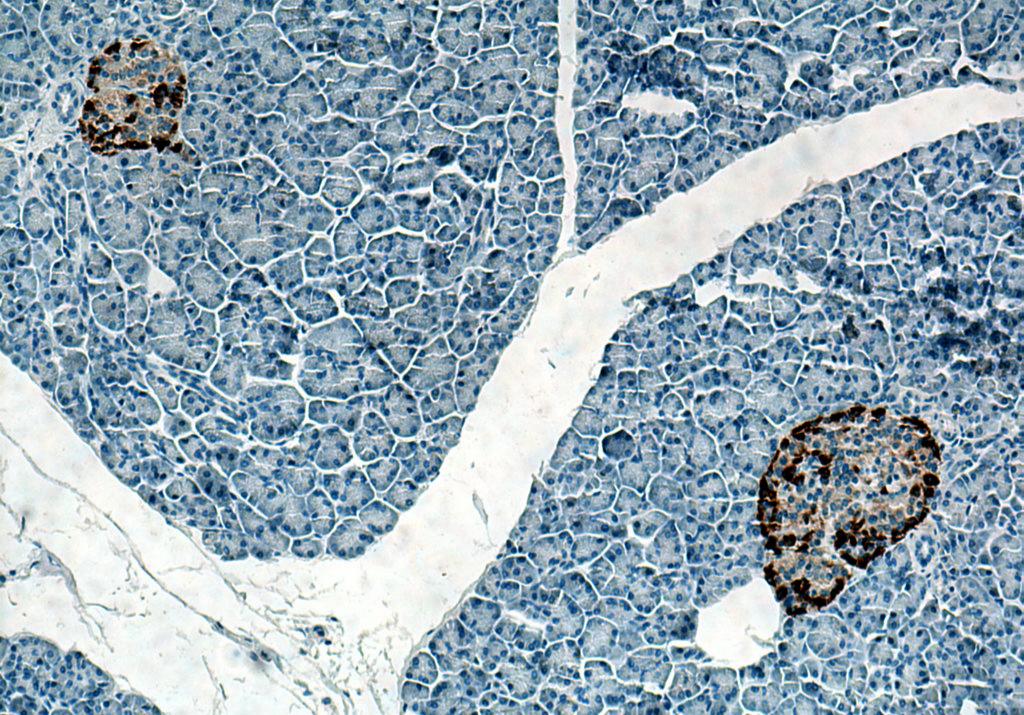
Immunohistochemical analysis of paraffin-embedded human pancreas tissue slide using Glucagon antibody at dilution of 1:10000 (under 10x lens). Heat mediated antigen retrieval with Tris-EDTA buffer (pH 9.0).IHC
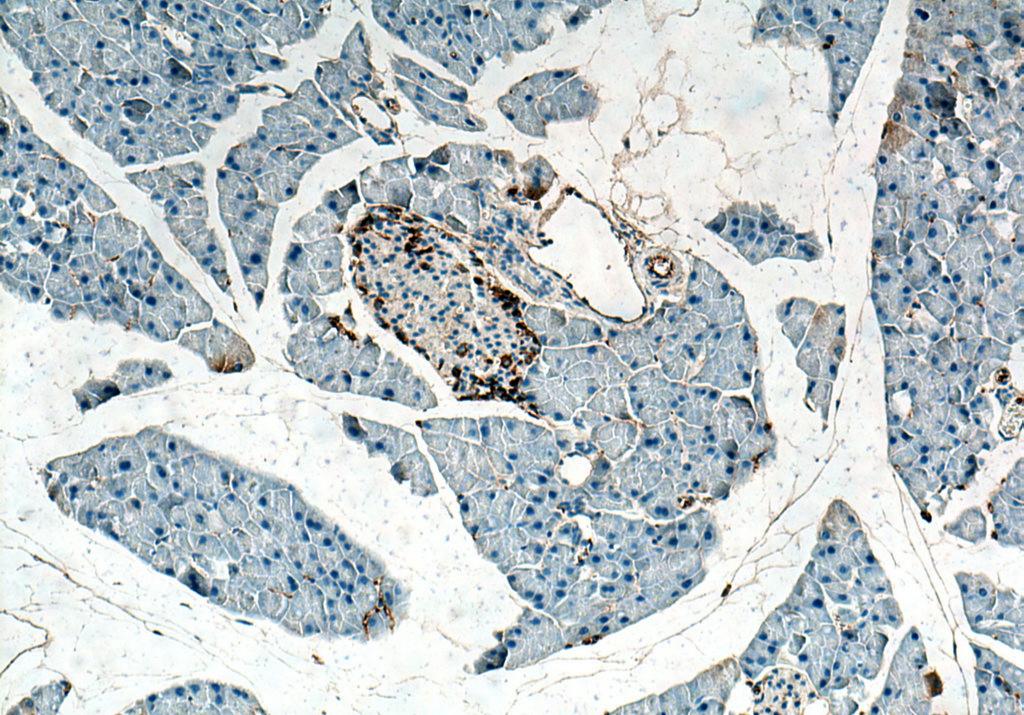
Immunohistochemical analysis of paraffin-embedded mouse pancreas tissue slide using Glucagon antibody at dilution of 1:10000 (under 10x lens). Heat mediated antigen retrieval with Tris-EDTA buffer (pH 9.0).IF-P
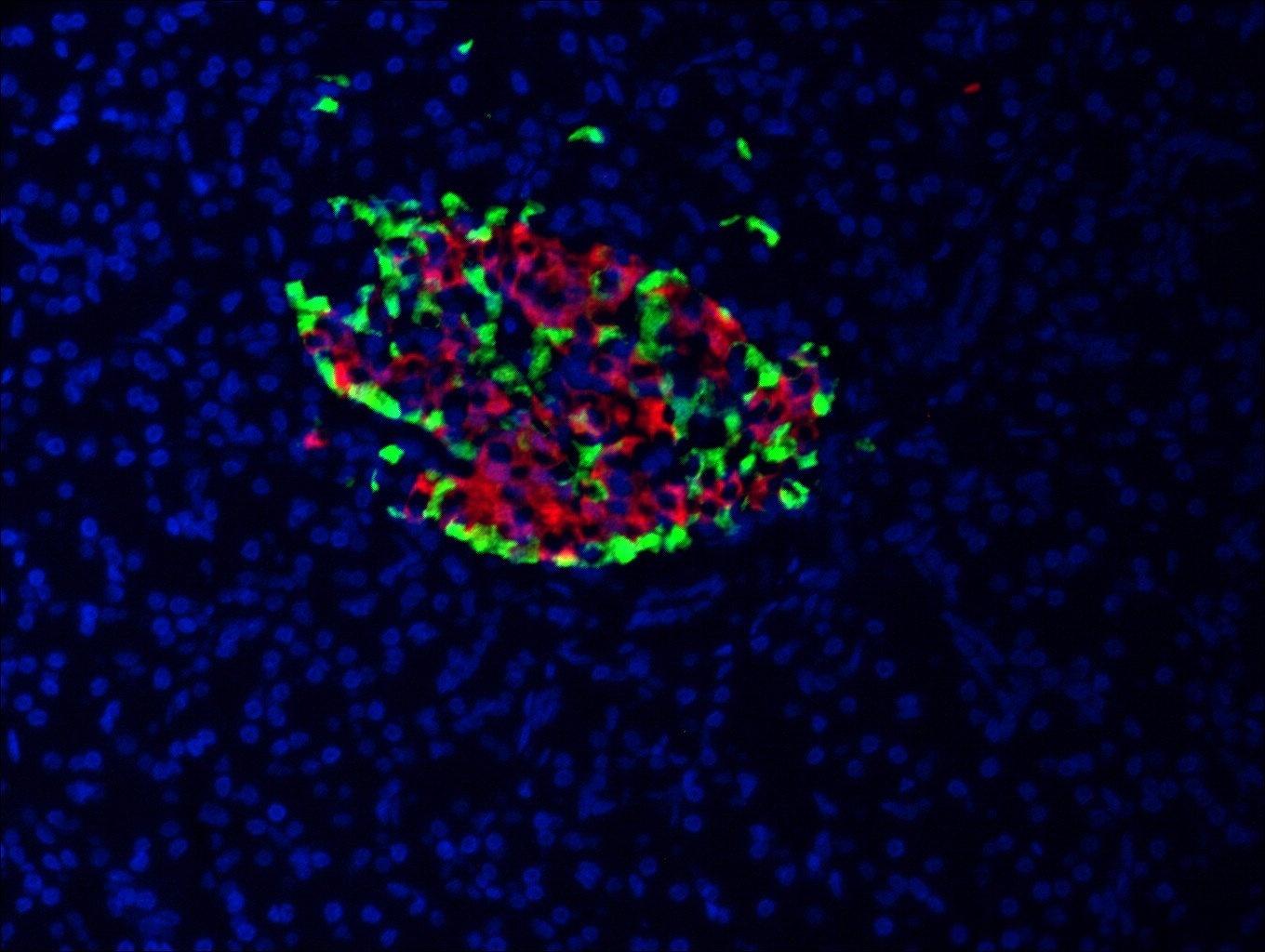
Immunofluorescent analysis of (4% PFA) fixed human pancreas tissue using Glucagon antibody at dilution of 1:50 and CoraLite488-Conjugated AffiniPure Goat Anti-Mouse IgG(H+L). The B cells of the islets of Langerhans was labelled in red with Insulin antibody.IF-P
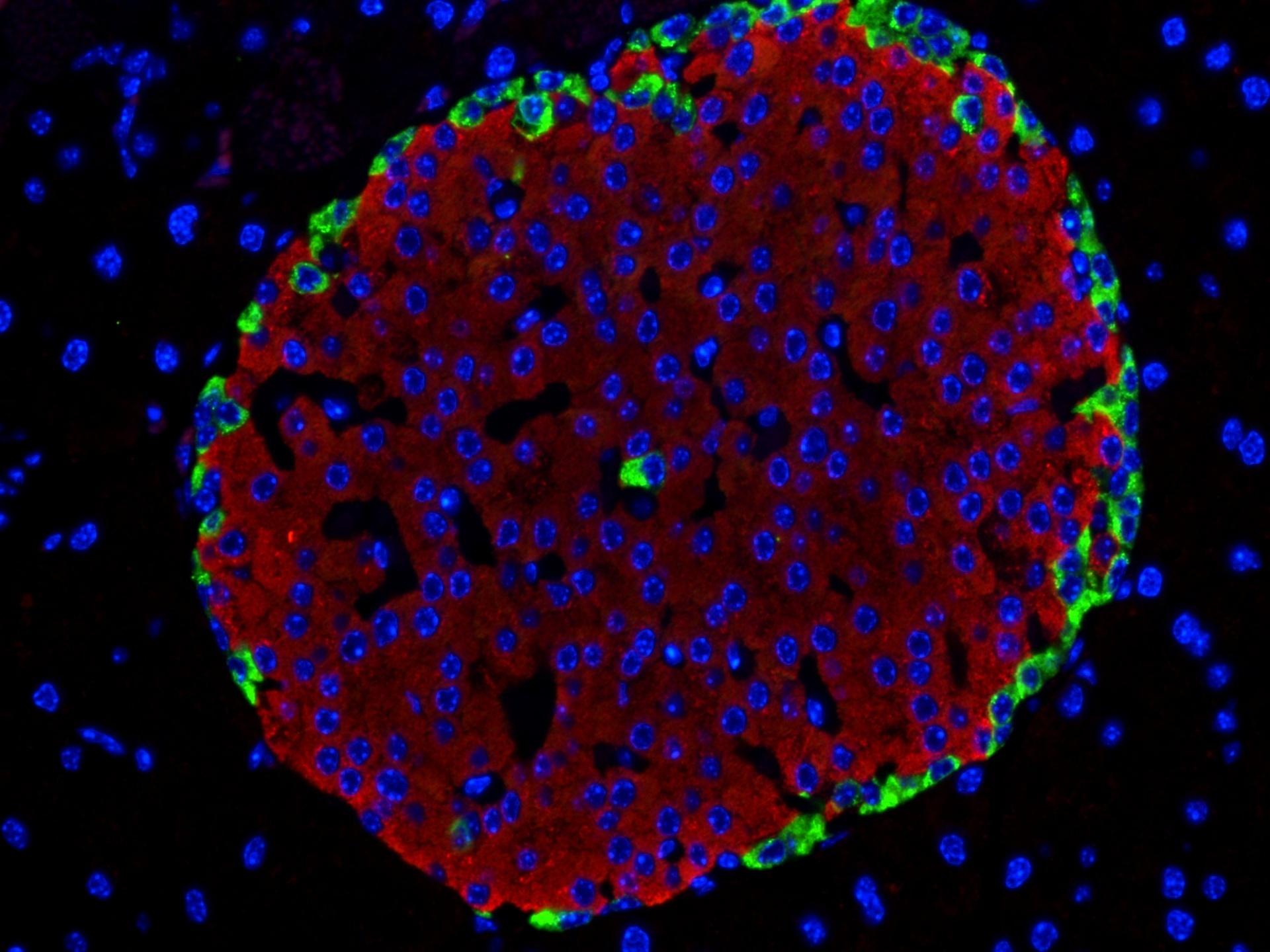
Immunofluorescent analysis of (4% PFA) fixed mouse pancreas tissue using Glucagon antibody at dilution of 1:200 and CoraLite®488-Conjugated AffiniPure Goat Anti-Mouse IgG(H+L), INS antibody (red).IF-P
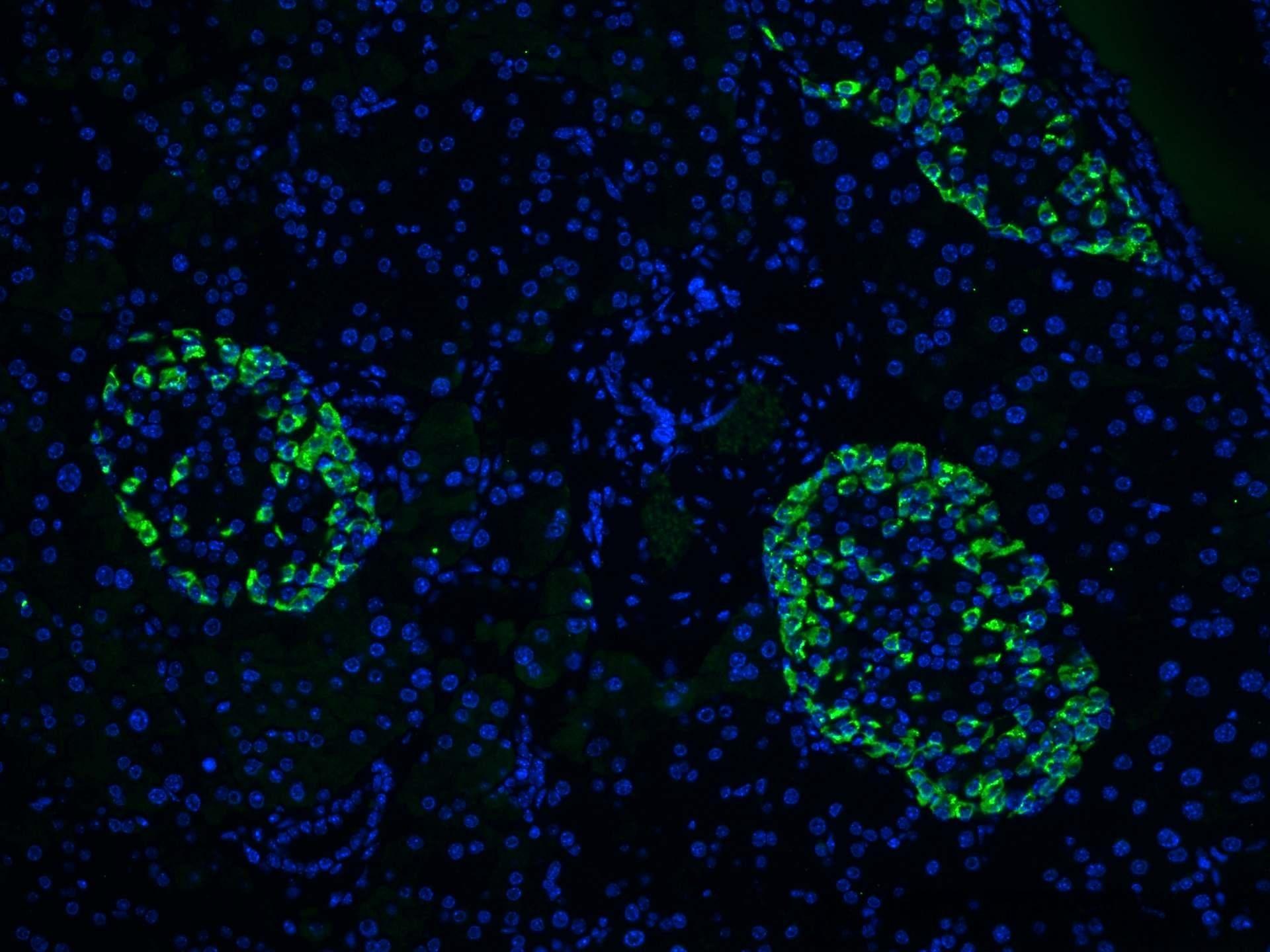
Immunofluorescent analysis of (4% PFA) fixed paraffin-embedded mouse pancreas tissue using Glucagon antibody at dilution of 1:400 and CoraLite®488-Conjugated AffiniPure Goat Anti-Mouse IgG(H+L). Heat mediated antigen retrieval with Tris-EDTA buffer (pH 9.0).| Product Name | Glucagon Monoclonal antibody |
|---|---|
| Antibody Type | Primary Antibodies |
| Immunogen | Recombinant human Glucagon protein |
| Clonality | Monoclonal |
|---|---|
| Isotype | IgG1 |
| Host Species | Mouse |
| Tested Applications | IF-PIHC |
| IHC:1:2000-1:15000 IF-P:1:200-1:800 |
|
| Species Reactivity | HumanMouse |
| Concentration | 1mg/ml |
| Purification | Protein G |
| Gene Symbol | GCG |
|---|---|
| Gene Synonyms | GLP1 GLP2 GRPP GLP-1 |
| Gene Full Name | glucagon |
| Gene Summary | The protein encoded by this gene is a proglucagon precursor that is cleaved into four distinct mature peptides. One of these, glucagon, is a pancreatic hormone that counteracts the glucose-lowering action of insulin by stimulating glycogenolysis and gluconeogenesis in the liver. In addition, glucagon promotes lipolysis and ketone body formation during prolonged fasting or stress. Glucagon secretion is stimulated by low blood glucose and inhibited by high glucose or insulin. Glucagon is a ligand for a specific G-protein linked receptor called glucagon receptor, which activates the Gs protein-adenylate cyclase-cAMP-protein kinase A signaling pathway to regulate carbohydrate and lipid metabolism. Two of the other peptides, glucagon-like peptide-1 and glucagon-like peptide-2, are produced by the intestinal L-cells and secreted in response to nutrient ingestion, where they function as important regulators of glucose metabolism and intestinal physiology. Glucagon-like peptide-1 enhances glucose-dependent insulin secretion, suppresses glucagon release, slows gastric emptying, and promotes satiety, making it a key incretin hormone for maintaining postprandial glucose levels. Glucagon-like peptide-2 primarily acts on the gut, promoting intestinal growth, enhancing nutrient absorption, and supporting mucosal integrity. Both peptides exert their effects through specific G-protein-coupled receptors, glucagon-like peptide-1 receptor and glucagon-like peptide-2 receptor, respectively, and analogs of glucagon-like peptide-1 are used clinically for the treatment of type 2 diabetes and obesity. The fourth peptide is similar to glicentin, an active enteroglucagon produced in the intestinal L-cells. This peptide is thought to have multiple roles in gastrointestinal physiology, including stimulating intestinal growth, modulating gut motility, and influencing the secretion of other gut hormones. Although its precise functions are less well-characterized than those of glucagon, glucagon-like peptide-1, or glucagon-like peptide-2, glicentin-like peptides may contribute to postprandial digestive processes and the coordination of nutrient absorption. [provided by RefSeq, Mar 2026] |
| Alternative Names | GCG 2A8G1 Glicentin-related polypeptide Glucagon-like peptide 1 Glucagon-like peptide 1(7-36) |
| Molecular Weight(MW) | 21 kDa |
| Cellular Localization | Secreted. |
IHC
Immunohistochemical analysis of paraffin-embedded human pancreas tissue slide using Glucagon antibody at dilution of 1:10000 (under 10x lens). Heat mediated antigen retrieval with Tris-EDTA buffer (pH 9.0).
IHC
Immunohistochemical analysis of paraffin-embedded mouse pancreas tissue slide using Glucagon antibody at dilution of 1:10000 (under 10x lens). Heat mediated antigen retrieval with Tris-EDTA buffer (pH 9.0).
IF-P
Immunofluorescent analysis of (4% PFA) fixed human pancreas tissue using Glucagon antibody at dilution of 1:50 and CoraLite488-Conjugated AffiniPure Goat Anti-Mouse IgG(H+L). The B cells of the islets of Langerhans was labelled in red with Insulin antibody.
IF-P
Immunofluorescent analysis of (4% PFA) fixed mouse pancreas tissue using Glucagon antibody at dilution of 1:200 and CoraLite®488-Conjugated AffiniPure Goat Anti-Mouse IgG(H+L), INS antibody (red).
IF-P
Immunofluorescent analysis of (4% PFA) fixed paraffin-embedded mouse pancreas tissue using Glucagon antibody at dilution of 1:400 and CoraLite®488-Conjugated AffiniPure Goat Anti-Mouse IgG(H+L). Heat mediated antigen retrieval with Tris-EDTA buffer (pH 9.0).| Application Notes | IHC:1:2000-1:15000 IF-P:1:200-1:800 |
|---|
| Form | Liquid |
|---|---|
| Storage Instructions | Store at -20°C. Stable for one year after shipment. |
| Storage Buffer | PBS with 0.02% sodium azide and 50% glycerol pH 7.3. |


