Application
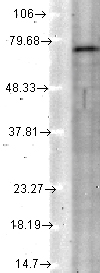
Western blot analysis of KCNQ4 in rat tissue lysates using a 1:1000 dilution ofApplication
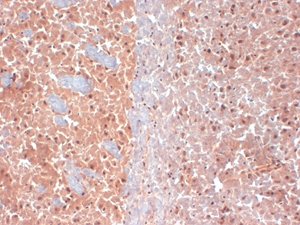
IHC analysis of KCNQ4 in frozen sections of mouse brain extract using| Product Name | KCNQ4 antibody |
|---|---|
| Antibody Type | Primary Antibodies |
| Product description | Mouse monoclonal antibody [S43-6] to KCNQ4The protein encoded by this gene forms a potassium channel that is thought to play a critical role in the regulation of neuronal excitability, particularly in sensory cells of the cochlea. The current generated by this channel is inhibited by M1 muscarinic acetylcholine receptors and activated by retigabine, a novel anti-convulsant drug. The encoded protein can form a homomultimeric potassium channel or possibly a heteromultimeric channel in association with the protein encoded by the KCNQ3 gene. Defects in this gene are a cause of nonsyndromic sensorineural deafness type 2 (DFNA2), an autosomal dominant form of progressive hearing loss. Two transcript variants encoding different isoforms have been found for this gene. [provided by RefSeq] |
| Immunogen | Fusion protein amino acids 2-77 of human KCNQ4, accession number P56696 |
| Clonality | Monoclonal |
|---|---|
| Isotype | IgG1 |
| Clone Number | S43-6 |
| Host Species | Mouse |
| Tested Applications | ICC/IFIHC-FIPWB |
| We recommend a working dilution of 1-10ug/mL (WB), 0.1-1.0ug/mL (Perox) (IHC/ICC), 1.0-10ug/mL (IF).: |
|
| Species Reactivity | HumanMouseRat |
| Concentration | 1mg/ml (Please refer to the vial label for the specific concentration) |
| Purification | Protein G |
| Gene Synonyms | KQT like4 DFNA2 KQT like 4 KCNQ4 Kv7.4 voltage gated potassium channel subunit Kv7.4 |
|---|---|
| Target | KCNQ4 |
| Molecular Weight(MW) | 77kDa (note) |
| Cellular Localization | Situated at the basal membrane of cochlear outer hair cells. |
Application
Western blot analysis of KCNQ4 in rat tissue lysates using a 1:1000 dilution of
Application
IHC analysis of KCNQ4 in frozen sections of mouse brain extract using| Application Notes | We recommend a working dilution of 1-10ug/mL (WB), 0.1-1.0ug/mL (Perox) (IHC/ICC), 1.0-10ug/mL (IF).: |
|---|
| Form | Liquid |
|---|---|
| Storage Instructions | Aliquot and store at -20 C. Avoid repeated freeze-thaw cycles. |
| Storage Buffer | PBS pH7.4, 50% glycerol |


