Application
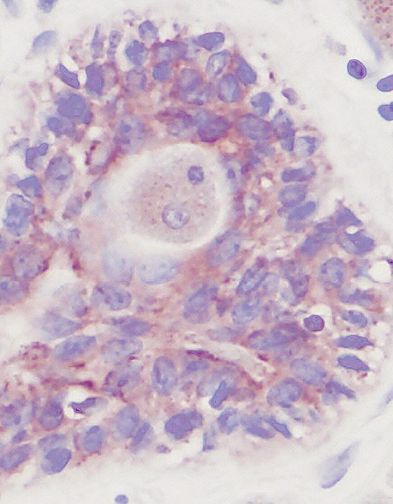
IHC-P analysis of normal human skin using PDGF-AA antibody at a concentration of 1.0 μg/ml. An HRP-labeled polymer detection system was used with a non-alcohol soluble AEC chromogen and a proteinase K antigen retrieval.| Product Name | PDGF-AA antibody |
|---|---|
| Antibody Type | Primary Antibodies |
| Product description | Rabbit Polyclonal antibody to PDGF-AAThe protein encoded by this gene is a member of the platelet-derived growth factor family. The four members of this family are mitogenic factors for cells of mesenchymal origin and are characterized by a motif of eight cysteines. This gene product can exist either as a homodimer or as a heterodimer with the platelet-derived growth factor beta polypeptide, where the dimers are connected by disulfide bonds. Studies using knockout mice have shown cellular defects in oligodendrocytes, alveolar smooth muscle cells, and Leydig cells in the testis; knockout mice die either as embryos or shortly after birth. Two splice variants have been identified for this gene. [provided by RefSeq, Jul 2008] |
| Immunogen | E.coli derived Recombinant Human PDGF-AA |
| Clonality | Polyclonal |
|---|---|
| Host Species | Rabbit |
| Tested Applications | ELISAIHCIHC-PNeutWB |
| IHC:1:50~1:200 IHC-P:1:50~1:200 WB:1:500~1:2000 Notes:Optimal dilutions/concentrations should be determined by the researcher. |
|
| Species Reactivity | Human |
| Concentration | 1mg/ml |
| Purification | Affinity purified |
| Gene Synonyms | PDGF1 platelet-derived growth factor alpha polypeptide PDGFA PDGF-A |
|---|---|
| Target | PDGF-AA |
Application
IHC-P analysis of normal human skin using PDGF-AA antibody at a concentration of 1.0 μg/ml. An HRP-labeled polymer detection system was used with a non-alcohol soluble AEC chromogen and a proteinase K antigen retrieval.| Application Notes | IHC:1:50~1:200 IHC-P:1:50~1:200 WB:1:500~1:2000 Notes:Optimal dilutions/concentrations should be determined by the researcher. |
|---|
| Form | Liquid |
|---|---|
| Storage Instructions | Keep as concentrated solution. Aliquot and store at -20ºC or below. Avoid multiple freeze-thaw cycles. |
| Storage Buffer | PBS, pH 7.2 |


