Application
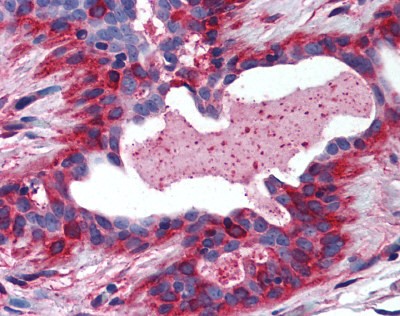
Immunohistochemistry staining of Prolactin Receptor in breast tissue using Prolactin Receptor monoclonal Antibody.| Product Name | Prolactin Receptor Antibody |
|---|---|
| Antibody Type | Primary Antibodies |
| Antigen Alias | PRLR, HPRL receptor, PRL-R, HPRLrI, Prolactin receptor |
| Product description | Prolactin is a pituitary hormone involved in the stimulation of milk production, salt and water regulation, growth, development and reproduction. The initial step in its action is the binding to a specific membrane receptor (prolactin receptor) which belongs to the superfamily of class 1 cytokine receptors. The function of the prolactin receptor is mediated, at least in part, by two families of signaling molecules: Janus kinases and signal transducers and activators of transcription. Western Blot (Ab 1-2 μg/mL for 2hrs at RT) Immunohistology (Formalin/paraffin) (Use Ab at 1-2 μg/mL for 30 min at RT) (Staining of formalin/paraffin tissues REQUIRES digestion of tissue sections with pepsin at 1 mg/mL Tris-HCl, pH 2.0 for 15 min at RT or 10 min at 37 deg C) Positive Control Breast carcinoma Cellular Localization Cell membrane/cytoplasmic Recognizes Prolactin Receptor. Species Crossreactivity: Human. |
| Immunogen | Prolactin Receptor monoclonal antibody was raised against semi - purified human prolactin receptor (70kD) (Human). |
| Clonality | Monoclonal |
|---|---|
| Isotype | IgG1 |
| Host Species | Mouse |
| Tested Applications | ELISAIHC |
| Prolactin Receptor antibody can be used in immunohistochemistry starting at 20 μg/mL.: |
|
| Species Reactivity | Human |
| Concentration | 1mg/ml |
| Purification | Protein G |
| Gene Symbol | PRLR |
|---|---|
| Alternative Names | PRLR HPRL receptor PRL-R HPRLrI Prolactin receptor |
Application
Immunohistochemistry staining of Prolactin Receptor in breast tissue using Prolactin Receptor monoclonal Antibody.| Application Notes | Prolactin Receptor antibody can be used in immunohistochemistry starting at 20 μg/mL.: |
|---|
| Form | Liquid |
|---|---|
| Storage Instructions | Prolactin Receptor antibody should be stored long term (months) at -20 ˚C and short term (weeks) at 4 ˚C. As with all antibodies avoid freeze/thaw cycles. |
| Storage Buffer | 10mM PBS, pH 7.4, 0.2% BSA, 0.09% sodium azide, before the addition of glycerol to 40% |


