Application
Immunofluorescence of APP in mouse brain tissue with APP Antibodyat 20 μg/mL.Application
Immunohistochemistry of APP in mouse brain tissue with APP Antibodyat 5 μg/mL.| Product Name | APP Antibody |
|---|---|
| Antibody Type | Primary Antibodies |
| Antigen Alias | APP Antibody: AAA, AD1, PN2, ABPP, APPI, CVAP, ABETA, PN-II, CTFgamma, A4, Amyloid beta A4 protein, APP |
| Product description | APP Antibody: Accumulation of the amyloid-beta peptide (Abeta) in the cerebral cortex is a critical event in the pathogenesis of Alzheimer's disease. The beta-amyloid protein precursor (APP) is cleaved by beta-secretase, producing a soluble derivative of the protein and a membrane anchored 99-amino acid carboxy-terminal fragment (C99). The C99 fragment serves as substrate for gamma-secretase to generate the 4 kDa amyloid-beta peptide (Abeta), which is deposited in the brains of all suffers of Alzheimer's disease.1) Ponte P, Gonzalez-DeWhitt P, Schilling J, Miller J, Hsu D, Greenberg B, Davis K, Wallace W, Lieberburg I, Fuller F. A new A4 amyloid mRNA contains a domain homologous to serine proteinase inhibitors. Nature 1988;331:525-7 |
| Immunogen | APP antibody was raised against a 15 amino acid peptide near the carboxy terminus of human APP. The immunogen is located within the last 50 amino acids of APP. |
| Clonality | Polyclonal |
|---|---|
| Isotype | IgG |
| Host Species | Rabbit |
| Tested Applications | IF |
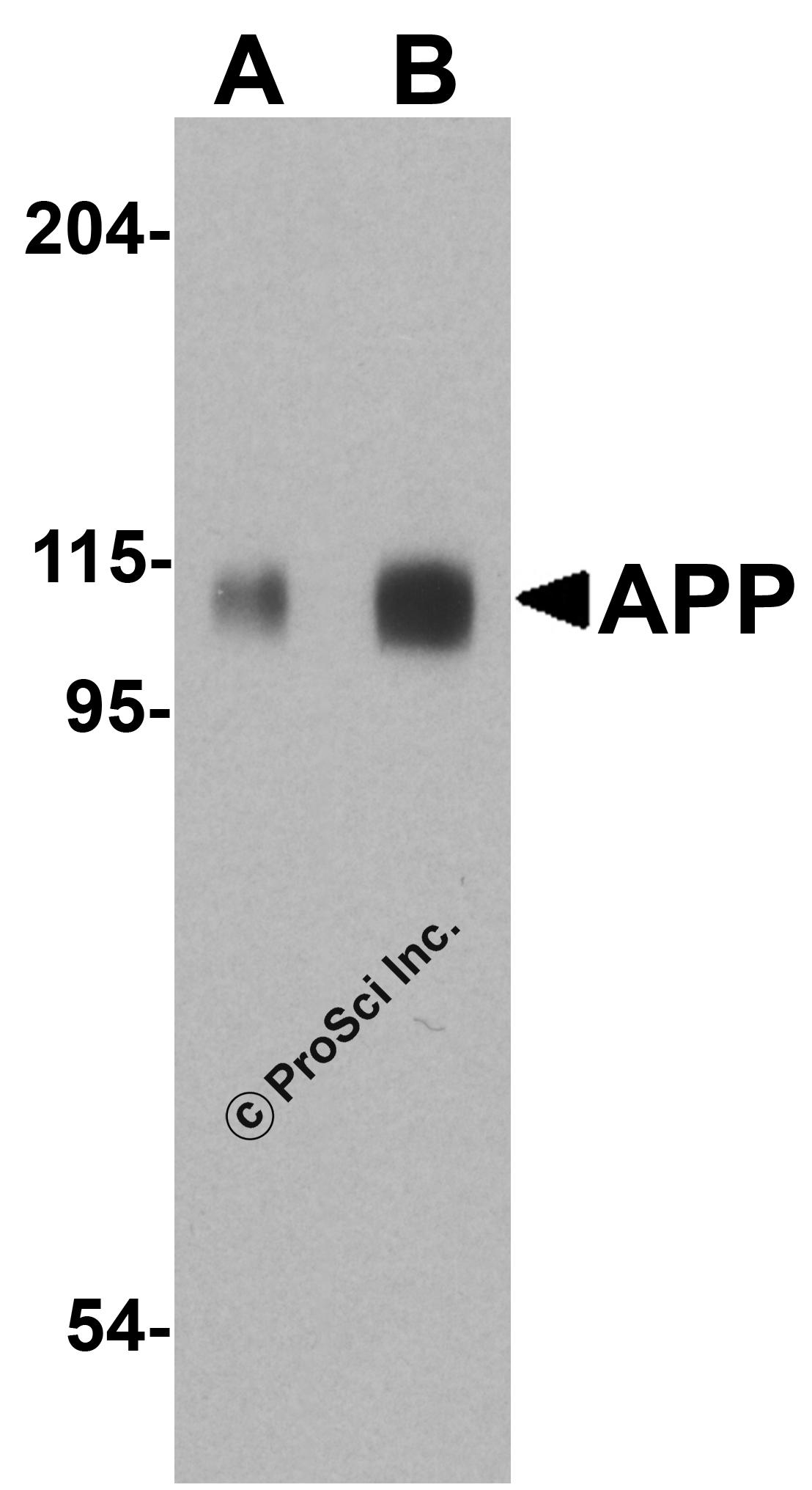
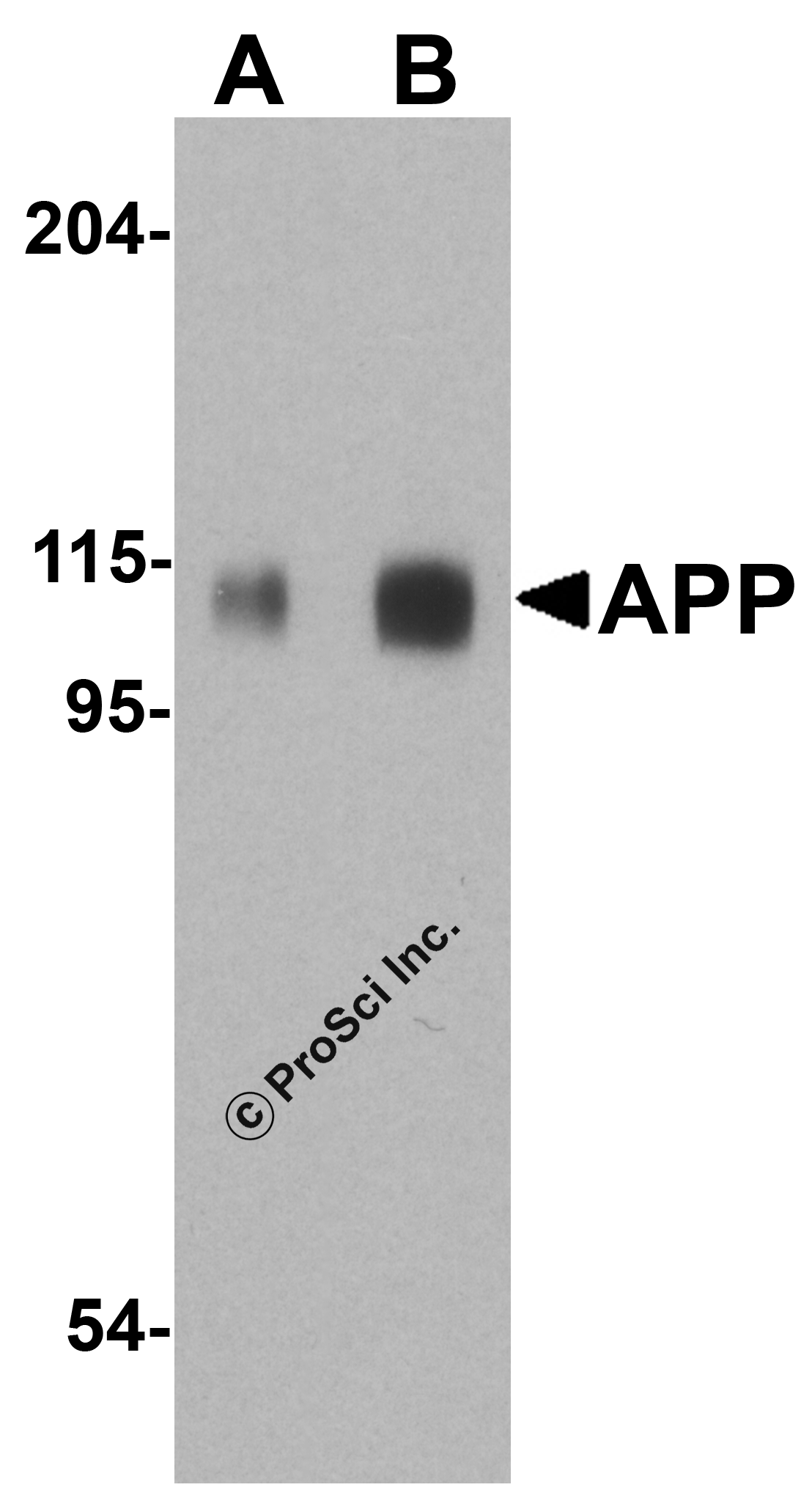
| APP antibody can be used for detection of APP and the C99 fragment by Western blot at 2 μg/mL. Antibody can also be used for immunohistochemistry starting at 2 μg/mL. For immunofluorescence start at 20 μg/mL.: |
|
| Species Reactivity | Human |
| Concentration | 1mg/ml |
| Purification | Affinity purified |
| Gene Symbol | APP |
|---|---|
| Alternative Names | APP Antibody: AAA AD1 PN2 ABPP APPI CVAP ABETA PN-II CTFgamma A4 Amyloid beta A4 protein APP |
| Sequence Similarities | Predicted species reactivity based on immunogen sequence: Pig: (100%) |
Application
Immunofluorescence of APP in mouse brain tissue with APP Antibodyat 20 μg/mL.
Application
Immunohistochemistry of APP in mouse brain tissue with APP Antibodyat 5 μg/mL.| Positive Control | 1) Cat. No. 1403 - Mouse Brain Tissue Lysate |
|---|---|
| Application Notes | APP antibody can be used for detection of APP and the C99 fragment by Western blot at 2 μg/mL. Antibody can also be used for immunohistochemistry starting at 2 μg/mL. For immunofluorescence start at 20 μg/mL.: |
| Form | Liquid |
|---|---|
| Storage Instructions | APP antibody can be stored at 4˚C for three months and -20˚C, stable for up to one year. As with all antibodies care should be taken to avoid repeated freeze thaw cycles. Antibodies should not be exposed to prolonged high temperatures. |
| Storage Buffer | APP Antibody is supplied in PBS containing 0.02% sodium azide. |


