Application
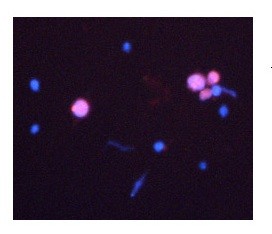
Antibody used in IHC on rat and mouse.Application
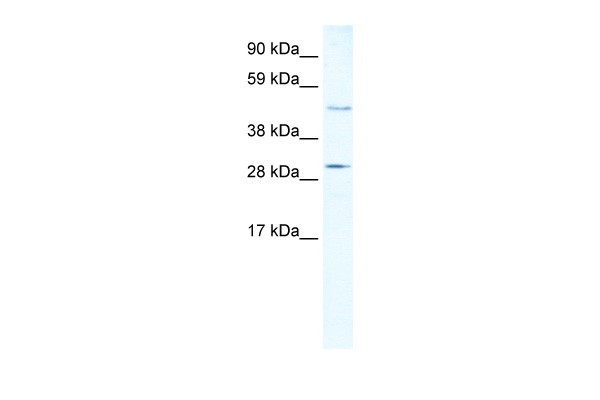
Antibody used in WB on Human Liver at 5 ug/ml.| Product Name | CASP3 Antibody |
|---|---|
| Antibody Type | Primary Antibodies |
| Antigen Alias | CASP3, CPP32, SCA-1, CPP32B |
| Product description | CASP3 is a protein which is a member of the cysteine-aspartic acid protease (caspase) family. Sequential activation of caspases plays a central role in the execution-phase of cell apoptosis. Caspases exist as inactive proenzymes which undergo proteolytic processing at conserved aspartic residues to produce two subunits, large and small, that dimerize to form the active enzyme. This protein cleaves and activates caspases 6, 7 and 9, and the protein itself is processed by caspases 8, 9 and 10. It is the predominant caspase involved in the cleavage of amyloid-beta 4A precursor protein, which is associated with neuronal death in Alzheimer's disease. Alternative splicing of this gene results in two transcript variants that encode the same protein.1) Selvakumar, P., et al., (2006) FEBS Lett. 580 (8), 2021-2026. |
| Immunogen | Antibody produced in rabbits immunized with a synthetic peptide corresponding a region of human CASP3. |
| Clonality | Polyclonal |
|---|---|
| Host Species | Rabbit |
| Tested Applications | ELISAWB |
| CASP3 antibody can be used for detection of CASP3 by ELISA at 1:62500. CASP3 antibody can be used for detection of CASP3 by western blot at 5 μg/mL, and HRP conjugated secondary antibody should be diluted 1:50,000 - 100,000.: |
|
| Species Reactivity | Human |
| Concentration | 1mg/ml |
| Purification | Protein A |
| Gene Symbol | CASP3 |
|---|---|
| Alternative Names | CASP3 CPP32 SCA-1 CPP32B |
| Molecular Weight(MW) | 32 kDa, 32 kDa |
Application
Antibody used in IHC on rat and mouse.
Application
Antibody used in WB on Human Liver at 5 ug/ml.| Positive Control | 1) Cat. No. XBL-10409 - Fetal Liver Tissue Lysate |
|---|---|
| Application Notes | CASP3 antibody can be used for detection of CASP3 by ELISA at 1:62500. CASP3 antibody can be used for detection of CASP3 by western blot at 5 μg/mL, and HRP conjugated secondary antibody should be diluted 1:50,000 - 100,000.: |
| Form | Liquid |
|---|---|
| Storage Instructions | For short periods of storage (days) store at 4˚C. For longer periods of storage, store CASP3 antibody at -20˚C. As with any antibody avoid repeat freeze-thaw cycles. |
| Storage Buffer | IgG in phosphate buffered saline , pH 7.4, 150mM NaCl, 0.02% sodium azide and 50% glycerol.Store at -20 °C.Stable for 12 months from date of receipt |


